How has the alliance between NCP factions benefited local body polls in Maharashtra?

Synopsis
In the wake of a potential merger of two NCP factions, a strategic alliance has proven to be politically advantageous in rural Maharashtra. This collaboration, highlighting the impact of Ajit Pawar's leadership, has resulted in significant gains in the Zilla Parishad elections, showcasing the power of unity in local governance.
Key Takeaways
Alliance boosts NCP performance Collaboration in elections yields majority Strategic seat-sharing enhances electoral prospects Sympathy for Ajit Pawar aids party image Upcoming merger announcement critical for NCP
Mumbai, Feb 9 (NationPress) In the midst of the ongoing discussions regarding the unification of two factions of the NCP, the collaboration between the Ajit Pawar-led NCP and the faction headed by Sharad Pawar has yielded significant political gains in rural Maharashtra.
The choice to jointly contest the Zilla Parishad elections in Pune district, along with coordinated seat-sharing in at least 10 additional districts, seems to have revitalized both factions’ performance in the rural areas, especially in western Maharashtra—a region renowned as the NCP’s traditional stronghold.
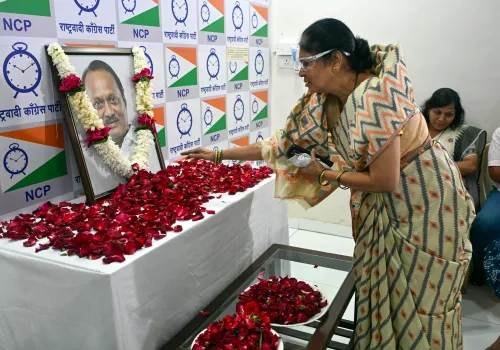
Both factions have also capitalized on the sympathy generated following the tragic and unexpected demise of NCP chief and state deputy chief minister Ajit Pawar in a plane crash on January 28.
This alliance in local body elections is perceived as a preliminary move towards merging the two NCP factions led by Ajit Pawar and his uncle Sharad Pawar. NCP SP chief Sharad Pawar recently revealed that a formal announcement concerning the merger of the two parties is expected on February 12, following the Zilla Parishad election results.
Sources indicate that it was Ajit Pawar who initiated the alliance and subsequently the merger, contending that the division of votes was constricting the political space for both factions.
The Zilla Parishad outcomes in western Maharashtra seem to validate this perspective. In Pune, the NCP emerged as the largest party with an outright majority in the 73-member Zilla Parishad, securing over 50 seats.
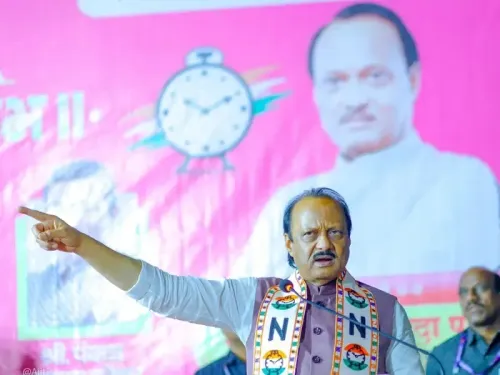
Both factions campaigned under the common Clock symbol across the district, apart from a few friendly contests in the Ambegaon area. This strategy appears to have unified votes and enabled the party to achieve a clear majority.
After a disappointing performance in the municipal corporation elections, discussions commenced between the two factions about joining forces for the Zilla Parishad polls, with Pune—home to the Pawar family—designated as the experimental center. Following consultations, NCP SP state president Shashikant Shinde announced in January that both factions would collaborate for the rural local body elections.
A similar tactic seems to have succeeded in Kolhapur, where the NCP became the largest party in the Zilla Parishad and is poised to appoint its president. In the 68-member assembly, the NCP claimed 20 seats, trailed by Congress with 15, BJP with 13, and Eknath Shinde-led Shiv Sena with 9. The Mahayuti alliance is anticipated to elect an NCP leader as Zilla Parishad president.
In Sangli, although no formal alliance was declared, the two NCP factions contested on mutually agreed-upon seats. The NCP SP emerged as the largest party, winning 19 seats, followed by Congress with 11. The NCP secured four seats while the BJP obtained 15. The NCP SP is in a robust position and is likely to install its Zilla Parishad president with support from Congress.
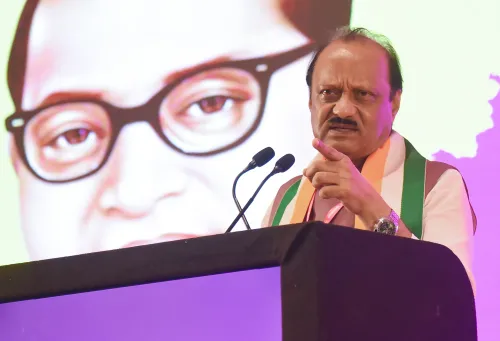
In Satara as well, the NCP upheld its understanding with its allies, winning 18 seats and emerging as the second-largest party in the Zilla Parishad. Overall, the election results indicate that Ajit Pawar's strategy of contesting rural local body elections through collaboration and common symbols has bolstered the party’s standing, particularly in western Maharashtra.
“The senior party leadership made the decision to contest together or establish an understanding during seat-sharing. This has greatly benefited the party. We anticipate that our leaders will now analyze the results in detail,” stated a legislator from NCP SP.
Point of View
I recognize the strategic significance of the NCP factions' alliance. This collaboration has the potential to reshape the political dynamics in Maharashtra, especially in rural areas where the NCP has traditionally held sway. The upcoming merger announcement will be crucial in determining the party's trajectory moving forward. It’s essential to monitor how these developments will influence voter sentiment and party unity.
NationPress
7 Oct 2026
Frequently Asked Questions
What is the significance of the alliance between the NCP factions?
The alliance is crucial as it consolidates votes and enhances the political strength of both factions, particularly in rural Maharashtra.
How did the recent deaths affect the NCP's performance?
The sympathy generated by the untimely death of Ajit Pawar has positively influenced voter sentiment towards the NCP.
What are the expected outcomes of the upcoming merger announcement?
The merger could lead to a more unified party structure, potentially increasing their electoral success in future elections.
How did the NCP perform in the Zilla Parishad elections?
The NCP emerged as the largest party in several districts, securing significant wins in Pune, Kolhapur, and Sangli.
What strategies did the NCP factions employ in the elections?
They contested under a common symbol and coordinated their seat-sharing strategy to maximize their electoral gains.