NCP power struggle: Sunetra Pawar caught between Young Turks and Old Guard
Synopsis
Sunetra Pawar's rise to NCP president has exposed a raw fault line — her son Parth Pawar's faction reportedly engineered a controversial ECI filing that erased the titles of veterans Praful Patel and Sunil Tatkare. With financial leverage lost after Ajit Pawar's death and local body elections looming, the party's survival may hinge on whether she can hold two irreconcilable camps together.
Key Takeaways
Sunetra Pawar , NCP National President and Maharashtra's first woman Deputy Chief Minister, is caught between rival party factions.
A national executive list filed with the ECI on 29 April omitted official designations of veterans Praful Patel and Sunil Tatkare — described publicly as a clerical error but reportedly an intentional move by Parth Pawar's faction.
Sunetra Pawar manages State Excise , Sports , and Minority Development — far weaker portfolios than the Finance Ministry once held by her late husband Ajit Pawar .
Opposition NCP (SP) leaders including Rohit Pawar are actively exploiting the internal rift to erode grassroots loyalty.
Analysts urge an immediate formal national executive meeting to clarify roles and prevent further organisational paralysis ahead of local body elections.
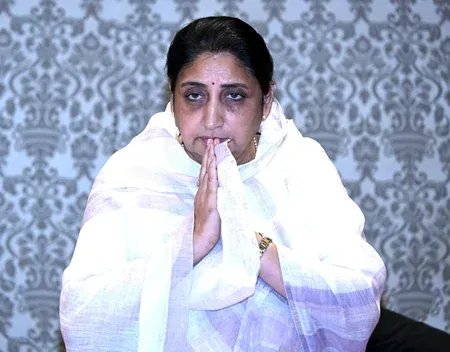
Sunetra Pawar, Maharashtra's first woman Deputy Chief Minister and newly-elected Nationalist Congress Party (NCP) National President, finds herself at the epicentre of a quiet but intensifying battle for institutional control within the party. Having secured legislative legitimacy through a hard-fought victory in the Baramati Assembly bye-election, she now confronts a far more treacherous challenge inside her own organisation — a structural tug-of-war between two rival factions pulling in opposite directions.
The Fault Lines Within NCP
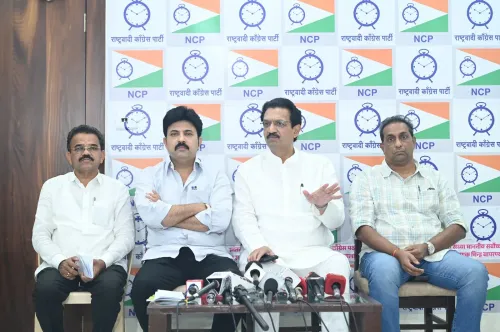
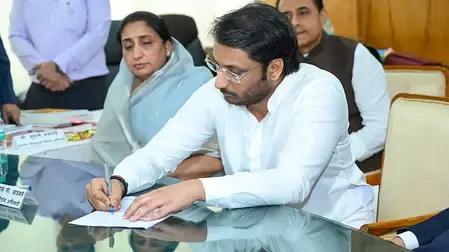
Party insiders confirm that Sunetra Pawar is increasingly caught between the ambitious 'Young Turks' — championed by her son and Rajya Sabha MP Parth Pawar — and the party's deeply entrenched 'Old Guard', led by veteran leaders Praful Patel and Sunil Tatkare. The friction broke into the open following a series of closely scrutinised communications sent by Sunetra Pawar to the Election Commission of India (ECI).
A formal list of office-bearers in the newly-constituted national executive, submitted to the ECI on 29 April this year, conspicuously omitted the official designations of Patel (National Working President) and Tatkare (Maharashtra State Unit Chief). While lesser office-bearers had their titles clearly listed, the spaces next to the two veterans' names were left blank — an omission that triggered intense media speculation of another vertical split within the party.
Damage Control and What Really Happened
Both Sunetra Pawar and senior leaders including Umesh Patil moved quickly to defuse the situation, describing the omission as a 'technical oversight' or 'clerical mistake.' However, according to senior sources within the party, the letter was reportedly an intentional, defensive manoeuvre aggressively pushed by the younger leadership tier, notably Parth Pawar. The move was reportedly designed to prevent any unauthorised constitutional changes or structural consolidation by the veteran duo in the administrative vacuum left following the death of Ajit Pawar.
Three Interlocking Challenges Ahead
Political analysts say Sunetra Pawar must immediately navigate three interconnected challenges to prevent a structural meltdown. First, she must strike a workable equilibrium in the succession conflict — balancing dynastic obligations to the Pawar family with pragmatic party administration. Sidelining veterans like Patel, Tatkare, and Chhagan Bhujbal risks alienating leaders who command the organisational machinery, corporate networks, and legal expertise the party depends upon.
Second, she faces a significantly diminished leverage position compared to her late husband. Ajit Pawar's authority was anchored in his control over the State Finance Ministry, which gave him decisive influence over rural constituencies. With that portfolio now resting with Chief Minister Devendra Fadnavis, Sunetra Pawar is left managing State Excise, Sports, and Minority Development — portfolios with far less financial reach. Retaining the loyalty of sugar cooperative directors, district cooperative bank chiefs, and Agriculture Produce Marketing Committee (APMC) heads — who may look towards Eknath Shinde's Shiv Sena or the Opposition Maha Vikas Aghadi (MVA) for political survival — will be an uphill task.
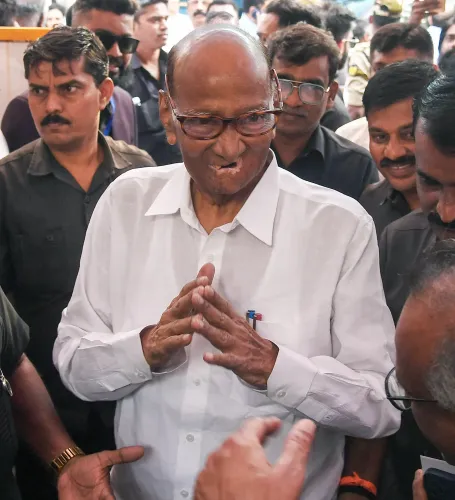
Third, she must navigate the long shadow of family patriarch Sharad Pawar and persistent reunification rumours. The Opposition NCP (SP) faction, led by leaders including Rohit Pawar, has actively capitalised on the internal rift, publicly suggesting that the Old Guard is prioritising personal political survival over the Pawar family's interests — a narrative designed to test grassroots loyalty to Sunetra's leadership.
What Political Analysts Recommend
Analysts argue that Sunetra Pawar must convene a formal national executive meeting at the earliest to officially reaffirm the roles of the Old Guard while simultaneously defining clear, substantive responsibilities for the younger leadership. Leaving designations ambiguous, they warn, only deepens paralysing distrust within the ranks.
With critical local body elections on the horizon, she must also fiercely protect the party's seat-sharing quotas against a highly assertive Bharatiya Janata Party (BJP) and Shinde-led Shiv Sena, demonstrating to her legislators that her leadership can still guarantee their electoral survival. Her transition from low-profile social organiser to frontline political chief may be complete — but her true test, analysts say, lies not in defeating external opponents, but in brokering durable peace inside her own war room.
Point of View
And everyone in the NCP read them correctly. What this episode reveals is that the succession battle within the Ajit Pawar faction was never settled; it was merely deferred by grief and electoral urgency. Sunetra Pawar now holds the title of party president without the financial sinews — the Finance Ministry — that made her husband's authority unchallengeable at the district level. That asymmetry between position and power is precisely what makes her vulnerable to pressure from both sides. The deeper risk is not a split, but a slow hollowing-out: veterans hedge their bets, rural satraps drift toward stronger patrons, and the party's organisational machinery quietly decays before the next election cycle.
NationPress
20 Sept 2026
Frequently Asked Questions
What is the power struggle inside NCP about?
The NCP is witnessing an internal conflict between the 'Young Turks' led by Rajya Sabha MP Parth Pawar and the 'Old Guard' comprising veterans Praful Patel and Sunil Tatkare, both factions competing to shape the party's direction under new National President Sunetra Pawar. The dispute escalated after a national executive list filed with the Election Commission of India on 29 April omitted the official designations of Patel and Tatkare.
Why were Praful Patel and Sunil Tatkare's titles left blank in the ECI filing?
The NCP officially described the omission as a 'technical oversight' or 'clerical mistake.' However, senior party sources say the move was reportedly intentional, pushed by Parth Pawar's faction to prevent the veteran leaders from consolidating institutional control in the administrative vacuum left by the late Ajit Pawar.
How has Sunetra Pawar's leverage been weakened since Ajit Pawar's death?
Ajit Pawar's authority rested heavily on his control of the State Finance Ministry, which gave him direct influence over rural cooperative networks. That portfolio now rests with Chief Minister Devendra Fadnavis, leaving Sunetra Pawar managing State Excise, Sports, and Minority Development — portfolios with far less financial reach over rural constituencies.
How is the Opposition NCP (SP) exploiting this rift?
The NCP (SP) faction, led by leaders including Rohit Pawar, has publicly suggested that the Old Guard is prioritising personal political survival over the Pawar family's interests. This narrative is designed to sow doubt among grassroots workers about the stability and direction of Sunetra Pawar's leadership.
What must Sunetra Pawar do to stabilise the NCP?
Political analysts say she must convene a formal national executive meeting at the earliest to officially reaffirm the Old Guard's roles while defining clear responsibilities for the younger leadership. With local body elections approaching, she must also protect the party's seat-sharing agreements against BJP and Shinde-led Shiv Sena to retain legislator confidence.