NEET paper leak: Rijiju says govt ready for debate, blames Opposition for deadlock
Synopsis
Four days into a parliamentary deadlock over the NEET paper leak, Parliamentary Affairs Minister Kiren Rijiju accused the Opposition of weaponising the crisis to stall the House — even as the Opposition held firm on its demand for the Education Minister's resignation before any debate begins. The standoff exposes a deeper fault line: who gets to set the terms of accountability in Parliament.
Key Takeaways
Parliament witnessed its fourth consecutive day of disruption over the NEET paper leak issue on 23 July .
Kiren Rijiju said the government reached out to Congress President Mallikarjun Kharge to agree on debate format and duration.
PM Narendra Modi has directed 'stern action' against those responsible for paper leaks, according to Rijiju.
Fast-track courts have been constituted to deliver swift punishment in NEET paper leak cases.
The Opposition insists the Union Education Minister must resign before any debate can begin.
Both Lok Sabha and Rajya Sabha proceedings remain stalled due to the government-opposition deadlock.
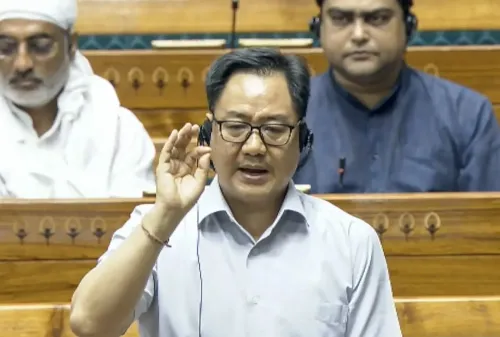
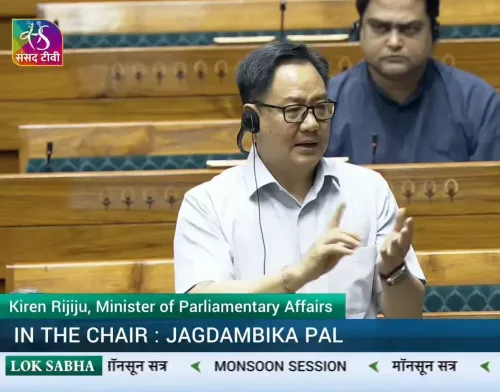
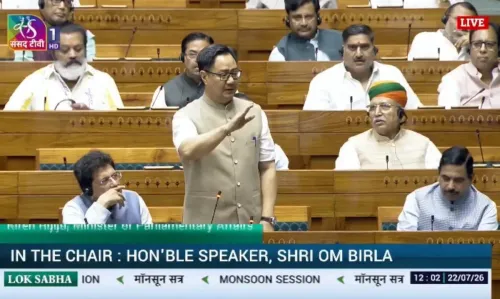
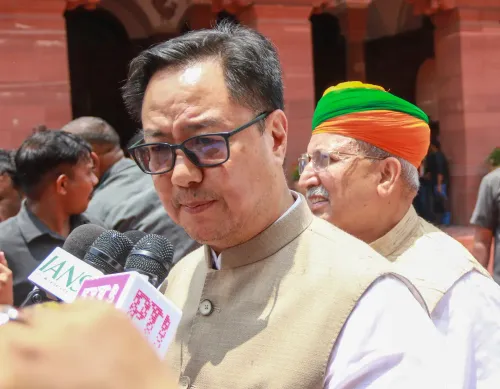
Parliamentary Affairs Minister Kiren Rijiju on Thursday, 23 July asserted that the government has been open to a parliamentary discussion on the NEET paper leak controversy from the outset, while accusing the Opposition of deliberately obstructing House proceedings by attaching preconditions to any debate. The statement came as Parliament logged its fourth consecutive day of disruption over the issue, with Opposition benches refusing to relent.
What Rijiju Said on the Floor
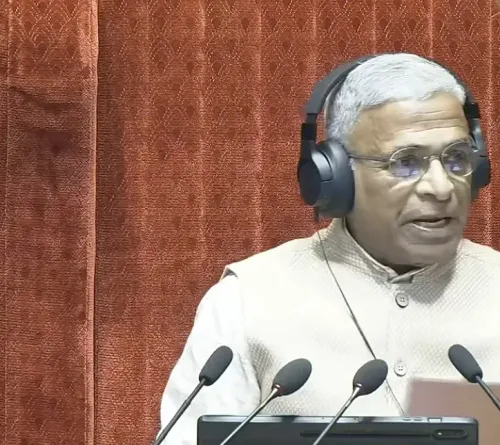
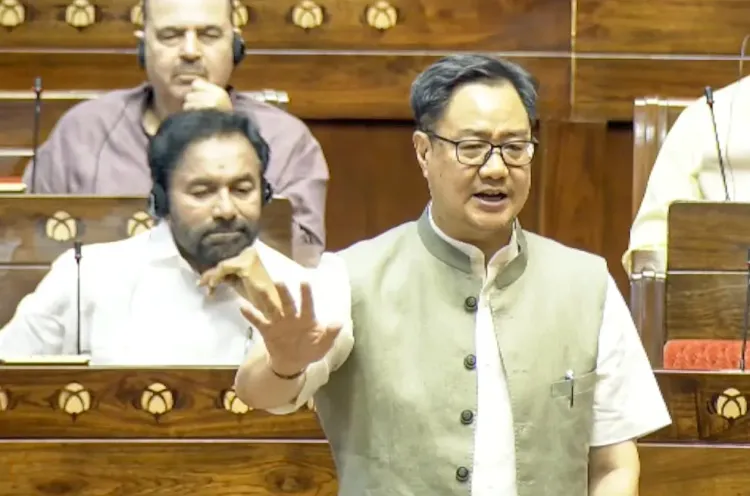
Speaking in the Rajya Sabha, Rijiju stated that the government had reached out to senior Opposition leaders — including Congress President Mallikarjun Kharge — to work out the duration and format of a debate through mutual consent. He argued that imposing conditions before a discussion was 'not right' and that the Opposition's conduct suggested it was more interested in rhetoric than in a substantive conversation about student welfare.
Rijiju also conveyed Prime Minister Narendra Modi's directive for 'stern action' against those responsible for the paper leaks, and informed the House that fast-track courts have been constituted to ensure swift and severe punishment for the guilty.
NDA Allies Aligned, Government Says
The minister said all allies within the National Democratic Alliance (NDA) are on board for a detailed discussion on the NEET issue, framing the impasse squarely as a product of Opposition intransigence. He appealed to the Opposition to withdraw its conditions and allow the House to function without obstruction.
Opposition Holds Its Ground
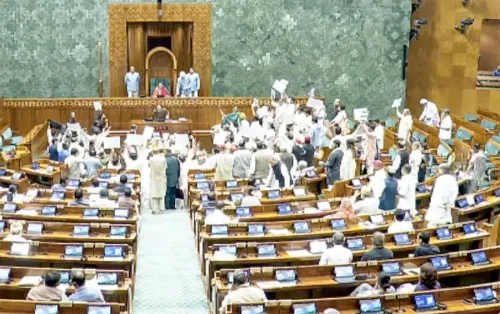
Opposition members, however, refused to accept the government's framing. They remained firm on their central demand: that the Union Education Minister resign, taking moral responsibility for the widespread irregularities in the examination system. Until that condition is met, they indicated, no structured debate would be permitted to proceed.
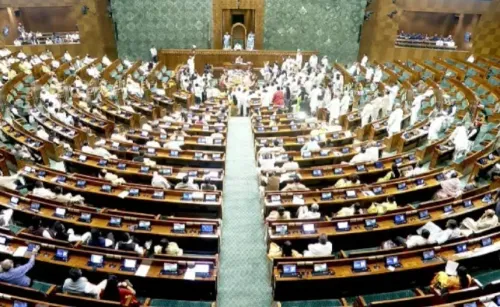
The deadlock has effectively paralysed both the Lok Sabha and the Rajya Sabha, with the government insisting it is ready to debate and the Opposition insisting accountability must precede discussion.
The Broader Context
The NEET controversy erupted after allegations of large-scale paper leaks and irregularities surfaced in the results of the National Eligibility cum Entrance Test (NEET), sparking nationwide protests by students and drawing sharp criticism from multiple political parties. The row has become one of the most disruptive issues of the current parliamentary session, with no resolution in sight as both sides dig in.
With the session's remaining days at stake, the standoff raises serious questions about Parliament's ability to hold the government accountable on issues that directly affect millions of students across India.
Point of View
While politically loaded, reflects a legitimate accountability norm. What is missing from both sides is any urgency about the students at the centre of this crisis. Four days of parliamentary paralysis have produced no new information, no policy commitment beyond fast-track courts, and no credible timeline for remediation. The NEET controversy is not just a political flashpoint — it is a systemic failure of examination governance that has disrupted the futures of hundreds of thousands of aspirants.
NationPress
21 Oct 2026
Frequently Asked Questions
What is the NEET paper leak controversy?
The NEET paper leak controversy refers to allegations of large-scale irregularities and paper leaks in the National Eligibility cum Entrance Test (NEET), which is the gateway examination for medical admissions in India. The issue triggered nationwide student protests and has become the dominant flashpoint in the current parliamentary session.
Why is Parliament deadlocked over NEET?
Parliament has been deadlocked for four consecutive days because the government says it is ready to debate the NEET issue while the Opposition refuses to allow proceedings until the Union Education Minister resigns. Neither side has shown willingness to move from its position.
What has the government done in response to the NEET paper leak?
The government has constituted fast-track courts to ensure swift and severe punishment for those found guilty in the NEET paper leak cases. Parliamentary Affairs Minister Kiren Rijiju also cited PM Modi's directive for stern action against those responsible.
What is the Opposition's demand in the NEET Parliament standoff?
The Opposition is demanding the resignation of the Union Education Minister, holding him responsible for the widespread irregularities in the NEET examination. They have made this a precondition for allowing any structured debate on the issue in Parliament.
Which leaders has the government engaged with to resolve the deadlock?
Kiren Rijiju stated that the government engaged with Congress President Mallikarjun Kharge and other Opposition leaders to facilitate a discussion and reach mutual agreement on the debate's format and duration.