NEET-UG 2026 re-exam on June 21: 2.5 lakh personnel, 1.38 lakh CCTVs deployed
Synopsis
After the NEET-UG 2026 May exam was scrapped over irregularity allegations, the re-examination on 21 June is being held under the most intensive security apparatus in the test's history — 1.38 lakh CCTVs, AI surveillance, 51,311 jammers, and 2.5 lakh personnel for 22 lakh students. The scale of the response is itself a measure of how badly public trust was shaken.
Key Takeaways
NEET-UG 2026 re-examination is scheduled for 21 June 2026 , after the original 3 May exam was cancelled over allegations of irregularities.
More than 22 lakh aspirants will appear across 5,440 centres in 551 cities and 14 international locations .
1,38,560 CCTV cameras in 95,000+ rooms will be monitored live with AI-based analysis ; 51,311 jammers deployed by ECIL and BEL .
More than 2.5 lakh security personnel mobilised, including police, paramilitary, the Indian Air Force , and the Department of Posts .
Examination runs from 2 pm to 5:15 pm IST ; entry closes at 1:30 pm ; Aadhaar-based biometric verification mandatory at all centres.
A nationwide mock drill was conducted on 20 June to test all systems ahead of exam day.
The NEET-UG 2026 re-examination — India's largest medical entrance test — is scheduled for Sunday, 21 June 2026, after the original 3 May examination was cancelled following allegations of irregularities. The National Testing Agency (NTA), working in tandem with the Centre, state governments, police, district administrations, and paramilitary forces, has put in place what it describes as an end-to-end security architecture covering more than 22 lakh aspirants vying for seats in MBBS, BDS, and allied undergraduate medical programmes.
Scale of the Examination
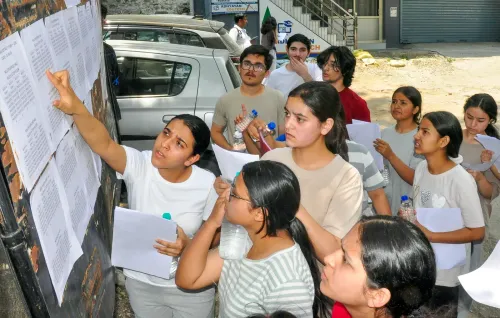
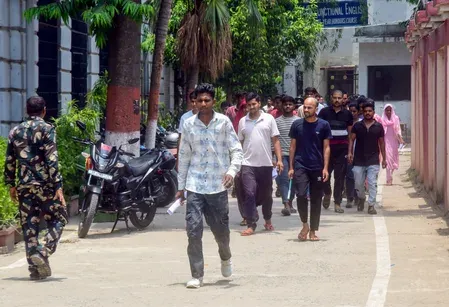
The test will be conducted across 5,440 centres in 551 cities within India and 14 international locations, including centres in the UAE, Kuwait, and Saudi Arabia. It will be offered in English and 12 Indian languages, making it one of the most linguistically inclusive examinations in the country. Reporting and biometric verification begin at 11 am, with the entry deadline set at 1:30 pm; the examination runs from 2 pm to 5:15 pm IST.
Security Architecture: Cameras, Jammers, and AI
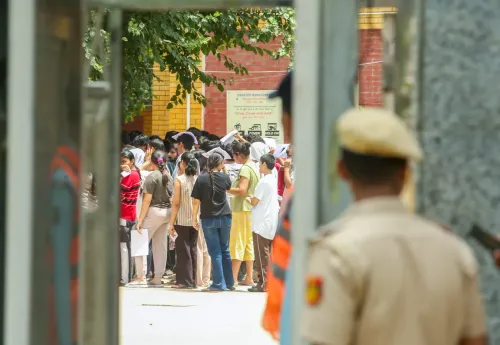
More than 95,000 examination rooms have been equipped with 1,38,560 CCTV cameras, monitored live at the national, state, and ministry levels. The surveillance network is backed by AI-based analysis of CCTV feeds and 51,311 jammers supplied by Electronics Corporation of India Limited (ECIL) and Bharat Electronics Limited (BEL). Each centre will have an average deployment of 40 to 50 security personnel, with a total of more than 2.5 lakh security personnel mobilised nationwide.
Personnel and Candidate Verification
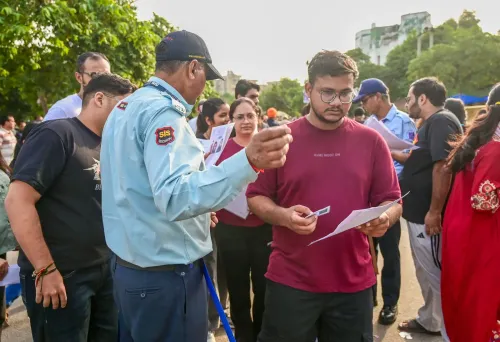
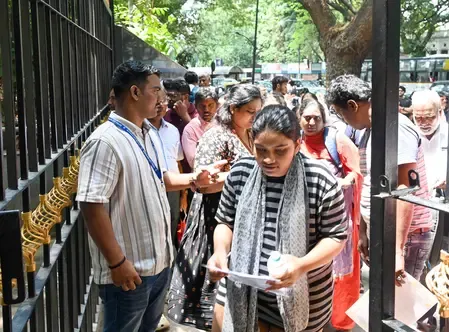
Two invigilators will be stationed in every examination room, supported by more than 10 functionaries per centre. A total of 38,795 frisking personnel and 48,448 biometric staff have been deployed, with face authentication systems introduced to strengthen candidate verification. Around 6,700 observers and more than 100 virtual observers will oversee proceedings. Aadhaar-based biometric verification and frisking are mandatory at all centres.
Material Transport and Logistics
Question papers and OMR sheets will move under sealed, end-to-end protocols. GPS-enabled transport vehicles and police escorts have been deployed for examination material movement, with the Indian Air Force providing support in sensitive areas. The Department of Posts has also been mobilised. Confidential materials have been verified at custodian banks. A nationwide mock drill was conducted on 20 June to stress-test paper dispatch, entry processes, biometric systems, and emergency response mechanisms.
City-Wise Arrangements and Candidate Guidelines
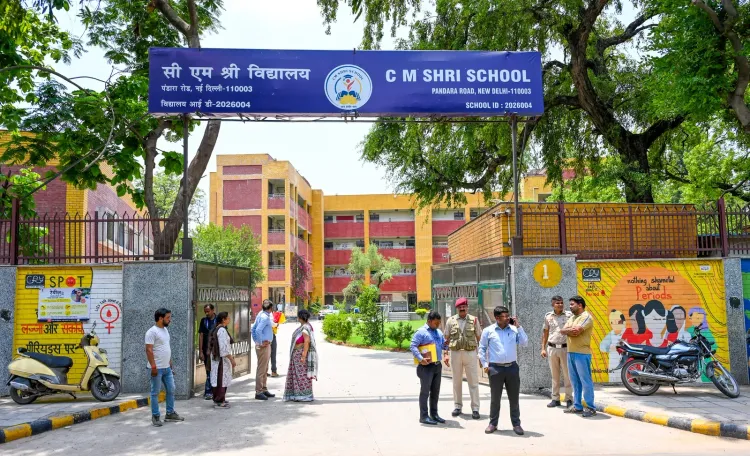
In the National Capital Region, centres in Delhi, Gurugram, Ghaziabad, and Noida have been equipped with advanced surveillance. In Maharashtra, centres span Mumbai, Navi Mumbai, Pune, Nagpur, Nashik, and Chhatrapati Sambhajinagar. Southern states — Tamil Nadu, Karnataka, Telangana, and Kerala — have strengthened deployments, while Kolkata, Patna, Bhubaneswar, Lucknow, and Prayagraj operate under enhanced protocols. In Madhya Pradesh, Bhopal alone hosts 32 dedicated centres, with West Central Railway running help desks at stations including Bhopal, Vidisha, Narmadapuram, Guna, and Ashoknagar.
Candidates must carry a printed admit card with a passport-sized photograph affixed, a 4x6-inch postcard-sized photograph, a valid photo ID — Aadhaar, PAN card, voter identity card, passport, or driving licence — and two additional passport-sized photographs. Electronic devices including mobile phones, smartwatches, Bluetooth devices, earphones, and calculators are prohibited. Ballpoint pens will be provided at all centres. The NTA has urged candidates to rely solely on official communication channels and disregard social media rumours about paper leaks. With the country watching closely after the May controversy, the agency says all arrangements are in place for a smooth and transparent examination.
Point of View
AI-monitored cameras, Air Force logistics — is less a routine precaution and more an acknowledgement of institutional failure. The cancellation of the May examination was not just an administrative setback; it eroded confidence in a high-stakes system that 22 lakh families depend on. The NTA's response addresses the symptom — leakage risk on exam day — but the deeper question of systemic vulnerability in question-paper custody chains remains inadequately answered. If this level of mobilisation is what it takes to run one examination credibly, the agency faces a structural problem that no amount of CCTV cameras can fully resolve.
NationPress
19 Sept 2026
Frequently Asked Questions
Why is the NEET-UG 2026 re-examination being held?
The NEET-UG 2026 re-examination on 21 June was ordered after the original 3 May examination was cancelled amid allegations of irregularities. The NTA, in coordination with the Centre and state governments, has put in place an extensive security framework for the re-test.
How many students will appear in the NEET-UG 2026 re-examination?
More than 22 lakh aspirants are registered to appear in the NEET-UG 2026 re-examination. They will sit at 5,440 centres across 551 cities in India and 14 international locations.
What security measures have been put in place for NEET-UG 2026?
The NTA has deployed 1,38,560 CCTV cameras with AI-based monitoring, 51,311 jammers, Aadhaar-based biometric verification, face authentication, GPS-enabled transport for question papers, and more than 2.5 lakh security personnel including police, paramilitary, and Indian Air Force support.
What time does the NEET-UG 2026 re-examination start and end?
The examination is scheduled from 2 pm to 5:15 pm IST on 21 June 2026. Reporting and frisking begin at 11 am, and no candidate will be permitted entry after the 1:30 pm deadline.
What documents must NEET-UG 2026 candidates carry to the exam centre?
Candidates must bring a printed admit card with a passport-sized photograph affixed, a 4x6-inch postcard-sized photograph, a valid photo ID (Aadhaar, PAN card, voter identity card, passport, or driving licence), and two additional passport-sized photographs. Electronic devices, bags, and metallic ornaments are prohibited.