What Are the New Guidelines for Vande Mataram at Government Events?
Synopsis
The Centre has introduced new guidelines for Vande Mataram, detailing how and when it should be performed at government events. This initiative aims to enhance respect for national symbols and ensure proper conduct during state functions. The guidelines address both ceremonial clarity and audience expectations.
Key Takeaways
New guidelines formalize Vande Mataram's role at government events.
Full version of the song is to be performed at major state occasions.
Audience must stand for both Vande Mataram and the national anthem.
Educational institutions are encouraged to promote the song in assemblies.
Exemptions exist for cinema screenings.
New Delhi, Feb 11 (NationPress) The Centre has released new, detailed instructions that outline the formal protocol for the performance of Vande Mataram, India's national song, specifying the timing and manner of its rendition at government events along with the expected behavior from the audience, particularly regarding the national anthem.
These guidelines, issued by the Union Home Ministry, aim to legitimize the ceremonial status of Vande Mataram during public and official gatherings across the nation, placing heightened importance on its observance at state functions and institutional events.
According to the new protocol, the full official version of Vande Mataram, which consists of six stanzas and lasts around 3 minutes and 10 seconds, is to be performed or played at significant state events.
Such occasions include the raising of the national flag, formal arrival and departure ceremonies for the President and Governors at official gatherings, and before or after their scheduled speeches at these functions.
One important aspect of the directive stipulates that when both Vande Mataram and the national anthem are included in a program, the national song should be performed first.
The guidelines also indicate that the audience is expected to stand in attention during both performances as a sign of respect.
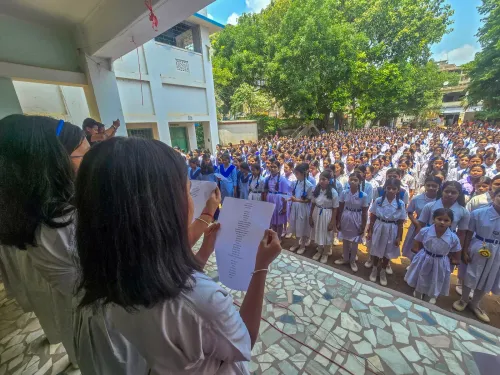
The Home Ministry has encouraged educational institutions to foster the singing of Vande Mataram during daily school assemblies and important institutional events.
This initiative aims to promote awareness and respect for national symbols among students and the general populace.
To ensure clarity in ceremonial proceedings, the guidelines suggest that when Vande Mataram is played by a band, it should be preceded by a drum roll or a bugle call to formally announce the beginning of the rendition.
At the same time, specific exemptions have been made for cinema halls and film screenings.
The directive notes that audiences will not be required to stand when Vande Mataram is played as part of a film's soundtrack, as compelling viewers to stand in entertainment venues could disrupt the viewing experience and create confusion.
This initiative seeks to bridge a long-standing gap in formal protocols concerning the national song. Unlike the national anthem, which is governed by comprehensive executive instructions and legal provisions outlining both performance norms and audience conduct, Vande Mataram has historically lacked well-defined official guidelines or enforceable standards.
The Home Ministry is also contemplating aligning the protocol for Vande Mataram more closely with that of the national anthem, including expectations related to standing and other gestures of respect.
However, no statutory amendments or legal provisions have yet been introduced in this context.
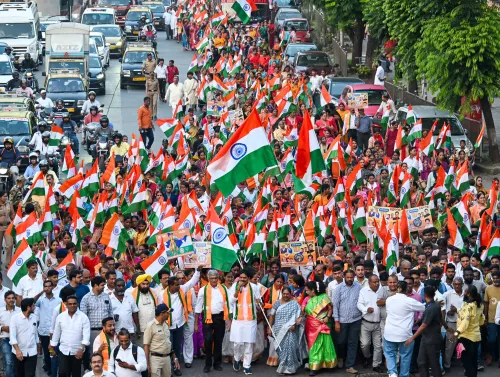
This announcement comes during a time of heightened discussions regarding national symbols, particularly in light of the ongoing commemoration of the 150th anniversary of Vande Mataram.
This milestone has reignited discussions over the song's historical significance, its role in shaping modern India’s national identity, and whether its ceremonial observance should be expanded across public and institutional platforms.
Through these new directives, the Centre aims to reinforce and formalize the ceremonial importance of Vande Mataram alongside the national anthem, reaffirming its dignity during state functions and emphasizing its role in nurturing patriotic feelings among citizens.
Point of View
The Centre’s new guidelines for Vande Mataram reflect a timely effort to reinforce its ceremonial importance alongside the national anthem. This initiative not only aims to standardize the observance of the national song but also to cultivate a sense of respect and awareness among citizens, particularly the youth. It is essential, however, to balance ceremonial observance with individual freedoms and cultural sensitivities.
NationPress
30 Sept 2026
Frequently Asked Questions
What is the purpose of the new guidelines for Vande Mataram?
The guidelines aim to formalize the ceremonial role of Vande Mataram at government events and ensure proper audience conduct.
When should Vande Mataram be performed?
Vande Mataram should be performed at significant state events, including flag unfurling, arrival and departure ceremonies of dignitaries, and before or after their speeches.
What is expected from the audience during the performance?
The audience is expected to stand at attention during both Vande Mataram and the national anthem as a mark of respect.
Are there any exemptions to the standing rule?
Yes, audiences are not required to stand when Vande Mataram is played in cinema halls as part of a film's soundtrack.
Why was there a need for new guidelines?
There was a long-standing gap in formal protocols for Vande Mataram, unlike the national anthem, which had detailed regulations regarding its performance.