Why Are New Voter Applications So Low Compared to Those Excluded?
Synopsis
The recent draft voters' list shows a concerning trend: new voter applications are alarmingly low when juxtaposed with the vast number of voters excluded. With critical elections on the horizon, the implications of this disparity could be significant. Will the number of applications rise before the final list is released?
Key Takeaways
324,800 new voter applications submitted.
58,20,899 voters excluded from the previous list.
Final voters' list to be published on February 14 .
Significant number of unmapped voters: 30,59,273 .
Investigation into 1.60 crore voters with dubious family data.
Kolkata, Dec 19 (NationPress) According to the draft voters’ list released on December 16, the quantity of applications for new voter enrolment is remarkably low compared to the number of voters removed from the prior list as of October 2025.
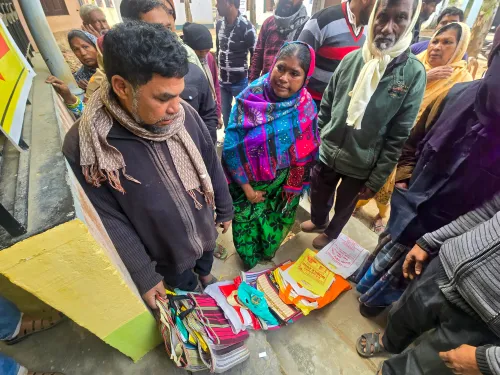
Insiders from the office of the Chief Electoral Officer (CEO) in West Bengal have indicated that the total applications for new voter enrolment during the initial stage stands at 324,800, in stark contrast to the staggering 58,20,899 voters who have been excluded from the previous list.
The applications for new voter enrolment are also insignificant when compared to the 30,59,273 unmapped voters—those lacking any association with the voters' list from 2002, the last time the State Information Report (SIR) was conducted in the state, either through self-mapping or progeny mapping.
The count of 324,800 applications submitted via Form-6 includes individuals who have just turned 18 as well as those seeking to transfer their voter enrolment.
However, sources within the CEO's office have suggested that this number is likely to rise in the coming days, given the ample time left for Form-6 submissions. The final voters’ list is set to be published on February 14 next year, concluding the SIR process that commenced on November 4.
Following this, the Election Commission of India (ECI) will announce the polling dates for the crucial Assembly elections next year.
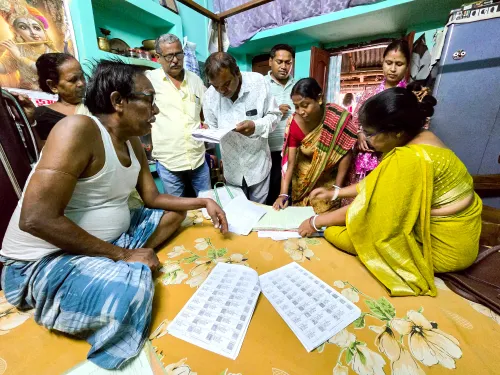
The ECI has clarified that mere presence in the draft voters’ list—whether through self-mapping or progeny mapping—does not ensure retention in the final voters' list. This is particularly pertinent as the Commission has identified 1.60 crore voters with questionable family-tree data during the revision process.
Many of these voters with dubious family-tree data will be summoned for hearings to clarify these anomalies. Examples include voters with identical names for both parents in the last voters’ list, those who became fathers at age 15 or younger, and individuals identified as grandfathers at age 40 or less. One troubling case involves a voter alleged to have fathered two sons at the age of five.
Point of View
The staggering gap between new voter applications and the number of excluded voters warrants serious attention. It raises crucial questions about voter engagement and the integrity of the electoral process. As the situation unfolds, it is imperative to monitor these developments closely to ensure a fair democratic process.
NationPress
9 Oct 2026
Frequently Asked Questions
How many new voter applications were submitted?
A total of 324,800 new voter applications were submitted.
What is the number of voters excluded from the previous list?
58,20,899 voters have been excluded from the previous list.
When will the final voters' list be published?
The final voters' list is set to be published on February 14 next year.
What is the significance of self-mapping and progeny mapping?
Self-mapping and progeny mapping are processes through which voters can establish their connection to the voters' list.
What issues have been raised regarding family-tree data?
The ECI has identified 1.60 crore voters with suspicious family-tree data, prompting further investigation.