Can the Newspaper Be Stopped? SC Provides Interim Relief to Media Outlet
Click to start listening
Synopsis
In a landmark decision, the Supreme Court has provided interim relief to the Punjab Kesari newspaper group, preventing the Punjab government from taking coercive actions against them. This ruling comes amid allegations of government retaliation for unfavorable reporting, marking a significant moment for press freedom in India.
Key Takeaways
- The Supreme Court has granted interim relief to the Punjab Kesari newspaper group.
- The Punjab government is prohibited from taking coercive actions against the publication.
- The printing press must continue to operate without any interruptions.
- The ruling highlights the importance of press freedom in India.
- The situation arose amid allegations of government retaliation for unfavorable articles.
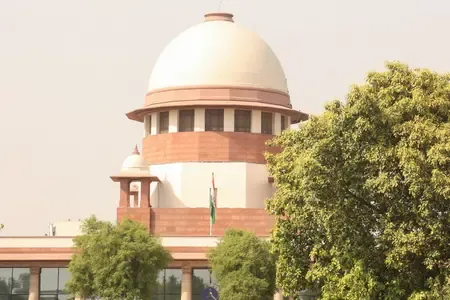
New Delhi, Jan 20 (NationPress) In a significant move for the Punjab Kesari newspaper group, the Supreme Court has provided interim relief by instructing the Punjab government to refrain from taking any coercive actions against its publication. Furthermore, the court mandated that the printing press operates without any interruptions.
While the Punjab and Haryana High Court has yet to deliver its ruling on this issue, a Bench led by Chief Justice of India (CJI) Surya Kant granted this relief following an urgent oral request made by senior advocate Mukul Rohatgi on behalf of the newspaper's management.
Rohatgi asserted that after Punjab Kesari published articles that challenged the state government, several aggressive measures were taken against the media group. These included electricity disconnections, notices from the Punjab Pollution Control Board, a halt to the printing press, sealing of the group’s hotels, and the filing of FIRs.
“This series of actions occurred within just two days of publishing articles that were critical of the Punjab government,” the senior lawyer claimed, emphasizing that the printing press, which has been operational for nearly two decades, was abruptly ordered to close due to alleged pollution infractions.
“A newspaper cannot be silenced,” observed CJI Kant, directing that the printing press be permitted to operate. However, he noted that the status of other commercial operations, including the hotels, would remain unchanged for now.
The Supreme Court ruled that, “without prejudice to the rights of both parties, and without expressing any opinion on the merits of the case, the printing press of the Punjab Kesari newspaper shall continue to function without interruption,” stating that this interim arrangement would stay in effect for one week following the Punjab and Haryana High Court’s verdict.
Representing the state government, Additional Advocate General (AAG) Shadan Farasat contended that all actions were executed in strict compliance with the law and highlighted that the Punjab and Haryana High Court had already reserved its judgment on similar petitions submitted by the newspaper group.
AAG Farasat mentioned that only one unit had been ordered closed, not the entire newspaper. “It is acceptable to temporarily close hotels or other commercial properties, but the newspaper must continue,” stated the Bench led by CJI Kant.
Previously, the Punjab and Haryana High Court had reserved its decision on petitions filed by the media group contesting the closure of its printing press and hotel but declined to provide interim relief, leading the management to seek recourse from the Supreme Court.
The Punjab Kesari group has claimed that the closure orders were issued on the same day of inspection, without waiting for test results or offering any opportunity for a hearing.
Point of View
Our commitment remains with the nation, advocating for press freedom and the essential role of media in democracy. The recent Supreme Court ruling underscores the necessity of protecting journalistic integrity against any form of government coercion.
NationPress
21/01/2026
Frequently Asked Questions
What was the Supreme Court's ruling regarding the Punjab Kesari newspaper?
The Supreme Court provided interim relief, instructing the Punjab government to refrain from coercive actions against the Punjab Kesari newspaper and allowed its printing press to operate without interruptions.
Why did the Punjab Kesari newspaper seek relief from the Supreme Court?
The newspaper sought relief after facing aggressive actions from the Punjab government, including shutdowns and FIRs, in response to its critical reporting on government activities.
What implications does this ruling have for press freedom in India?
This ruling is a significant affirmation of press freedom, emphasizing that the media cannot be silenced and reinforcing the judiciary’s role in protecting journalists' rights.