Darjeeling Himalayan Railway marks 146 years with Sukna Station Mahotsav
Synopsis
A 125-year-old locomotive rolled again, a siding shut for 21 years was reopened, and a new museum was unveiled — all in a single day at Sukna. NFR's Mahotsav for the Darjeeling Himalayan Railway's 146th anniversary wasn't just a ceremony; it was a statement that India's most storied narrow-gauge line is being actively preserved, not just commemorated.
Key Takeaways
NFR held the Sukna Station Mahotsav on 5 October 2026 to mark 146 years of the Darjeeling Himalayan Railway (DHR) , a UNESCO World Heritage Site .
NFR General Manager Chetan Kumar Shrivastava inaugurated the renovated Sukna Museum and released the first DHR Collector's Edition Volume on Heritage and History .
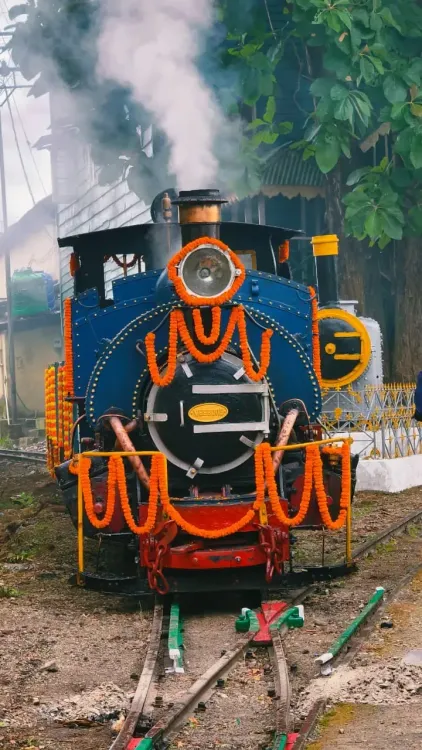
The 125-year-old heritage locomotive 780B was restored after 36 years and flagged off from the Tindharia Railway Workshop .
The Giddaypahar siding was reopened after 21 years ; a new RPF barrack was also inaugurated at the site.
Cultural performances, essay and drawing competitions involving students from Narayana School, Siliguri and Sukna School were part of the celebrations.
The Northeast Frontier Railway (NFR) on Monday, 5 October 2026 organised the Sukna Station Mahotsav to mark 146 years of the architectural heritage of the Darjeeling Himalayan Railway (DHR), a UNESCO World Heritage Site. The event brought together railway officials, local communities, and students in a celebration that combined heritage preservation with live infrastructure announcements.
Key Developments at the Celebration
NFR General Manager Chetan Kumar Shrivastava inaugurated the newly renovated Sukna Museum, which documents the rich operational and historical legacy of DHR. He also released the first DHR Collector's Edition Volume on Heritage and History, marking a new archival effort for one of India's most iconic railway lines.
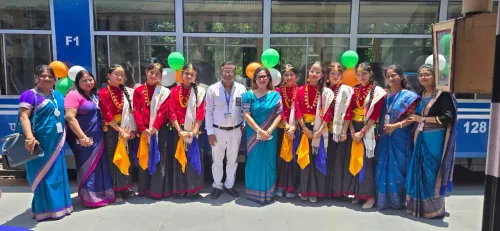
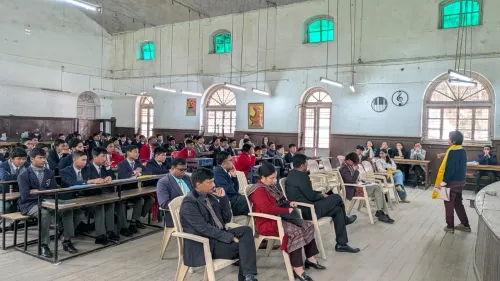
Students from Narayana School, Siliguri and Sukna School delivered cultural performances, while essay and drawing competitions were held for young participants. The top three winners in each category received DHR certificates. Artist Ajay Sarkar presented a live nail art demonstration, and the finished artwork was formally presented to the Station Manager of Sukna.
Heritage Locomotive and Restored Infrastructure
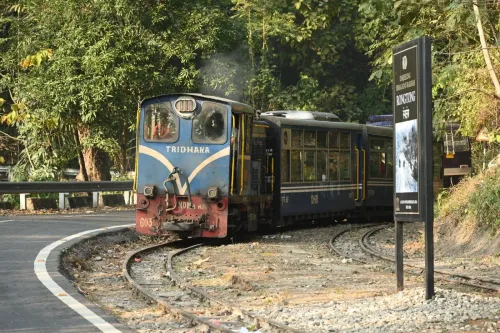
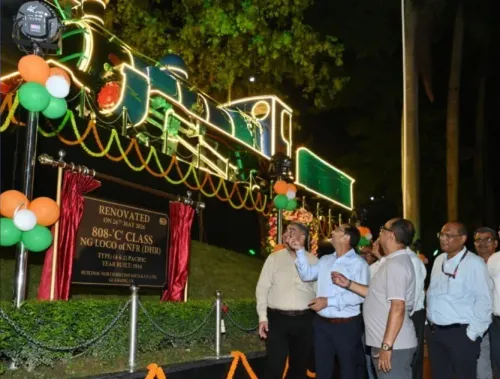
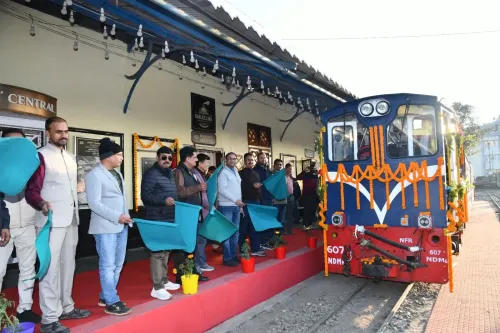
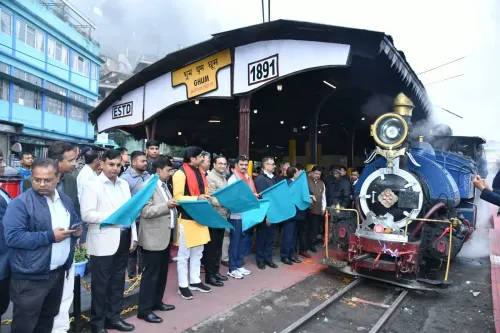
In a highlight of the day, General Manager Shrivastava flagged off the 125-year-old heritage locomotive 780B along with a flat wagon — both restored after 36 years at the Tindharia Railway Workshop, one of the oldest operational workshops on the narrow-gauge network. According to NFR Chief Public Relations Officer (CPRO) Kapinjal Kishore Sharma, the restoration represents a significant conservation milestone for DHR's rolling stock.
The Giddaypahar siding, dormant for 21 years, was also restored and reopened to strengthen the railway's operational capacity. A new barrack for the Railway Protection Force (RPF) was simultaneously inaugurated at Giddaypahar to improve security infrastructure along the heritage corridor.
Why the Darjeeling Himalayan Railway Matters
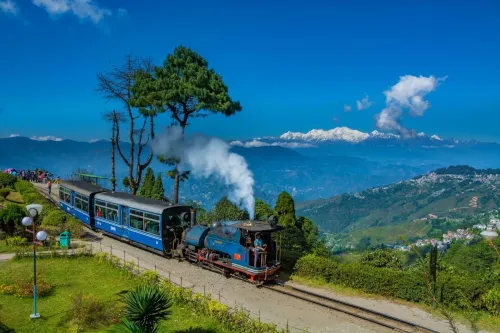
Established in 1880, the DHR is one of the world's few remaining narrow-gauge mountain railways still in active operation. Its UNESCO World Heritage status, granted in 1999, recognises its outstanding engineering achievement — the zig-zag reverses and loop lines that carry trains from the plains of West Bengal to the hill town of Darjeeling at roughly 2,200 metres. Notably, DHR is among only three mountain railways worldwide to hold this distinction alongside the Nilgiri Mountain Railway and the Shimla Mountain Railway.
The NFR, headquartered at Maligaon near Guwahati, administers railway operations across the northeastern states as well as seven districts of West Bengal and five districts of north Bihar.
What the Celebrations Signal
This year's Mahotsav reflects a broader NFR push to treat heritage railway assets not merely as tourist attractions but as living infrastructure requiring sustained investment. The simultaneous inauguration of security facilities and the reopening of a long-dormant siding alongside cultural events signals an intent to balance preservation with operational modernisation. Railway observers note that community participation — through school events and local artists — is an increasingly deliberate strategy to build public stewardship of heritage corridors.
Point of View
But the infrastructure actions embedded within it deserve closer attention. Restoring a locomotive dormant for 36 years and reopening a siding shut for 21 years are not ceremonial gestures — they are operational commitments on a corridor that has historically been under-resourced relative to its UNESCO status. The deeper question is whether this signals a sustained funding pipeline for DHR or a one-time anniversary push. Heritage railway maintenance is expensive and continuous; a single renovation does not reverse decades of deferred investment. India's mountain railways remain among the world's most extraordinary engineering assets, and their long-term survival depends less on mahotsavs and more on predictable annual budgets and trained technical staff.
NationPress
6 Oct 2026
Frequently Asked Questions
What is the Darjeeling Himalayan Railway and why is it significant?
The Darjeeling Himalayan Railway (DHR), established in 1880, is a narrow-gauge mountain railway running from the West Bengal plains to Darjeeling at roughly 2,200 metres. It was designated a UNESCO World Heritage Site in 1999, recognising its exceptional engineering — including zig-zag reverses and loop lines — and its continued active operation over 146 years.
What happened at the Sukna Station Mahotsav on 5 October 2026?
NFR General Manager Chetan Kumar Shrivastava inaugurated the renovated Sukna Museum, released the first DHR Collector's Edition Volume, and flagged off the restored 125-year-old heritage locomotive 780B. The Giddaypahar siding was reopened after 21 years and a new RPF barrack was inaugurated at the site.
How old is the heritage locomotive 780B and how long had it been out of service?
The locomotive 780B is approximately 125 years old. It had been out of service for 36 years before being restored at the Tindharia Railway Workshop and flagged off during the Sukna Station Mahotsav celebrations.
Why was the Giddaypahar siding reopened?
The Giddaypahar siding was restored and reopened after 21 years to strengthen the operational capacity of the Darjeeling Himalayan Railway. A new Railway Protection Force barrack was also inaugurated there to improve security infrastructure along the heritage corridor.
Which areas does the Northeast Frontier Railway (NFR) cover?
The NFR, headquartered at Maligaon near Guwahati, operates across the northeastern states of India, seven districts of West Bengal, and five districts of north Bihar. It is the administrative authority responsible for the Darjeeling Himalayan Railway.