Is the NGT Urging Pond Demarcation Due to Groundwater Crisis in Lucknow?
Synopsis
The NGT's urgent directive to Lucknow authorities to demarcate ponds in six weeks reflects the alarming groundwater crisis in the region. A recent report reveals that groundwater levels have drastically declined, raising concerns about water management practices in the capital of Uttar Pradesh. This decision underscores the need for immediate action to address the ongoing water scarcity issues.
Key Takeaways
NGT mandates pond demarcation in Lucknow.
Groundwater levels have dropped significantly in the past decade.
Authorities have six weeks to complete the demarcation process.
The need for sustainable water management practices is urgent.
Next hearing scheduled for March 12, 2026 .
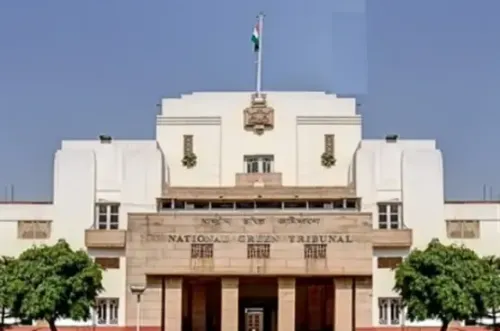
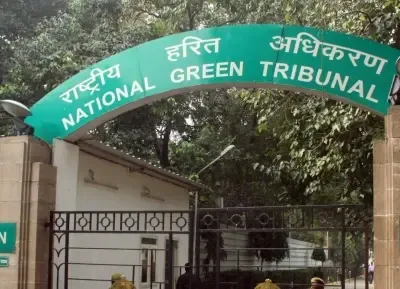
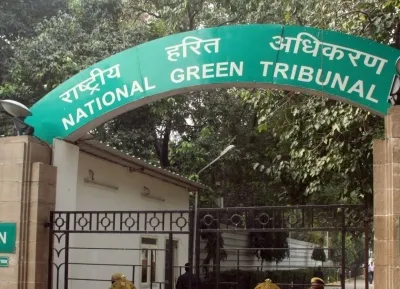
New Delhi, Dec 21 (NationPress) The National Green Tribunal (NGT) has mandated that Lucknow authorities complete the demarcation of ponds in the capital of Uttar Pradesh within six weeks, utilizing revenue records as a basis.
A panel led by Chairperson Justice Prakash Shrivastava approved a request from the Lucknow Development Authority (LDA) and the Central Pollution Control Board (CPCB) for an adjournment to facilitate this essential demarcation.
The tribunal emphasized that this demarcation should be finalized within the six-week timeframe, with a report and an affidavit to be submitted, scheduling the next hearing for March 12, 2026.
This decision followed a suo motu case initiated upon a media report revealing a concerning decline in Lucknow's groundwater levels, which have plummeted by as much as 160 feet over the past decade.
The report highlighted that in neighborhoods like Azad Nagar in Geetapalli, groundwater, which was previously accessible at 80 feet, is now found at depths nearing 240 feet.
Previously, the NGT had requested a status update on the execution of the block-wise groundwater management strategy devised by the Central Ground Water Board (CGWB) for Lucknow.
During that session, the District Magistrate and the Municipal Commissioner of Lucknow requested additional time to compile details about water bodies within the jurisdiction of the Lucknow Municipal Corporation, including the extent of encroachments and their current conditions.
The Central Ground Water Authority informed the tribunal that a National Aquifer Mapping (NAQUIM) study was performed in Lucknow district in 2021.
Based on the findings, the CGWB formulated management plans recommending actions such as artificial recharge, water conservation, and enhanced water-use efficiency to prevent further groundwater depletion.
In May 2024, the NGT took note of a press article indicating that rainwater harvesting initiatives by the Municipal Corporation and the LDA were not functioning effectively, with most residential complexes lacking adequate rainwater storage options.
Noting that the article raised significant concerns under the Environment (Protection) Act, 1986, and the Water (Prevention and Control of Pollution) Act, 1974, the tribunal initiated suo motu proceedings and issued notifications to the relevant authorities.
Point of View
It's vital for us to recognize the urgent need for effective water management strategies in Lucknow. The NGT's directive serves as a wake-up call to authorities and residents alike, emphasizing the necessity of preserving our precious water resources for future generations.
NationPress
22 Oct 2026
Frequently Asked Questions
What has the NGT directed regarding pond demarcation in Lucknow?
The NGT has ordered Lucknow authorities to complete the pond demarcation process based on revenue records within six weeks.
What prompted the NGT to take action?
The NGT took action following reports highlighting a significant drop in groundwater levels in Lucknow, with levels decreasing by 160 feet over the last decade.
What is the significance of the groundwater crisis in Lucknow?
The groundwater crisis in Lucknow poses severe risks to water availability for residents, necessitating urgent management and conservation measures.
What measures have been suggested by the CGWB?
The CGWB has recommended artificial recharge, water conservation, and improved water-use efficiency to combat the groundwater decline.
What is the timeline for the NGT's next hearing on this issue?
The NGT has scheduled the next hearing for March 12, 2026, to review the progress of the pond demarcation and groundwater management plans.