NIA attaches Srinagar property used to shelter LeT terrorists from Pakistan
Synopsis
The NIA has attached a Srinagar home that sheltered two Pakistani LeT operatives — Abu Huraira and Khubaib — and yielded explosive material and digital devices when searched in April 2026. The case lays bare a local Over Ground Worker network coordinating with Pakistan-based handlers, and signals the NIA's shift toward asset-forfeiture as a front-line counter-terror tool in J&K.
Key Takeaways
The NIA attached a property at Khasra No.
315, Danihama, Hazratbal, Srinagar on 12 October 2026 under the UAPA, 1967 .
The property belongs to accused Ghulam Mohammad Mir (alias Mama Gas ), who allegedly sheltered Pakistani LeT terrorists.
Two suspected Pakistani terrorists — Abu Huraira and Khubaib — were detected at the premises during a search on 6 April 2026 .
An explosive-like substance , digital devices, and other incriminating material were seized from the site.
The case (originally FIR No.
24/2026 , Police Station Zakoora) exposes a network of local Over Ground Workers coordinating with Pakistan-based handlers.
The NIA investigation is ongoing to identify additional OGWs, facilitators, and handler links.
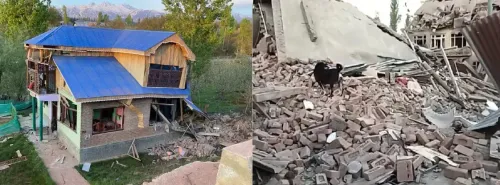
The National Investigation Agency (NIA) on Monday, 12 October 2026, attached a residential property in Srinagar's Hazratbal area that was used to shelter Pakistani operatives of the proscribed terrorist organisation Lashkar-e-Taiba (LeT). The action marks a significant step in dismantling a cross-border terror-support network operating in Jammu and Kashmir.
Property and Accused Identified
The attached property is located at Khasra No. 315, Village Danihama, Hazratbal, Srinagar, and belongs to accused Ghulam Mohammad Mir, also known as Mama Gas. The attachment was carried out under Section 25 of the Unlawful Activities (Prevention) Act (UAPA), 1967, following prior approval from the Director General, NIA. The case is registered as RC-02/2026/NIA/JMU, relating to a cross-border terrorist conspiracy involving LeT.
How the Property Was Linked to Terror Activity
A search conducted on 6 April 2026 at the Danihama premises led to the detection of two suspected Pakistani terrorists — identified as Abu Huraira and Khubaib — both reportedly associated with LeT. Investigators also recovered an explosive-like substance, digital devices, and other incriminating material from the site. The investigation established, according to the agency, a direct nexus between the property and the terror conspiracy — the premises were used for sheltering Pakistani terrorists and concealing materials connected to the network.
The Overground Worker Network
The case was originally registered as FIR No. 24/2026 on 31 March 2026 at Police Station Zakoora, Srinagar, before the NIA took it over and re-registered it. Investigators say the probe has exposed a network of local Over Ground Workers (OGWs) allegedly coordinating with Pakistan-based LeT handlers to facilitate infiltration, movement, shelter, and logistical support for Pakistani terrorists. According to the NIA, the targets included government establishments, security forces, and civilians.
What the Investigation Reveals About Ghulam Mohammad Mir
The NIA stated that Ghulam Mohammad Mir knowingly provided his residence as a safe haven for the terrorists and permitted the premises to be used to facilitate their activities. His alleged role as a facilitator underscores the pattern of local OGWs enabling Pakistani terror outfits — a recurring feature in J&K-related terror cases that investigators say requires sustained action on property and financial fronts.
Investigation Continues
The NIA said it is continuing the investigation to identify and expose the full extent of the terror-support network, including other OGWs, facilitators, and persons linked to Pakistan-based handlers. The attachment of the property signals that the agency is deploying asset-forfeiture as a tool alongside arrests, consistent with its approach in similar LeT and Jaish-e-Mohammed cases in recent years.
Point of View
Because it provides the last-mile logistics that Pakistan-based handlers cannot supply themselves. The recovery of an explosive-like substance alongside digital devices suggests the premises were operationally active, not merely a resting point. The bigger question the investigation must answer is how many more such safe houses exist, and whether the full handler chain in Pakistan can be mapped and exposed — that is where the strategic value of this case lies.
NationPress
12 Oct 2026
Frequently Asked Questions
What property has the NIA attached in Srinagar and why?
The NIA attached a residential property at Khasra No. 315, Village Danihama, Hazratbal, Srinagar, belonging to accused Ghulam Mohammad Mir, because it was used to shelter Pakistani Lashkar-e-Taiba operatives and conceal incriminating terror-related material. The attachment was carried out under Section 25 of the UAPA, 1967, with prior approval from the NIA Director General.
Who are Abu Huraira and Khubaib, the suspects found at the Srinagar property?
Abu Huraira and Khubaib are two suspected Pakistani terrorists associated with Lashkar-e-Taiba who were detected at Ghulam Mohammad Mir's Danihama residence during an NIA search on 6 April 2026. Their presence, along with explosive material and digital devices recovered at the site, directly linked the property to the cross-border terror conspiracy under investigation.
What is the role of Over Ground Workers (OGWs) in this terror network?
Over Ground Workers are local individuals who allegedly coordinate with Pakistan-based terror handlers to facilitate infiltration, movement, shelter, and logistics for Pakistani terrorists operating inside India. In this case, the NIA says the OGW network, including accused Ghulam Mohammad Mir, provided critical on-ground support that handlers based in Pakistan could not directly supply.
Under which law did the NIA attach the Srinagar property?
The property was attached under Section 25 of the Unlawful Activities (Prevention) Act (UAPA), 1967, after obtaining the requisite prior approval of the Director General, NIA. This provision allows the agency to attach property linked to terrorist activities as part of its investigative powers.
What is the current status of the NIA investigation?
The investigation is ongoing. The NIA says it is working to identify and expose the complete terror-support network, including additional OGWs, facilitators, and persons linked to Pakistan-based LeT handlers. The property attachment is one of several enforcement steps taken since the case was originally registered on 31 March 2026.