NIA arrests Mizoram drug case mastermind in ₹30.72 crore meth seizure
Synopsis
The NIA has arrested the alleged mastermind of a ₹30.72 crore methamphetamine trafficking operation from Silchar in Assam — a case that lays bare the scale of cross-border drug smuggling through Mizoram's Myanmar frontier. With five already chargesheeted and digital devices now seized from the new accused, investigators are closing in on a network that stretches from the Golden Triangle to mainland India.
Key Takeaways
NIA arrested Nurul Islam from Silchar, Assam on 16 November 2026 in connection with the ₹30.72 crore methamphetamine seizure in Mizoram .
Islam is identified as the alleged mastermind behind the cross-border trafficking of 236.33 kg of methamphetamine tablets from Myanmar .
Digital devices including mobile phones and memory cards were seized from Islam at the time of arrest.
Five accused — two from Mizoram, two from Tripura, one from Assam — were earlier chargesheeted in the same case.
Mizoram and Manipur share a combined 910-km border with Myanmar, making them key corridors for Golden Triangle narcotics.
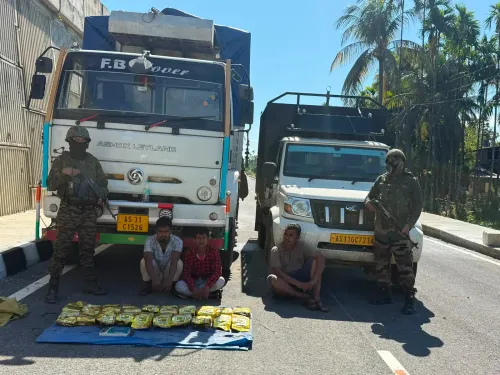
The National Investigation Agency (NIA) on Monday, 16 November 2026, arrested Nurul Islam from Silchar in southern Assam in connection with the seizure of 236.33 kg of methamphetamine tablets — valued at approximately ₹30.72 crore — from Mizoram's Champhai district in May last year. The NIA has identified Islam as the alleged mastermind behind a cross-border drug trafficking network that smuggled the contraband from Myanmar into mainland India.
Key Developments in the Arrest
During Islam's arrest in Silchar, NIA officers also seized several digital devices from his possession, including mobile phones and memory cards, which investigators believe could yield further leads into the network's operations. The case was originally registered as an FIR at the Dungtlang Police Station in Mizoram. According to the NIA, Islam's arrest is part of the agency's continuing investigation into the major narcotics haul.
Earlier in the investigation, five accused persons had already been chargesheeted — two from Mizoram, two from Tripura, and one from Assam. Investigators are now working to identify additional conspirators and dismantle the broader trafficking network.
The Champhai Corridor and Myanmar Border
The seized drugs were recovered from Champhai district, which shares a long and largely unfenced international border with Myanmar — making it one of the most vulnerable entry points for narcotics into India. According to the NIA statement, the methamphetamine tablets were trafficked through an interstate network stretching from Myanmar into Mizoram and onward into the Indian mainland.
Notably, six districts of Mizoram and five districts of Manipur share a combined 910-km-long international border with Myanmar, creating a wide and difficult-to-monitor frontier for security agencies.
Northeast India and the Golden Triangle Threat
Both Mizoram and Manipur have emerged as primary drug-trafficking corridors in Northeast India, owing to their geographical proximity to the Golden Triangle — the region spanning Myanmar, Laos, and Thailand that is globally recognised as a major hub for illicit narcotics production, particularly synthetic drugs such as methamphetamine.
The porous borders, dense forests, and challenging terrain in this region pose significant operational hurdles for law enforcement agencies attempting to intercept narcotics consignments and disrupt trafficking networks. This comes amid a broader pattern of increasing methamphetamine seizures along India's northeastern frontier in recent years.
What Happens Next
The NIA has stated that further investigation is ongoing to uncover the full extent of the conspiracy and identify other members of the network. The digital evidence seized from Islam is expected to play a crucial role in tracing communication links and financial trails within the syndicate. With the chargesheeting of five accused already complete, the agency's focus now shifts to building a case against Islam and any co-conspirators yet to be identified.
Point of View
And no amount of post-seizure enforcement fully compensates for the absence of physical border infrastructure along the 910-km Myanmar frontier. The NIA's focus on digital evidence is a welcome tactical shift, but the pattern of multiple chargesheets spread across Mizoram, Tripura, and Assam signals a fragmented, multi-state network that individual arrests will not dismantle alone. What is missing from the public record is a coherent inter-agency strategy — not just investigative response after seizures, but coordinated border management that reduces the frequency of such hauls in the first place. Until the Centre addresses the unfenced border question with political will and infrastructure investment, cases like this will keep recurring.
NationPress
16 Nov 2026
Frequently Asked Questions
Who is Nurul Islam and why was he arrested by the NIA?
Nurul Islam is the alleged mastermind behind the cross-border trafficking of 236.33 kg of methamphetamine tablets from Myanmar into mainland India. He was arrested by the NIA from Silchar in southern Assam on 16 November 2026, in connection with the ₹30.72 crore drug seizure in Mizoram's Champhai district in May of last year.
Where and when were the drugs originally seized in this case?
The 236.33 kg of methamphetamine tablets, valued at approximately ₹30.72 crore, were seized in Champhai district of Mizoram. The seizure took place in May last year, and the case was originally registered as an FIR at the Dungtlang Police Station.
How many accused have been arrested or chargesheeted so far?
Prior to Islam's arrest, five accused persons had already been chargesheeted — two from Mizoram, two from Tripura, and one from Assam. Islam's arrest adds a sixth named accused to the case; the NIA says further investigation is ongoing to identify others.
Why is Mizoram's Champhai district significant for drug trafficking?
Champhai district shares a long, largely unfenced international border with Myanmar, making it one of the most porous entry points for narcotics into India. Its proximity to the Golden Triangle — spanning Myanmar, Laos, and Thailand — makes it a preferred transit route for synthetic drugs like methamphetamine.
What is the Golden Triangle and why does it matter to India?
The Golden Triangle is a region comprising parts of Myanmar, Laos, and Thailand, long identified as one of the world's largest producers of illicit narcotics including heroin and synthetic drugs. India's northeastern states, which share a 910-km border with Myanmar, are directly in the trafficking corridor between the Golden Triangle and mainland India.