NIA raids 12 locations in 4 states in Indo-Pak arms, IED smuggling case

Synopsis
The NIA simultaneously raided 12 locations across four states on 29 May in a case rooted in a single February arrest in Amritsar — a man caught with an IED, a foreign pistol, and live ammunition. What began as a local Punjab seizure has expanded into a suspected multi-state terror network allegedly backed by cross-border handlers, with digital devices now at the centre of cracking the conspiracy wide open.
Key Takeaways
The NIA searched 12 locations across 4 states — Uttar Pradesh, Rajasthan, Bihar, and Maharashtra — on 29 May 2025 .
The case originated with an arrest by the Amritsar Special Operations Cell in February 2025 , when one accused was found with an IED, a .30 bore pistol, and 20 live cartridges .
The alleged conspiracy targeted IED blasts in Punjab, Delhi , and other parts of India to cause mass disruption.
Several digital devices were seized and will be forensically analysed to map the full terror network.
Investigators are working to identify both Indian and transnational elements behind the smuggling operation.
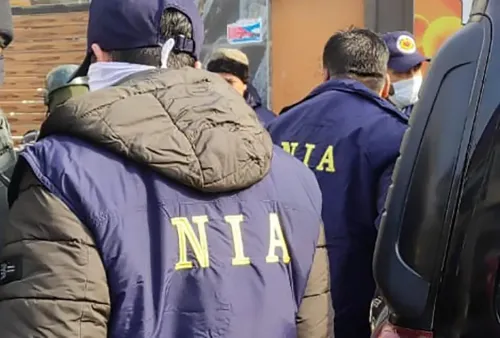
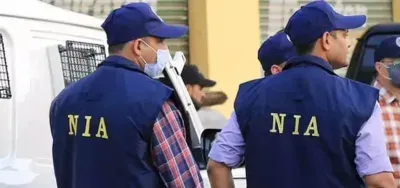
The National Investigation Agency (NIA) on Friday, 29 May conducted coordinated search operations across 12 locations in four states — Uttar Pradesh, Rajasthan, Bihar, and Maharashtra — in a cross-border arms and IED smuggling case linked to the Indo-Pakistan border. Several digital devices were seized during the operation and will be subjected to forensic analysis to unravel what investigators describe as a wider terror conspiracy.
Scope of the Searches
The searches spanned four locations in Uttar Pradesh, two in Rajasthan, two in Bihar, and three in Maharashtra, according to an official NIA statement. The coordinated nature of the operation — spread across geographically distant states simultaneously — signals that investigators believe the network extends well beyond its original point of detection in Punjab.
How the Case Originated
The case traces back to February 2025, when the Special Operations Cell of Amritsar Police arrested one individual found in possession of an improvised explosive device (IED) packed in a metallic case with a remote control set. The accused was also carrying a foreign-made .30 bore pistol with a magazine and 20 live cartridges, along with a mobile handset. A case was initially registered locally under provisions of the Bharatiya Nyaya Sanhita (BNS), the Unlawful Activities (Prevention) Act, the Arms Act, the Explosive Substances Act, and the NDPS Act.
What the NIA Investigation Revealed
After taking over the investigation, the NIA established that the cross-border smuggling was aimed at executing IED blasts at multiple locations in Punjab, Delhi, and other parts of India, with the stated objective of causing extensive damage to life and property and destabilising public order. Investigators found that the arrested accused was allegedly in contact with several individuals spread across different states to coordinate acts of terror, arson, and other violent activities.
Notably, the Friday raids were aimed at extracting communication data from the seized digital devices — information that officials say could expose the full network of accused, including both domestic and transnational elements. Efforts to identify all individuals involved in the conspiracy are ongoing, according to an NIA official.
Broader Security Context
This operation comes amid heightened security alertness along India's western border. Cross-border smuggling of arms and explosives via drone drops and courier networks has been a persistent challenge for security agencies in Punjab and Rajasthan in recent years. The NIA has in the past linked several such seizures to Pakistan-based handlers operating through proxy networks inside India. The multi-state dimension of the current case — touching states as far apart as Maharashtra and Bihar — suggests a more elaborate distribution chain than earlier intercepts.
What Comes Next
Forensic analysis of the seized devices is expected to be a critical next step, potentially leading to further arrests and the identification of transnational handlers. Investigators have indicated that the case could expand as communication trails are decoded. The NIA has not yet named additional accused publicly, and charges against any newly identified suspects will depend on the forensic findings.
Point of View
Which points to a structured distribution chain rather than an isolated local cell. What remains unanswered is the role of transnational handlers: the NIA has acknowledged their existence but has not yet named them publicly. If the seized devices yield communication links to Pakistan-based operators, this case could become a significant test of India's cross-border terror prosecution framework — one that has historically struggled to secure convictions when the principal accused are beyond jurisdictional reach.
NationPress
19 Sept 2026
Frequently Asked Questions
What is the NIA arms and IED smuggling case about?
It is a cross-border smuggling case in which arms, ammunition, and IEDs were allegedly brought into India from across the Indo-Pakistan border to carry out blasts in Punjab, Delhi, and other states. The NIA took over the case after an initial arrest by Amritsar Police in February 2025.
Where did the NIA conduct raids on 29 May 2025?
The NIA searched 12 locations across four states: four in Uttar Pradesh, two in Rajasthan, two in Bihar, and three in Maharashtra. The coordinated operation was aimed at seizing digital devices linked to the terror network.
How did the case originally come to light?
The case began in February 2025 when the Special Operations Cell in Amritsar arrested one person found carrying an IED in a metallic case with a remote control set, a foreign-made .30 bore pistol, a magazine, 20 live cartridges, and a mobile handset.
What were the alleged targets of the IED conspiracy?
According to the NIA, the cross-border smuggling was aimed at executing IED blasts at multiple locations in Punjab, Delhi, and other parts of India to cause extensive damage to life and property and disrupt public order.
What happens next in the NIA investigation?
Forensic analysis of the seized digital devices is the immediate next step, with investigators hoping to map communication between accused across the network. The NIA is also working to identify additional Indian and transnational suspects, which could lead to further arrests.