Telangana CM hails NIMS Hyderabad's 1,000 robotic surgeries
Synopsis
The Nizam's Institute of Medical Sciences, Hyderabad, has completed 1,000 robotic-assisted surgeries in under three years, with over 90% delivered free through Aarogyasri and CMRF. Chief Minister Revanth Anumula called it a transformative moment in public healthcare, crediting NIMS Director Dr. Rahul Devraj and multidisciplinary teams across urology, gastroenterology, and oncology.
Key Takeaways
NIMS Hyderabad completed 1,000 robotic-assisted surgeries in under three years , a first for a Telangana government hospital.
Over 90% of the surgeries were provided free of cost under Aarogyasri and the Chief Minister's Relief Fund (CMRF) .
The breakdown: 590 surgeries by Urology, 248 by Surgical Gastroenterology, and 162 by Surgical Oncology.
CM Revanth Anumula credited Dr.
Rahul Devraj , NIMS Director and Robotic Surgery Coordinator, along with multidisciplinary teams.
Aarogyasri , launched in 2007 , has been the backbone of Telangana's advanced-treatment coverage for below-poverty-line families since state formation in 2014 .
The milestone positions NIMS as a national benchmark for integrating robotic surgery into public tertiary care.
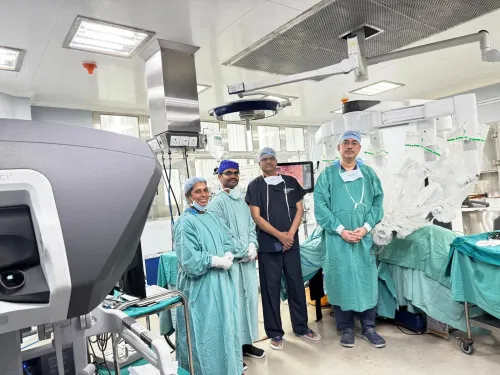
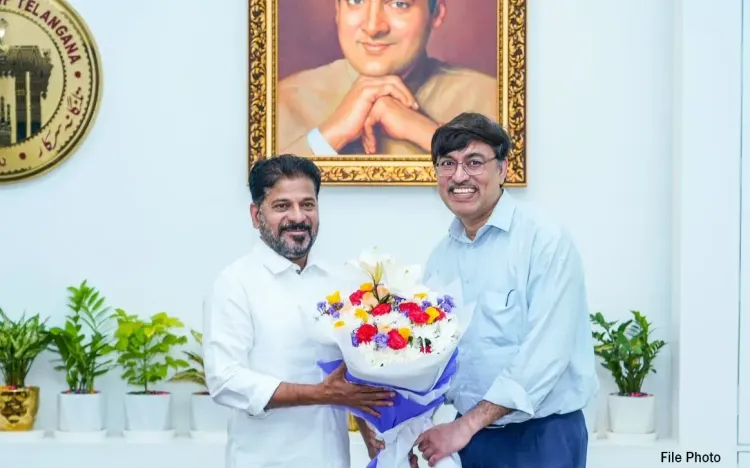
A government hospital in Hyderabad has quietly rewritten what public healthcare can look like in India. The Nizam's Institute of Medical Sciences (NIMS) has crossed 1,000 robotic-assisted surgeries in under three years — and over 90% of those procedures were delivered free of cost. On Monday, 3 August 2026, the Chief Minister's Office of Telangana announced that Chief Minister Sri Revanth Anumula has congratulated NIMS on reaching this milestone, calling it 'a transformative moment in public healthcare.'
590 urology cases, 248 gastroenterology, 162 oncology — the numbers behind the milestone
The 1,000 surgeries were not concentrated in a single department. 590 procedures were performed by the Department of Urology, 248 by Surgical Gastroenterology, and 162 by Surgical Oncology — spanning complex urological, gastrointestinal, hepatobiliary, pancreatic, colorectal, gynecological, and oncological cases. That breadth matters: it signals institutional depth, not a single-specialty showcase.
The CM specifically commended Dr. Rahul Devraj, Director of NIMS and Robotic Surgery Coordinator, along with the departments of Anaesthesiology, Nursing Services, and Operation Theatre staff. The achievement, the CM noted, reflects 'unwavering pursuit of excellence, innovation, and equitable healthcare delivery.'
Aarogyasri and the CM's Relief Fund: how the free surgeries were funded
The statistic that anchors the story is the 90%-plus free-of-cost rate. The funding pipeline runs through two channels: Aarogyasri — the state health insurance scheme that has covered catastrophic illnesses for below-poverty-line families since 2007, first in undivided Andhra Pradesh and then carried forward by Telangana after the 2014 bifurcation — and the Chief Minister's Relief Fund (CMRF). Together, they converted what is typically a premium private-hospital procedure into a routine entitlement for economically disadvantaged patients.
Robotic surgery's clinical advantages are well-documented: enhanced precision, reduced blood loss, lower postoperative pain, and faster recovery times. The challenge has always been cost. NIMS has demonstrated that the barrier is not technological — it is structural, and structures can be changed.
NIMS at 60-plus: from tertiary care to robotic frontier
NIMS, established in 1964, has long been Hyderabad's flagship government tertiary-care and medical-education institution. Integrating a robotic surgery programme into that legacy infrastructure — and scaling it to four figures in under three years — places it in a distinct category among Indian public hospitals. Several states have begun piloting robotic platforms in government facilities, but the combination of volume, departmental spread, and near-universal free access achieved at NIMS is uncommon.
Telangana's approach — routing high-end procedures through existing insurance architecture rather than building parallel premium tiers — offers a replicable model. The question the state's health planners will now face is whether this capacity can be extended to other government hospitals in the network.
Point of View
Where legacy government institutions absorb cutting-edge clinical technology and route it through welfare schemes rather than premium pricing. For CM Revanth Anumula, the announcement reinforces a welfare-forward identity that has defined his tenure since December 2023, and Aarogyasri's role here signals that the scheme's architects built it with enough flexibility to absorb future medical advances. The broader national implication is significant: if a government hospital can sustain four-figure robotic surgery volumes with near-universal free access, the argument that advanced surgical care requires privatisation loses considerable ground.
NationPress
17 Sept 2026
Frequently Asked Questions
How many robotic surgeries has NIMS Hyderabad completed?
NIMS Hyderabad has completed 1,000 robotic-assisted surgeries in under three years, spread across the departments of Urology (590), Surgical Gastroenterology (248), and Surgical Oncology (162).
Are robotic surgeries at NIMS Hyderabad free of cost?
Yes. Over 90% of the 1,000 robotic surgeries at NIMS were provided completely free of cost under the Aarogyasri health insurance scheme and the Chief Minister's Relief Fund (CMRF) , targeting economically disadvantaged patients.
What is the Aarogyasri scheme in Telangana?
Aarogyasri is a state health insurance scheme launched in 2007 in undivided Andhra Pradesh that covers catastrophic illnesses for below-poverty-line families. Telangana retained and expanded it after the state's formation in 2014 .
Who is the director of NIMS Hyderabad?
Dr. Rahul Devraj is the Director of NIMS, a Senior Professor of Urology and Renal Transplantation, and the institution's Robotic Surgery Coordinator.
What did Telangana CM Revanth Anumula say about NIMS robotic surgery?
CM Revanth Anumula described the 1,000-surgery milestone as 'a transformative moment in public healthcare,' saying it brings world-class robotic surgery within reach of patients who could never have otherwise afforded such advanced treatment.