Marathi Language Row: Nirupam Warns Against Harsh Driver Rules
Synopsis
Maharashtra's Marathi language mandate for auto-taxi drivers has ignited a political firestorm ahead of the May 1 deadline. Shiv Sena's Sanjay Nirupam is pushing back against strict enforcement, warning it could devastate thousands of low-income drivers. The row exposes a deeper tension between linguistic nationalism and constitutional rights to livelihood.
Key Takeaways
A 2019 Government Resolution (GR) mandates all autorickshaw drivers in Maharashtra to speak Marathi , with renewed push for strict enforcement by MLA Pratap Sarnaik .
Shiv Sena spokesperson Sanjay Nirupam has written to the Transport Minister urging a policy rethink, warning that rigid language tests could strip drivers of their permits and livelihoods.
Drivers failing the Marathi proficiency test face cancellation of permits and licences under the proposed enforcement framework.
MNS workers staged protests in Mira-Bhayandar against activist Gunratna Sadavarte , who has opposed the mandatory Marathi policy.
The government has set May 1 — Maharashtra Day — as the deadline for drivers to demonstrate Marathi proficiency, adding symbolic weight to the controversy.
A ministerial meeting is expected next week to deliberate on the policy, with constitutional questions around the right to livelihood likely to shape the outcome.
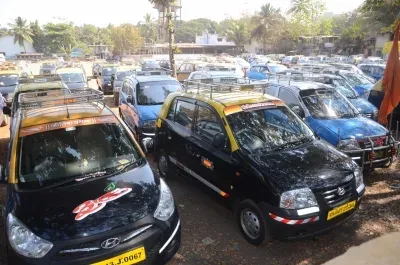
Mumbai, April 24: The Marathi language controversy in Maharashtra has reached a boiling point as Shiv Sena spokesperson Sanjay Nirupam called on the state government to strike a careful balance between promoting linguistic identity and safeguarding the economic survival of thousands of autorickshaw and taxi drivers. With a government-set deadline of May 1 — Maharashtra Day — fast approaching, the debate has moved from political chambers to the streets.
Background: The 2019 GR and Its Renewed Push
The controversy traces back to a Government Resolution (GR) issued in 2019, which made it mandatory for all autorickshaw drivers in Maharashtra to be able to speak Marathi. For years, the directive remained largely symbolic. However, MLA Pratap Sarnaik has recently pushed aggressively for its strict enforcement, including formal verification mechanisms to test drivers' language proficiency.
Under the proposed enforcement framework, drivers who fail to demonstrate adequate knowledge of Marathi could face cancellation of their permits and licences — a consequence that would effectively strip them of their only source of income. The Maharashtra Navnirman Sena (MNS) has thrown its full weight behind this crackdown, lending the issue significant political momentum.
Nirupam's Concerns: Livelihoods Over Linguistic Compliance
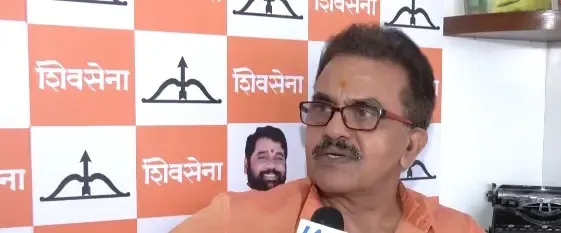
Speaking to IANS, Nirupam acknowledged that Marathi, as the official language of Maharashtra, deserves respect and that residents of the state should be encouraged to learn and use it. However, he drew a firm line against punitive enforcement that could devastate economically vulnerable communities.
"Auto and taxi drivers are not highly educated. If strict language tests are imposed and they fail, it could severely impact their ability to earn a living," Nirupam stated, calling instead for a practical approach where a basic working knowledge of Marathi is deemed sufficient for day-to-day operations.
Nirupam confirmed that he has formally written to the Transport Minister requesting a policy reconsideration. He noted that many drivers have already approached him, expressing deep anxiety about losing their livelihoods. A meeting is expected next week to deliberate further on the matter.
Political Fault Lines: Shiv Sena vs MNS on Implementation
While both Shiv Sena and MNS share a stated commitment to the promotion of Marathi, the two parties are sharply divided on how enforcement should be carried out. Nirupam acknowledged this ideological overlap but stressed that the method of implementation is where the critical difference lies.
He raised a pointed concern about selective enforcement: "Policies should not create barriers for people based on language. Every Indian has the right to work and earn a livelihood in any part of the country." He also questioned why the compliance burden appears to fall disproportionately on economically weaker sections like drivers, while larger corporations operating in Maharashtra face no comparable linguistic obligations.
This contradiction — targeting the most vulnerable workers while exempting powerful corporate entities — has not gone unnoticed by critics and opposition voices watching the situation unfold.
Ground Tensions: Protests and the May 1 Deadline
The situation has turned volatile on the ground. In the Mira-Bhayandar region, MNS workers staged aggressive protests against Gunratna Sadavarte, a lawyer-activist who has publicly opposed the mandatory Marathi policy for drivers. The demonstrations signal that the political temperature around this issue is rising sharply as May 1 draws near.
Notably, May 1 holds deep symbolic significance in Maharashtra — it marks Maharashtra Day, the anniversary of the state's formation in 1960 following the Samyukta Maharashtra movement, itself a struggle rooted in linguistic identity. Using this date as a compliance deadline adds a charged emotional dimension to what is already a sensitive policy dispute.
Broader Implications: Language, Rights, and the Right to Work
This controversy sits at the intersection of linguistic rights, constitutional freedoms, and economic justice. Article 19(1)(g) of the Indian Constitution guarantees every citizen the right to practise any profession or carry on any occupation, trade, or business. Legal experts argue that language-based permit cancellations could face constitutional scrutiny if challenged in court.
Historically, similar language-based employment disputes have emerged in states like Karnataka (Kannada job reservation debates) and Tamil Nadu, often triggering Supreme Court interventions. Maharashtra's current standoff may follow a similar trajectory if the government proceeds with rigid enforcement without legislative backing or judicial clarity.
Furthermore, Mumbai's auto-taxi sector employs hundreds of thousands of drivers, a significant proportion of whom are migrants from Uttar Pradesh, Bihar, Rajasthan, and other states. A sweeping language-based disqualification could trigger a workforce crisis in the city's public transport ecosystem, ultimately affecting millions of daily commuters.
As the May 1 deadline approaches, all eyes will be on the outcome of next week's ministerial meeting — and whether the Maharashtra government opts for pragmatic accommodation or doubles down on enforcement, potentially setting the stage for legal challenges and prolonged political conflict.
Point of View
Multinational offices, or government-private sector contracts. Nirupam's intervention is notable precisely because it comes from within the pro-Marathi camp — suggesting even ideological allies recognise that weaponising language against the poor is a political liability. With May 1 looming and a legal challenge likely, this row could ultimately land in the Supreme Court, forcing a long-overdue constitutional reckoning on language-based employment restrictions.
NationPress
19 Sept 2026
Frequently Asked Questions
What is the Marathi language controversy for auto and taxi drivers in Maharashtra?
The controversy stems from a 2019 Government Resolution mandating all autorickshaw drivers in Maharashtra to speak Marathi. A recent push for strict enforcement, including language tests and permit cancellations for those who fail, has triggered widespread protests and political debate.
What is Sanjay Nirupam's stand on the Marathi language mandate for drivers?
Sanjay Nirupam of Shiv Sena supports promoting Marathi as the state's official language but opposes harsh enforcement that could cost drivers their livelihoods. He has written to the Transport Minister urging that a basic working knowledge of Marathi be considered sufficient.
What happens to drivers who fail the Marathi language test in Maharashtra?
Under the proposed enforcement framework, drivers who fail to demonstrate Marathi proficiency could face cancellation of their permits and licences , effectively ending their ability to legally operate and earn a living.
What is the May 1 deadline for Marathi language compliance in Maharashtra?
The Maharashtra government has set May 1 — Maharashtra Day — as the deadline by which auto and taxi drivers must demonstrate proficiency in Marathi. The date carries deep symbolic significance as it marks the state's formation in 1960.
How does the MNS differ from Shiv Sena on the Marathi language driver issue?
Both MNS and Shiv Sena support promoting Marathi, but differ sharply on implementation. MNS strongly backs strict enforcement including permit cancellations, while Shiv Sena's Nirupam advocates a more lenient approach focused on basic communication skills rather than formal language testing.