Amit Shah in Vadnagar: No leader matched Modi's 25-year CM-PM record
Synopsis
Home Minister Amit Shah travelled to PM Modi's birthplace, Vadnagar, to launch a 21-day national campaign marking 25 years of Modi's unbroken tenure across two tiers of government — a milestone Shah claims no leader in independent India has matched. Six hundred bikers will ride from Vadnagar to Varanasi, threading together the birthplace and the 'karmabhoomi' in a politically charged message aimed squarely at younger voters before 7 October.
Key Takeaways
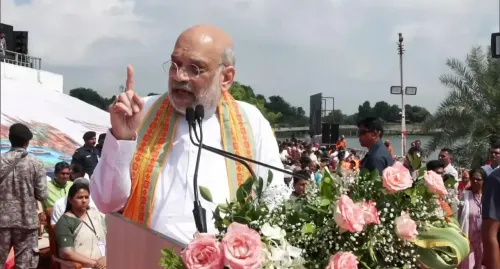
Amit Shah launched the Seva Sankalp Abhiyan at Sharmishtha Lake, Vadnagar on 17 September 2026 .
The campaign runs from 17 September to 7 October 2026 , marking PM Modi's 25 years in public life as CM and PM.
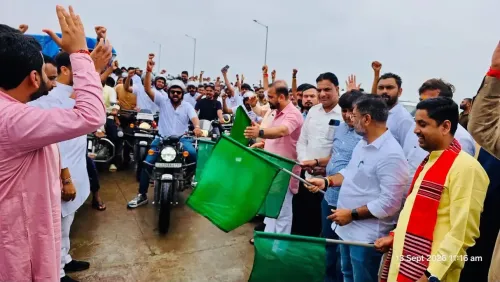
A Vadnagar-to-Varanasi bike yatra involving 600 riders across seven states was flagged off as part of the programme.
Shah claimed no political leader in independent India has served 25 continuous years as both a state chief minister and prime minister.
The BJP and NDA partners plan nationwide outreach, with the milestone date falling on 7 October .
Shah cited reforms including GST , JAM trinity , abrogation of Article 370 , and growth in airports from 75 to 150 as highlights of the period.
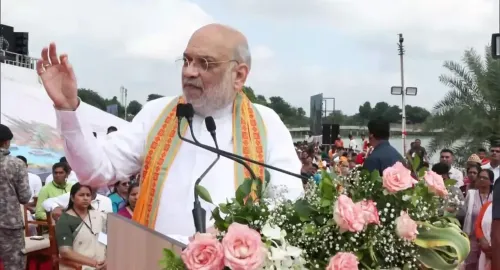
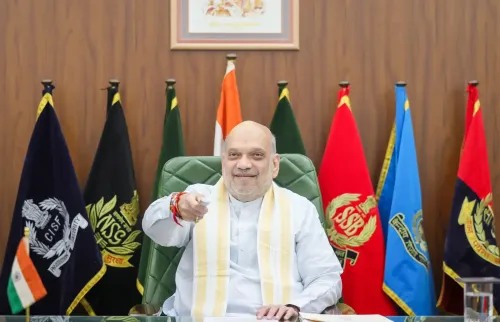
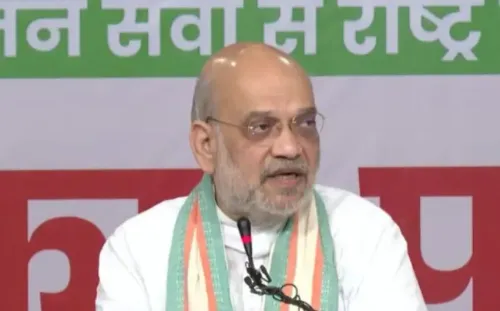
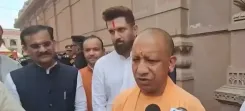
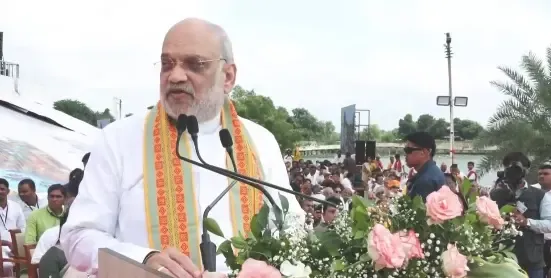
Union Home Minister Amit Shah on Thursday, 17 September 2026, declared that no political leader in independent India has completed a cumulative 25-year tenure as both a state chief minister and a prime minister — a milestone he attributed exclusively to Prime Minister Narendra Modi. Shah made the remarks at Vadnagar, Modi's birthplace in Gujarat, during the launch of the 'Seva Sankalp Abhiyan' at Sharmishtha Lake.
What the Seva Sankalp Abhiyan Is About
The campaign, running from 17 September to 7 October 2026, is designed to carry the message of PM Modi's 25 years in public life to citizens across the country. 7 October marks the date Modi first assumed charge as Chief Minister of Gujarat in 2001, making the anniversary a symbolic anchor for the programme.
As part of the launch, a Vadnagar-to-Varanasi service yatra was also flagged off, linking Modi's birthplace with his parliamentary constituency and what Shah described as his political 'karmabhoomi'. According to Shah, around 300 bikers will ride from Vadnagar and another 300 from Varanasi — totalling 600 riders — passing through villages across seven states. The journey, Shah noted, would connect Hatkeshwar Mahadev in Vadnagar with Kashi Vishwanath in Varanasi.
Shah's Claim: An Unmatched Political Record
'Since the country became independent till today, no politician has made a record of serving for 25 years as the head of a state and as the head of the country,' Shah said, describing Modi as the 'only leader' to have continuously received electoral mandates across this period.
He framed the campaign not merely as a birthday celebration but as an effort to introduce PM Modi's life and career to younger generations. The Bharatiya Janata Party (BJP) and its National Democratic Alliance (NDA) partners have collectively decided to mark the occasion at the national level, Shah added.
Before and After 2014: Shah's Account
Recounting his travels across India between 2010 and 2013, Shah said he encountered 'deep disappointment' among people, citing corruption cases, internal security concerns, and questions over external security. He described the pre-2014 period as one of 'policy paralysis.'
'When Modi ji became prime minister in 2014, and in 2026, 140 crore Indians are moving forward with enthusiasm, resolve and hope that by 2047 India will be foremost in the world,' Shah said, attributing a shift in public confidence to the subsequent period.
Shah linked this to India's economic trajectory, claiming the country had moved from what he termed the 'Fragile Five' grouping to becoming the world's fastest-growing major economy. He cited the Goods and Services Tax (GST), the Jan Dhan-Aadhaar-Mobile (JAM) trinity, and direct benefit transfers as key reforms. Banking reforms, foreign direct investment, and production-linked incentives were also named as contributors to manufacturing growth.
Infrastructure, Security and Social Measures Cited
Shah pointed to infrastructure expansion across roads, railways, airports, ports, and digital networks. He noted that the number of airports had grown from 75 to 150 and cited PM Gati Shakti as a technology-driven effort to coordinate projects with time-bound implementation.
On national security, Shah referenced the abrogation of Article 370, the abolition of triple talaq, the Citizenship Amendment Act, new criminal codes, the stated goal of making India free of Naxalism, peace agreements in the North-East, and military operations including the surgical strikes, air strikes, and Operation Sindoor.
He also credited the period with expanding opportunities for women in the armed forces, police, science, start-ups, drones, and sports, and mentioned Eklavya schools, PM Janman, and Vibrant Villages in the context of tribal welfare. Space achievements — Chandrayaan, Aditya-L1, and the naming of the Shiv Shakti Point — alongside One Rank One Pension and the creation of the Chief of Defence Staff were also listed.
Modi's Gujarat Record and the 'Gujarat Model'
Turning to Modi's tenure as Gujarat's chief minister, Shah highlighted the state's achievement of 24-hour electricity supply to villages, agricultural development, the Vanbandhu Kalyan Yojana, the Sagarkhedu development scheme, and the Vibrant Gujarat investment summits.
'This is not only a question of convenience. As soon as electricity arrived, business arrived. As soon as electricity arrived, education arrived. As soon as electricity arrived, health arrived. As soon as electricity arrived, infrastructure arrived,' Shah said, underscoring the multiplier effect of rural electrification.
He described the Vanbandhu and Sagarkhedu schemes as efforts to make development 'sarvasparshi' and 'sarvasamaveshi' — reaching tribal communities and coastal villages alike — and argued that the Gujarat model formed the basis of the political mandate Modi received nationally in 2014.
With the Seva Sankalp Abhiyan now under way, the BJP's organisational machinery is set to keep the 25-year milestone at the centre of its public messaging through the lead-up to 7 October.
Point of View
But whether the JAM trinity or PLI actually moved welfare and manufacturing needles at the scale claimed remains contested territory. Routing the yatra through seven states' villages is also a reminder that organisational reach, not just messaging, is what the BJP is testing ahead of the next round of state elections.
NationPress
17 Sept 2026
Frequently Asked Questions
What is the Seva Sankalp Abhiyan launched in Vadnagar?
The Seva Sankalp Abhiyan is a BJP-led national campaign launched on 17 September 2026 in Vadnagar, Gujarat, to mark PM Narendra Modi's 25 years in public life as both Chief Minister of Gujarat and Prime Minister of India. It runs until 7 October 2026, the date Modi first assumed charge as Gujarat CM in 2001.
What is the Vadnagar-to-Varanasi yatra and who is taking part?
The Vadnagar-to-Varanasi yatra is a bike rally flagged off as part of the Seva Sankalp Abhiyan, with around 300 riders starting from Vadnagar and 300 from Varanasi, totalling 600 bikers travelling through villages across seven states. It symbolically connects PM Modi's birthplace with his parliamentary constituency.
What record did Amit Shah claim PM Modi holds?
Shah claimed that no political leader in independent India has served 25 years as the head of both a state government and the Union government — a record he attributed solely to PM Modi. He described Modi as the 'only leader' to have continuously received electoral mandates across this period.
When does PM Modi complete 25 years in public office?
According to Shah, PM Modi completes 25 years since first becoming Chief Minister of Gujarat on 7 October 2026, which is also the concluding date of the Seva Sankalp Abhiyan campaign.
What achievements did Shah highlight during the event?
Shah cited a wide range of measures including GST, the Jan Dhan-Aadhaar-Mobile trinity, direct benefit transfers, abrogation of Article 370, military operations including Operation Sindoor, airport expansion from 75 to 150, space missions such as Chandrayaan and Aditya-L1, and Gujarat-era programmes like Vanbandhu Kalyan Yojana and 24-hour rural electrification.