Noida Sector 3 mobile network outages: employees urge TRAI drive tests

Synopsis
In Noida's Sector 3 — home to electronics, real estate, and software firms — all three major telecom operators are failing simultaneously, leaving employees without calls or data for hours. Workers are demanding TRAI replicate its Delhi drive-test model here, even as India pitches itself as a future 6G leader.
Key Takeaways
Employees in Noida's Sector 3 and adjoining Delhi border areas are reporting persistent mobile outages and call drops as of 16 July .
All three major operators — Airtel , Vodafone , and Reliance Jio — are simultaneously affected in the zone.
Workers say outages last for hours, disrupting both business operations and personal communication.
TRAI has previously conducted drive tests in Delhi's NDMC areas and Lutyens' Bungalow Zone following similar complaints.
Drive tests measure QoS parameters including Call Drop Rate , Call Setup Success Rate , and data throughput, with results published publicly.
Employees are demanding TRAI urgently extend the same drive-test exercise to the affected Noida corridor.
Employees and businesses in Noida's Sector 3 and adjoining Delhi border areas are battling persistent mobile network outages and sudden call drops across all major telecom operators — Airtel, Vodafone, and Reliance Jio — disrupting daily operations and personal communication, as of 16 July. The connectivity failures, which workers describe as increasingly routine, have prompted demands for the Telecom Regulatory Authority of India (TRAI) to urgently intervene and conduct drive tests in the affected zones.
What Employees Are Experiencing
Workers in Noida's industrial sectors say the outages are no longer occasional — they have become a predictable disruption to the working day. An employee at a private electronics company in Sector 3 said the blackouts affect calls, messaging, and social media access simultaneously across networks. 'These outages are regular now as we are unable to make calls, check social media or send SMSs and messages across telecom networks. This has impacted our daily business as well as the routine life,' the employee said, calling on TRAI to seek urgent replies from network providers.
A second worker, employed at a private real-estate software firm in the area, said connectivity loss can stretch for hours at a stretch. 'There have been days when there is no mobile network for hours, and we are unable to even connect with family and friends,' the employee said. The worker added that stepping outside to find signal pockets near the office is impractical — particularly during peak summer heat.
Scale of the Problem
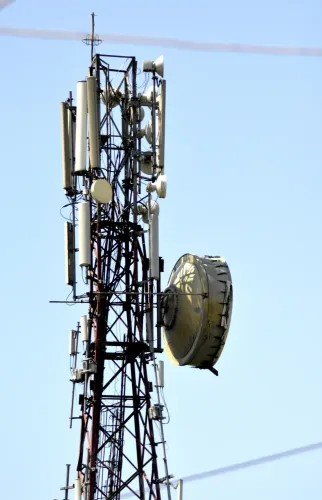
The affected zones are home to companies and firms spanning multiple industries, making mobile connectivity a direct business-continuity concern rather than a mere inconvenience. The simultaneous failure of Airtel, Vodafone, and Jio signals in the same geography suggests the issue may be structural — linked to tower density, spectrum allocation, or physical obstructions in the industrial corridor — rather than a single-operator fault.
This comes at a particularly pointed moment: India is actively pursuing 6G technology leadership on the global stage, even as urban industrial zones struggle with basic 4G voice and data reliability.
TRAI's Track Record on Drive Tests
The Telecom Regulatory Authority of India has previously responded to similar complaints. In the past, TRAI received a significant volume of consumer complaints regarding call drops and poor coverage in Delhi — particularly in New Delhi Municipal Council (NDMC) areas and the Lutyens' Bungalow Zone (LBZ). Following those complaints, the regulator held discussions with telecom service providers and conducted drive tests to assess real-time network performance.
Drive tests measure key Quality of Service (QoS) parameters including coverage, Call Drop Rate (CDR), Call Setup Success Rate (CSSR), and data download and upload throughput. Results are published to inform consumers and create accountability pressure on telecom service providers to improve their networks.
What Needs to Happen Next
Affected employees are specifically demanding that TRAI replicate the Delhi drive-test model for Noida's Sector 3 and the border areas with Delhi. The regulator has the mandate and the methodology — the question is whether it will act swiftly enough to address what workers describe as a worsening situation. Telecom operators have not yet issued a public response to the complaints from this corridor.
Point of View
Not proactive. TRAI's drive-test mechanism works — but it activates only after sustained public pressure, as the Delhi LBZ episode showed. Industrial zones like Noida Sector 3, which generate economic activity and employ thousands, should arguably be on a mandatory periodic-testing schedule, not a complaint-driven one. The irony of a country championing 6G leadership while its urban business districts lose 4G signal for hours is not lost on the workers who have to step outside in summer heat to make a phone call.
NationPress
15 Oct 2026
Frequently Asked Questions
What is causing mobile network outages in Noida Sector 3?
Employees in Noida Sector 3 are reporting simultaneous outages across Airtel, Vodafone, and Reliance Jio networks, with calls, SMS, and data all affected. The exact technical cause has not been officially confirmed, but the multi-operator nature of the failure points to possible structural issues such as tower density or spectrum gaps in the industrial corridor.
What is a TRAI drive test and why are employees demanding one?
A TRAI drive test is a real-time field assessment of mobile network quality, measuring parameters like Call Drop Rate, Call Setup Success Rate, and data upload and download speeds. Employees in Noida Sector 3 are demanding one because TRAI's drive tests in Delhi's NDMC and Lutyens' Bungalow Zone previously helped identify problems and pressured operators to improve services.
Has TRAI dealt with similar complaints before?
Yes. TRAI previously received complaints about call drops and poor coverage in Delhi, particularly in NDMC areas and the Lutyens' Bungalow Zone. The regulator held discussions with telecom service providers and conducted drive tests, publishing the results to encourage network improvements.
Which telecom operators are affected in Noida Sector 3?
All three major operators — Airtel, Vodafone, and Reliance Jio — are reportedly affected in Noida Sector 3 and the adjoining Delhi border areas. None of the operators have issued a public statement addressing the complaints as of 16 July.
Why does this matter given India's 6G ambitions?
India is actively working on 6G technology to position itself as a global innovation leader. The persistent 4G connectivity failures in an urban industrial zone like Noida Sector 3 highlight a gap between India's next-generation telecom ambitions and the ground-level reliability of existing networks.