NSCN-IM rejects India-Myanmar border fencing, vows to resist ₹31,000 crore plan

Synopsis
The NSCN-IM has drawn a hard line: the Centre's ₹31,000 crore plan to fence the 1,643-km India-Myanmar border through Naga territory will be 'resisted by all means.' With Nagaland and Mizoram governments also opposed, the fencing push is fast becoming a political flashpoint that could complicate the already-stalled Naga peace process.
Key Takeaways
NSCN-IM reiterated its opposition to border fencing through the Naga homeland on 17 August , vowing resistance 'by all means.' The group condemned the scrapping of the Free Movement Regime (FMR) as 'anti-Naga,' saying it restricts cultural and fraternal ties.
The MHA proposed replacing the FMR — which allowed visa-free movement within 16 km of the border — with a border pass system for residents within 10 km .
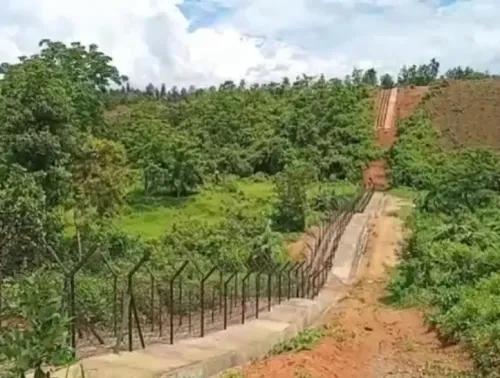
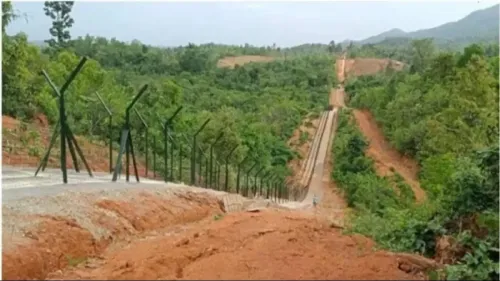
The Centre plans to fence the entire 1,643-km India-Myanmar border at a cost of ₹31,000 crore .
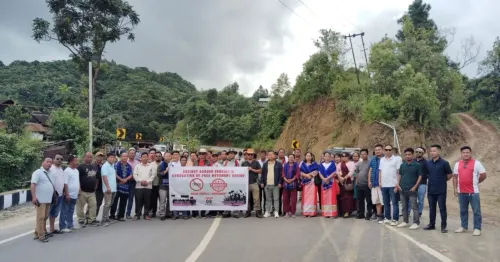
The governments of Nagaland and Mizoram , along with political parties and civil society groups, also oppose both the fencing and the FMR rollback.
NSCN-IM warned village chiefs and landowners not to accept government land compensation offers linked to the fencing project.
The Isak-Muivah faction of the National Socialist Council of Nagalim (NSCN-IM) has firmly reiterated its opposition to the Centre's proposed border fencing along the India-Myanmar frontier through the Naga homeland, warning that any such attempt would be 'resisted by all means.' The statement, issued on Sunday, 17 August, also condemned the scrapping of the Free Movement Regime (FMR) as 'anti-Naga.'
NSCN-IM's Core Position
The influential Naga group asserted that Nagas possess an inherent right to free movement within their homeland — a right they argue predates the drawing of international borders. 'Nagas have always maintained close ties with its neighbouring Naga villages before the Naga homeland was arbitrarily erected with the so-called border pillars, dismembering even the hearths of our homes which is not only outrageous but suppressive, oppressive and repressive in nature,' the NSCN-IM said in its statement.
The group drew a clear distinction between opposing all border fencing and opposing fencing specifically through Naga territory. 'Nagas are not illegal immigrants in their own land. Nagas do not object fencing elsewhere to check the influx of illegal immigrants, but at no cost will Nagas allow our homeland to be fenced/divided to serve the interest of others,' it stated.
Attack on Land Compensation Outreach
The NSCN-IM also took direct aim at what it described as the Union government's attempt to incentivise villagers with land compensation to facilitate fencing. 'The plot of Union government to entice the villagers with land compensation for fencing the border is a cheap agenda,' the group said, urging village chiefs and landowners to remain 'vigilant' and not 'succumb to such a derogatory approach.' The statement warned that 'the rights of Nagas cannot be bartered away for few dollars.'
Background: The FMR Scrapping and Fencing Plan
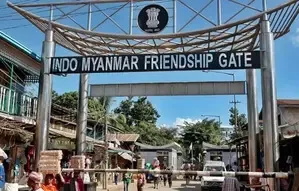
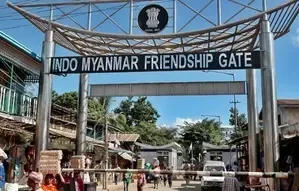
The Union Ministry of Home Affairs (MHA) announced in 2024 that the Free Movement Regime — which had allowed residents living within 16 km of the India-Myanmar border to cross without a passport or visa — would be scrapped. In its place, the MHA proposed a border pass system for residents living within 10 km on either side of the frontier.
Separately, the MHA had decided to erect fencing along the entire 1,643-km unfenced border shared by Arunachal Pradesh, Manipur, Nagaland, and Mizoram with Myanmar, at an estimated cost of ₹31,000 crore. The porous frontier has long been flagged by security agencies as a conduit for arms, ammunition, narcotics, and other contraband.
Broader Opposition in the Northeast
The NSCN-IM's resistance is not isolated. The governments of both Nagaland and Mizoram, along with a wide coalition of political parties and civil society organisations across the two states, have consistently opposed both the fencing plan and the FMR rollback. Critics argue the measures sever deep-rooted ethnic and cultural bonds that predate modern borders.
This is the latest in a series of public confrontations between Naga groups and the Centre over border policy — a fault line that intersects with the long-running Naga peace talks, which remain unresolved. How the Centre balances its security imperatives against these political sensitivities will be closely watched in the months ahead.
Point of View
000 crore fencing plan is being framed in New Delhi as a security imperative, but on the ground in Nagaland and Mizoram, it reads as a cultural severance. The NSCN-IM's hardening rhetoric — and the rare alignment between an armed group and elected state governments — signals that this is not simply a law-and-order dispute. It sits squarely in the unresolved heart of the Naga political question, and pushing fencing without a political settlement risks inflaming a peace process that has already stalled for years. The Centre's land compensation outreach, publicly labelled 'cheap' by the NSCN-IM, suggests ground-level implementation is already running into resistance — making the ₹31,000 crore figure look more aspirational than operational.
NationPress
2 Oct 2026
Frequently Asked Questions
Why is NSCN-IM opposing the India-Myanmar border fencing?
The NSCN-IM argues that fencing through the Naga homeland violates the Naga people's right to free movement within their ancestral territory, which straddles the modern India-Myanmar border. The group contends that the border itself was imposed without Naga consent, and that fencing would further 'dismember' Naga communities and cultural ties.
What is the Free Movement Regime (FMR) and why is it being scrapped?
The FMR was an arrangement that allowed residents living within 16 km of the India-Myanmar border to cross without a passport or visa. The MHA announced in 2024 that it would scrap the FMR, citing security concerns including arms smuggling and illegal cross-border movement, replacing it with a regulated border pass system for those within 10 km of the frontier.
How much will the India-Myanmar border fencing cost?
The MHA had estimated the cost of fencing the entire 1,643-km India-Myanmar border at ₹31,000 crore. The border is shared by four Northeastern states — Arunachal Pradesh, Manipur, Nagaland, and Mizoram.
Which states and groups oppose the border fencing?
The governments of Nagaland and Mizoram, along with a broad coalition of political parties and civil society organisations in both states, have opposed both the fencing and the FMR scrapping. The NSCN-IM has gone further, warning it will resist fencing 'by all means' and urging village chiefs not to accept land compensation from the Centre.
How does this affect the Naga peace process?
The NSCN-IM is one of the principal parties in the long-running Naga peace talks with the Centre, which remain unresolved. The group's hardening stance on border fencing adds a fresh point of contention to an already complex negotiation, with analysts noting that the fencing dispute intersects directly with core Naga political demands around territorial integrity.