India-Myanmar border: 16,428 passes issued under FMR/RMR regime, Assam Rifles clarifies NSF incident
Synopsis
Assam Rifles have pushed back against claims that the Naga Students' Federation delegation was blocked on identity grounds at the India-Myanmar border — the real reason, officials say, was the absence of a valid Border Pass. With 16,428 passes already issued under the new RMR framework and a ₹31,000 crore fencing project fuelling regional anger, the incident has exposed the fault line between Centre-driven border security and Northeastern communities' deep cross-border cultural ties.
Key Takeaways
16,428 Border Passes have been issued under the FMR/RMR framework for regulated cross-border movement along the India-Myanmar border .
The MHA replaced the original FMR (16-km travel without passport) in 2024 with the RMR , restricting movement to residents within 10 km of the border holding valid passes.
Assam Rifles stopped an 8-member NSF delegation at Avangkhu, Meluri district on 19 September for lacking a valid Border Pass — not due to their identity or purpose.
The NSF delegation had travelled from Kohima and could not claim automatic cross-border entitlement based on reference letters or a cultural-exchange programme.
Nagaland and Mizoram governments and civil societies strongly oppose both the FMR scrapping and border fencing.
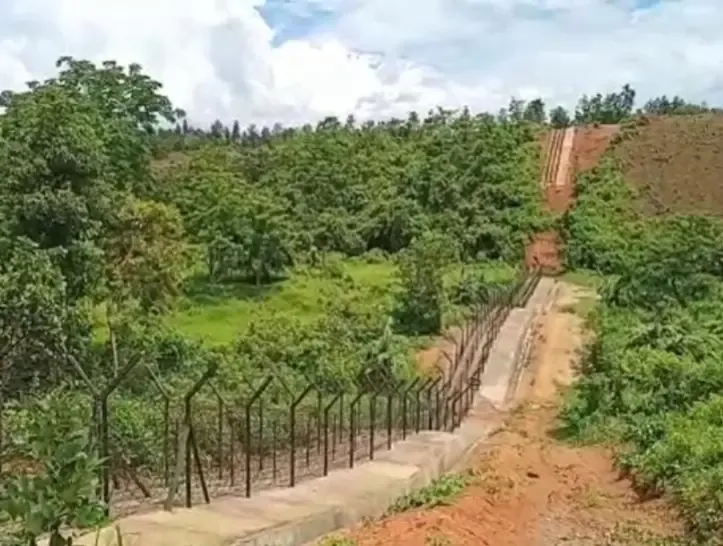
The MHA has proposed fencing the full 1,643-km India-Myanmar border at a cost of ₹31,000 crore .
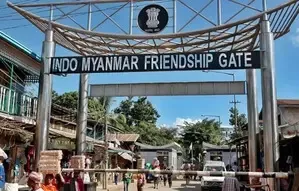
The Free Movement Regime (FMR) and its successor Regulated Movement Regime (RMR) allow eligible residents of villages within 10 km of the India-Myanmar border on either side to undertake regulated cross-border movement, officials confirmed on Monday, 21 September 2026. A total of 16,428 Border Passes have been issued to date, according to official records, underscoring that the mechanism continues to facilitate lawful people-to-people contact under prescribed conditions.
How the FMR/RMR Framework Works
The original FMR permitted border residents to travel up to 16 km into each other's territory without a passport or visa. In 2024, the Union Ministry of Home Affairs (MHA) announced the scrapping of the FMR and its replacement with the new RMR, which issues Border Passes to residents living within 10 km on either side of the frontier. Cross-border movement is now permitted only through designated crossing points and only to those holding a valid Border Pass or permission from a competent authority.
A defence spokesman emphasised that the scale of legitimate movement facilitated under the framework demonstrates that the regime is 'not intended to prevent people-to-people contact, but to regulate such movement in accordance with the prescribed conditions.'
The NSF Delegation Incident at Avangkhu
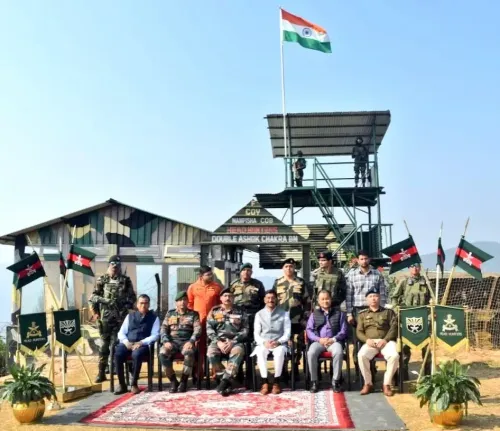
The clarification came in response to media reports alleging that the Assam Rifles stopped a delegation of the Naga Students' Federation (NSF) from crossing into Myanmar at Avangkhu in Meluri district, Nagaland, on 19 September. According to the Assam Rifles' statement, eight persons arrived at the designated crossing point in three vehicles, expressing their intention to travel to Tsera in Myanmar.
When asked to produce the required documents, the delegation was unable to furnish a valid Border Pass or permission from a competent authority. The Assam Rifles stated clearly: 'The movement of the delegation was stopped in the absence of the requisite authorisation required for crossing the international border and not on account of its identity or the stated purpose of its visit.'
The statement further noted that the NSF delegation had travelled from Kohima, the state capital, and therefore could not claim automatic entitlement to cross-border movement based solely on a proposed cultural-exchange programme or reference letters from civil organisations. 'A reference letter or recommendation from a civil organisation is not a valid document that constitutes permission to cross an international boundary,' the statement said.
Security Forces Push Back on Narrative Framing
The Assam Rifles expressed concern that the incident was being portrayed on social media and in media platforms as an attack on Naga identity, calling it an attempt to 'turn a specific border-regulation issue into a wider community-versus-security-force narrative.' Officials maintained that the issue is one of regulatory compliance rather than a denial of cultural contact or people-to-people ties.
Border Fencing and Regional Opposition
The broader policy context is contentious. The MHA had earlier decided to erect fencing along the entire 1,643-km unfenced border that Arunachal Pradesh, Manipur, Nagaland, and Mizoram share with Myanmar, at a projected cost of ₹31,000 crore. The border has long been associated with the smuggling of arms, ammunition, narcotics, and other contraband.
Both the Nagaland and Mizoram state governments, along with a significant number of political parties and civil society organisations in the two states, have strongly opposed both the border fencing and the scrapping of the original FMR. The cultural and ethnic ties of communities living across the border underpin much of this resistance.
With the regulated framework now in place and the fencing debate ongoing, how the Centre balances security imperatives with the cultural realities of Northeastern border communities will remain a defining challenge in the months ahead.
Point of View
But by framing every compliance failure as a 'narrative manipulation' problem, officials risk making themselves the story instead of the policy. The real question — whether the RMR's 10-km eligibility window and documentation requirements are actually accessible to the communities they are meant to serve — remains unanswered in every official statement.
NationPress
21 Sept 2026
Frequently Asked Questions
What is the Free Movement Regime (FMR) and how does the new RMR differ?
The original FMR allowed residents living within 16 km of the India-Myanmar border to cross without a passport or visa. In 2024, the MHA replaced it with the Regulated Movement Regime (RMR), which restricts eligible movement to residents within 10 km of the border who hold a valid Border Pass issued by a competent authority.
Why did Assam Rifles stop the Naga Students' Federation delegation at Avangkhu?
The Assam Rifles stopped the eight-member NSF delegation on 19 September at Avangkhu, Meluri district, because the delegates could not produce a valid Border Pass or official permission to cross the international border. Officials clarified the stoppage was solely a matter of regulatory compliance and was unrelated to the delegation's identity or its stated cultural-exchange purpose.
How many Border Passes have been issued under the FMR/RMR framework?
According to official records, 16,428 Border Passes have been issued to date under the FMR/RMR framework, indicating that regulated cross-border movement continues to be facilitated for eligible residents who meet the prescribed requirements.
Which states share the India-Myanmar border and what is the fencing plan?
Four Northeastern states — Arunachal Pradesh, Manipur, Nagaland, and Mizoram — share the 1,643-km unfenced border with Myanmar. The MHA has proposed erecting fencing along the entire stretch at a projected cost of ₹31,000 crore, citing smuggling of arms, narcotics, and other contraband.
Why are Nagaland and Mizoram opposing the border fencing and FMR changes?
Both state governments, along with numerous political parties and civil society organisations, argue that the fencing and scrapping of the FMR disrupt deep ethnic, cultural, and familial ties that communities on both sides of the border have maintained for generations. They view the measures as incompatible with the social realities of Northeastern border life.