NTA rejects NEET-UG 2026 OMR fraud claims, flags AI-altered sheets on social media

Synopsis
The NTA has gone public with a candidate-by-candidate rebuttal of viral NEET-UG 2026 OMR claims, alleging that AI and OCR tools were used to forge official documents. With the Public Examinations (Prevention of Unfair Means) Act, 2024 now invoked, this is the first major test of India's new anti-cheating law against digitally fabricated exam records.
Key Takeaways
The NTA on 20 July rejected viral NEET-UG 2026 OMR claims, calling circulated images 'digitally fabricated.' Avaneesh Srivastava's score of 337 marks verified; forged image inserted a fictitious identity using AI or OCR tools .
Abhay Yadav left 44 of 180 questions unattempted per official records, not 5 as he claimed; verified score is 164 marks .
Lakshya Singh's forged sheet had extra bubbles digitally shaded; verified score is 116 marks from 54 attempts .
Arya Singh's forged image altered an invigilator's signature time from 3:45 PM to 2:45 PM ; verified score is 167 marks .
NTA warned that circulating forged OMRs is an offence under the Public Examinations (Prevention of Unfair Means) Act, 2024 .
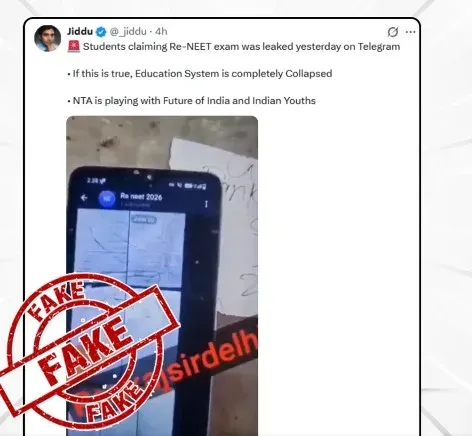
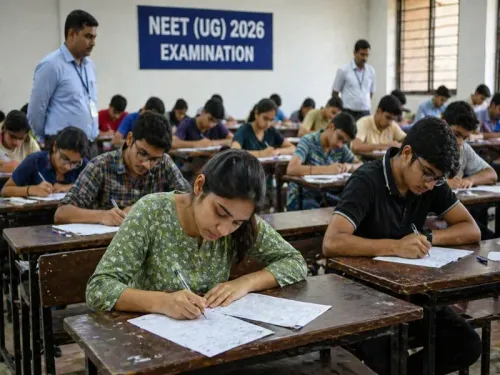
The National Testing Agency (NTA) on Monday, 20 July categorically rejected viral claims by several NEET (UG) 2026 candidates alleging discrepancies in their OMR answer sheets and declared scores, stating that the images circulating on social media were digitally fabricated and bore no resemblance to official records held by the agency.
Key Allegations Dismissed
The NTA addressed four specific candidates by name and application number, verifying each case against its on-file records. In the case of Avaneesh Srivastava (Application No. 260411198880, Roll No. 2001805051), the agency said the genuine OMR sheet — complete with the candidate's personal details, signature, thumb impression, and invigilator signatures — was on record and had also been emailed to him during the OMR Response Key challenge window.
The NTA noted that the viral image inserted a fictitious identity — 'Ajeet Singh, son of Shri Lakhan Singh and Smt. Reena Singh' — which does not correspond to any registered NEET (UG) 2026 candidate. The agency described the circulated image as 'a digitally regenerated version of the candidate's own genuine OMR sheet,' with identity fields overwritten using AI or OCR-based tools. Srivastava's verified score of 337 marks remains unchanged.
Candidate-by-Candidate Rebuttal
In the case of Abhay Yadav (Application No. 260411367191), who publicly claimed only 5 questions were left unanswered and that he deserved 634 marks, the NTA's records told a different story. According to the agency, 44 of 180 questions were left unattempted, and the OMR sheet and calculation sheet on file are 'mutually consistent.' Yadav's verified score stands at 164 marks.
For Lakshya Singh (Application No. 260412053016), the NTA said the circulated image showed 'additional bubbles shaded in by digital means to create a forged OMR sheet.' Official records show Singh attempted 54 of 180 questions, answered 34 correctly and 20 incorrectly, leaving 126 unattempted. His verified score is 116 marks.
The agency also addressed claims by Arya Singh (Application No. 260410434102), pointing to a specific alteration: the recorded time of an invigilator's signature had been changed from 3:45 PM on the genuine sheet to 2:45 PM on the forged version. The NTA noted 'several other markings of digital alteration' on the circulated image. Singh's verified score of 167 marks stands as declared.
NTA's Broader Warning
Addressing the wider controversy, the agency stated that 'the genuine OMR of every candidate concerned is on record with NTA,' and that the images being shared as the 'correct' OMR are 'digitally fabricated documents not issued by NTA.'
The NTA invoked the Public Examinations (Prevention of Unfair Means) Act, 2024, warning that creating or circulating forged OMR sheets is a criminal offence and that action could be taken against those generating or sharing such documents.
Context and What Comes Next
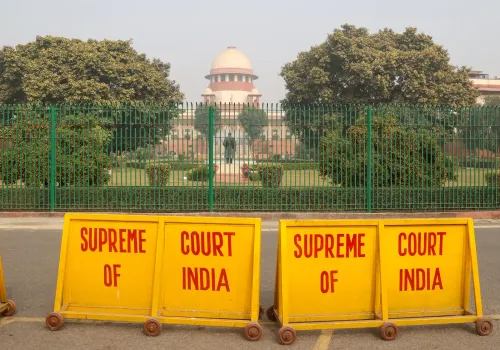
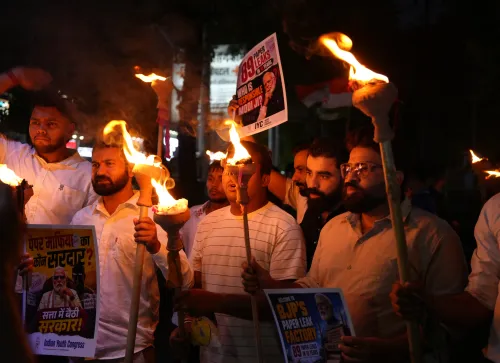
This is not the first time NEET has been at the centre of a controversy involving alleged paper or result manipulation. The 2024 NEET-UG cycle saw widespread protests over alleged irregularities, leading to a Supreme Court review and eventual re-examination in some centres. The 2026 edition's OMR controversy, however, appears to involve a new dimension — the use of AI tools to fabricate documents — raising questions about the sophistication of misinformation targeting high-stakes public examinations.
Candidates who believe their scores are incorrect retain the option of pursuing the official challenge mechanism. The NTA has not yet indicated whether it will file formal complaints against those identified as circulating forged documents, but its public warning signals that legal action remains on the table.
Point of View
Candidate-specific rebuttal is a departure from the agency's historically opaque crisis communications — and that shift matters. By naming applicants and publishing application numbers, the agency is betting that transparency will blunt the viral momentum of forged documents. What is underreported, however, is the implications of AI-generated exam fraud at scale: if OCR and image-manipulation tools can convincingly alter OMR sheets, the NTA's paper-based verification process may need a structural rethink. The invocation of the 2024 Act is significant, but its deterrent value depends entirely on whether prosecutions actually follow — something India's exam-integrity enforcement record does not yet guarantee.
NationPress
20 Oct 2026
Frequently Asked Questions
Why did the NTA reject NEET-UG 2026 OMR claims?
The NTA rejected the claims because its on-file records did not match the OMR images circulating on social media. After verifying four named candidates, the agency found that scores were accurately declared and that the viral images had been digitally fabricated using AI or OCR-based tools.
Which NEET 2026 candidates were named by the NTA?
The NTA named Avaneesh Srivastava, Abhay Yadav, Lakshya Singh, and Arya Singh. Each candidate's application number was cited, and their verified scores — 337, 164, 116, and 167 marks respectively — were confirmed as unchanged.
What law covers forged OMR sheets in India?
The Public Examinations (Prevention of Unfair Means) Act, 2024 criminalises the creation or circulation of forged OMR answer sheets. The NTA has warned that action can be taken against anyone involved in generating or sharing such documents.
How were the NEET 2026 OMR sheets allegedly forged?
According to the NTA, the forged images were digitally regenerated versions of genuine OMR sheets, with identity fields overwritten and additional answer bubbles shaded in using AI or OCR-based tools. In one case, an invigilator's recorded signature time was altered from 3:45 PM to 2:45 PM.
What can NEET 2026 candidates do if they dispute their scores?
Candidates who genuinely believe their scores are incorrect can use the NTA's official OMR Response Key challenge mechanism. The agency has stated that genuine OMRs are on file and were emailed to candidates during the designated challenge window.