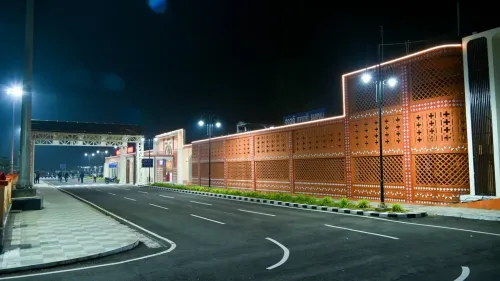
Odisha CM Office: 7 Stations Under Amrit Scheme Redevelopment
Synopsis
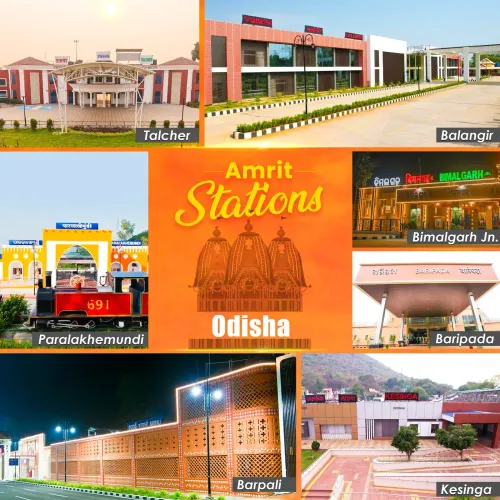
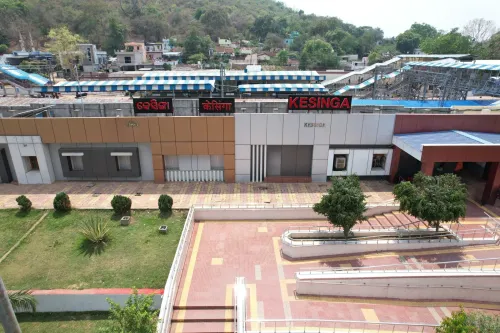
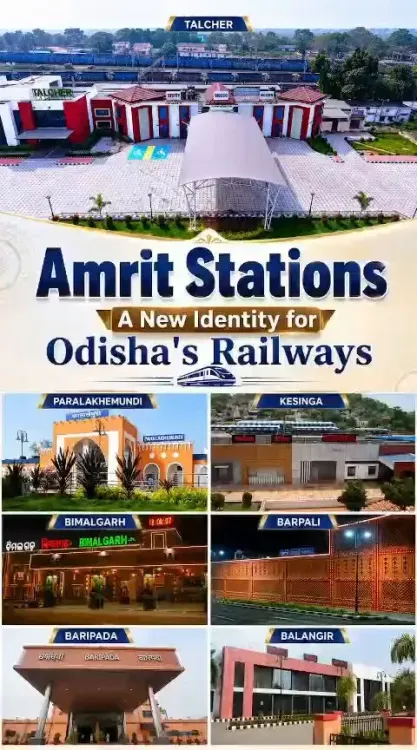
The Chief Minister's Office of Odisha on 17 July 2026 announced that seven stations — Talcher, Kesinga, Balangir, Paralakhemundi, Barpali, Bimalgarh and Baripada — are being redeveloped under the central government's Amrit Bharat Station Scheme to modernise passenger amenities and reflect the state's cultural identity.
Key Takeaways
Seven Odisha stations — Talcher, Kesinga, Balangir, Paralakhemundi, Barpali, Bimalgarh and Baripada — are under redevelopment under the Amrit Bharat Station Scheme .
The scheme was launched in Union Budget 2023-24 by the Ministry of Railways to upgrade more than 1,300 stations nationwide.
Station designs are intended to incorporate Odisha's architectural and cultural identity alongside functional passenger amenities.
The redevelopment covers geographically diverse districts, from the industrial hub of Talcher to the tribal and agricultural belt of Balangir .
The CMO tagged @PMOIndia , underscoring active centre-state coordination on the infrastructure programme.
Completion timelines and inauguration schedules for the seven stations remain to be announced officially.
The Chief Minister's Office of Odisha on Friday, 17 July 2026 highlighted the ongoing redevelopment of seven railway stations — Talcher, Kesinga, Balangir, Paralakhemundi, Barpali, Bimalgarh and Baripada — under the Amrit Bharat Station Scheme, tagging the Prime Minister's Office as a mark of centre-state coordination on the initiative.
Context
The CMO's post describes the redevelopment as reflecting 'Odisha's continued progress towards modern, efficient and passenger-centric railway infrastructure.' The seven stations span multiple districts across the state, from the industrial belt of Talcher in Angul district to the coastal town of Baripada in Mayurbhanj, signalling a geographically broad push to upgrade passenger facilities. The post also emphasises that the stations are designed to 'showcase Odisha's architectural and cultural identity,' indicating that heritage aesthetics are a stated design goal alongside functional improvements.Policy Backdrop
The Amrit Bharat Station Scheme was announced in the Union Budget 2023-24 by the Ministry of Railways with the aim of redeveloping more than 1,300 stations across India. The scheme prioritises upgraded passenger amenities — better waiting halls, improved lighting, accessible facilities — alongside architectural elements drawn from local culture and heritage. Odisha stations were included in the initial lists released by the Ministry of Railways in 2023, placing the state among the early beneficiaries of the phased national programme. The scheme is funded primarily through the central government, with state administrations playing a coordinating role in execution and communication.Stakeholders and Impact
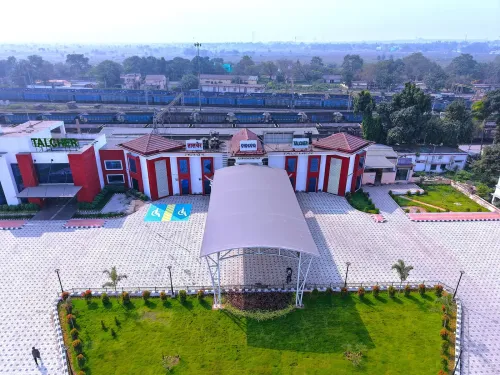
The redevelopment directly benefits rail passengers across western, northern and coastal Odisha who rely on these stations for daily commutes, agricultural trade and access to health and education services. Balangir, a district in western Odisha, serves tribal and farming communities for whom rail connectivity is a primary mode of long-distance travel. Talcher, as an industrial hub linked to coal transport, sees heavy passenger and freight movement, making its station upgrade significant for both workers and logistics operators. Local businesses around each station stand to gain from increased footfall and improved infrastructure that the scheme is designed to catalyse. The CMO's framing of the initiative as supporting 'inclusive growth and infrastructure-led development' aligns the station upgrades with Odisha's broader economic development narrative.What's Next
Completion milestones and inauguration schedules for the seven stations will be closely watched by residents and officials in the respective districts. As the Amrit Bharat Station Scheme continues its phased rollout nationally, subsequent lists may add further Odisha stations, deepening the state's participation in the programme. The tagging of @PMOIndia in the post suggests the state government is keen to maintain visibility of Odisha's progress within the national scheme, potentially ahead of formal inauguration events. The emphasis on cultural identity in station design also points to a longer-term effort to position Odisha's infrastructure as a reflection of its distinct heritage.Point of View
The state government signals cooperative federalism while also claiming a share of the political credit for a centrally funded programme. The emphasis on cultural identity in station design reflects a broader pattern across Indian states of using infrastructure projects as vehicles for regional soft power. Watching whether formal inaugurations follow before the next electoral cycle will reveal how much of this is governance communication versus political positioning.
NationPress
16 Oct 2026
Frequently Asked Questions
What is the Amrit Bharat Station Scheme?
The Amrit Bharat Station Scheme is a Ministry of Railways initiative announced in Union Budget 2023-24 to redevelop more than 1,300 railway stations across India with modern passenger amenities and designs inspired by local cultural heritage.
Which Odisha stations are being redeveloped under the Amrit Bharat scheme?
The Chief Minister's Office of Odisha confirmed on 17 July 2026 that Talcher, Kesinga, Balangir, Paralakhemundi, Barpali, Bimalgarh and Baripada are among the stations being redeveloped under the scheme.
When will the Odisha stations under the Amrit Bharat scheme be completed?
Official completion timelines and inauguration schedules for the seven Odisha stations have not been announced publicly as of the CMO's post on 17 July 2026 .
Who funds the Amrit Bharat Station Scheme in Odisha?
The scheme is funded primarily by the central government through the Ministry of Railways , with the state government playing a coordinating role in execution and stakeholder communication.
What amenities will the redeveloped Odisha stations have?
According to the CMO's post and the scheme's stated objectives, the redeveloped stations will feature improved passenger amenities, better connectivity infrastructure, and architectural designs that reflect Odisha's cultural and heritage identity .