Odisha Assembly Monsoon session disrupted over MMDR Act, textbook errors
Synopsis
The Odisha Assembly's Monsoon session was barely underway before it was derailed twice in a single day — Congress demanding repeal of the MMDR Amendment Act over alleged financial losses to the state, and the BJD calling for a minister's resignation over school textbook errors. With street protests reinforcing legislative disruption, the ruling BJP faces a coordinated pressure campaign on two fronts simultaneously.
Key Takeaways
The Odisha Assembly Monsoon session opened on 22 September 2026 and was adjourned twice due to Opposition protests.
Congress demanded the immediate repeal of the MMDR Amendment Act , alleging financial loss to the state.
BJD demanded the resignation of School and Mass Education Minister Nityananda Gond over errors in school textbooks.
Opposition Chief Whip Pramila Mallik called for recovery of excess public funds spent on reprinting faulty textbooks.
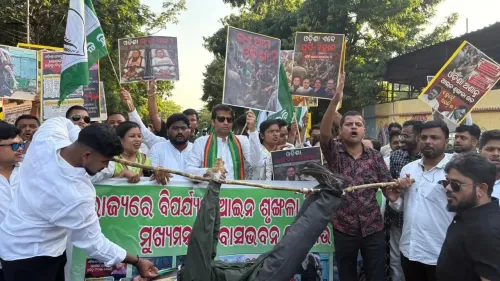
BJD members also took their protest to the streets at Lower PMG, Bhubaneswar , alongside students' and youth wings.
BJP MLA Tankadhar Tripathy said the government is ready for discussion and urged members to trust the Speaker's process.
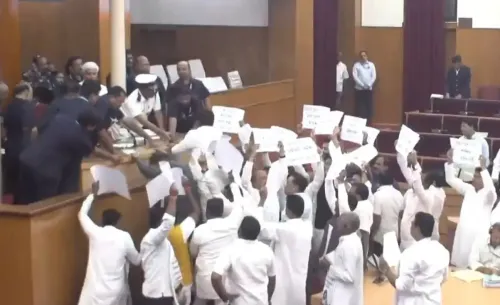
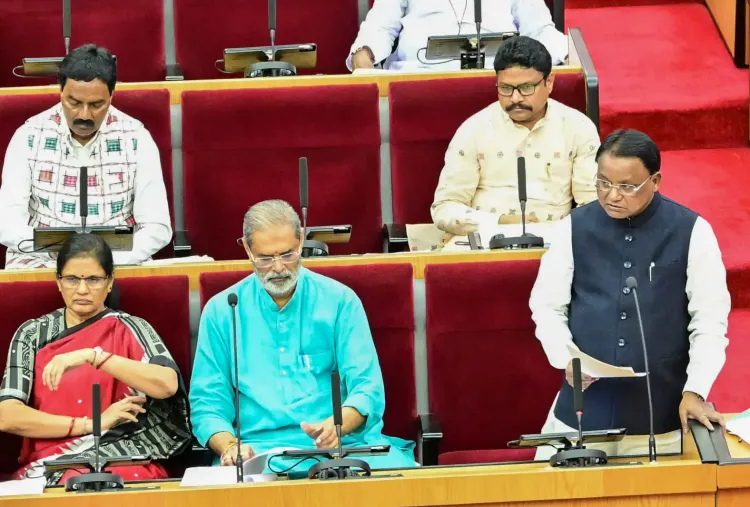
The Odisha Legislative Assembly's Monsoon session was disrupted on Tuesday, 22 September 2026, as members of the Opposition Biju Janata Dal (BJD) and Congress stormed the Well of the House, raising slogans against the ruling Bharatiya Janata Party (BJP) government over two contentious issues: the Mines and Minerals (Development and Regulation) Amendment Act and alleged errors in state school textbooks. The session was adjourned twice within hours of commencing, underscoring the sharp political fault lines that have emerged in Odisha since the BJP came to power.
Session Opens With Condolence Motion
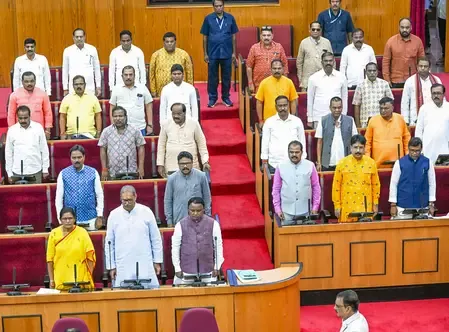
Proceedings began on a sombre note, with Chief Minister Mohan Charan Majhi moving a condolence motion in memory of six former members of the House who passed away recently, as well as more than 1,000 people who lost their lives in a recent tragedy in Nepal. The motion was seconded by Leader of Opposition and BJD President Naveen Patnaik, Congress Legislative Party (CLP) Leader Rama Chandra Kadam, and the CPI-M legislature party leader, among others.
Speaker Surama Padhy conveyed the House's sympathies to the bereaved families, and members observed a one-minute silence in memory of the departed. The brief moment of unity, however, did not last beyond the start of Question Hour.
Opposition Storms the Well Over Two Key Issues
As soon as Question Hour commenced, Opposition members carrying banners and placards surged toward the Speaker's podium, raising anti-government slogans. The protest centred on two distinct but equally charged demands.
Congress MLAs demanded the immediate repeal of the MMDR Amendment Act, with Odisha Pradesh Congress Committee President Bhakta Charan Das alleging that the legislation had caused a significant financial loss to the state. Das said the Congress would sustain its Assembly protest until the Act is struck down.
BJD legislators, meanwhile, demanded the resignation of School and Mass Education Minister Nityananda Gond over errors found in state school textbooks, alleging that the government had failed to act for six months and was now making cosmetic corrections only because the Assembly was in session.
Opposition Chief Whip Calls Out Government Inaction
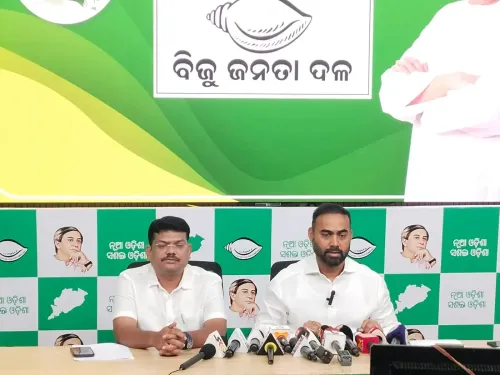
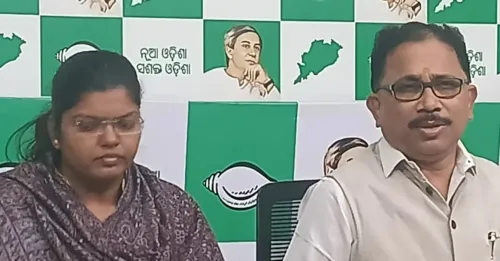
Opposition Chief Whip Pramila Mallik told reporters that the state government had been 'playing with the future of children.' She alleged that the authorities had distributed corrected textbooks in select areas only ahead of the session, to deflect accountability.
'We have placed our demand, and if the state government agrees to it, we will allow the House to function. Let the government first agree to our demand and ensure that School and Mass Education Minister Nityananda Gond resign for playing with the future of the children. We have been demanding the resignation of the Minister. If the government ensures the recovery of the additional amount spent from the public exchequer on the publication of new textbooks, we will call off our protest,' Mallik said.
Beyond the Assembly, BJD leaders joined street protests by the party's students' and youth wings at Lower PMG in Bhubaneswar, demanding the minister's resignation — a sign that the party is taking the issue beyond legislative chambers.
House Adjourned Twice; BJP Defends Government
Speaker Padhy first appealed to the protesting members to return to their seats and allow Question Hour to proceed, but the plea went unheeded. She adjourned the House till 1:10 pm. When the session reconvened, the Opposition maintained its agitation, forcing a second adjournment till 4 pm.
BJP MLA Tankadhar Tripathy defended the government's posture, saying the administration was 'ready for every kind of discussion in the Assembly and is prepared to give answers.' He added that the Speaker would determine under which rule each issue would be taken up, and urged members to trust the process. Tripathy also alleged that disrupting proceedings without allowing debate was 'not in the interest of democracy.'
What's Next for the Session
The Monsoon session has several pieces of legislation and questions on the agenda, but with the Opposition showing no signs of relenting on either the MMDR Act or the textbook controversy, further disruptions are likely. The government has not publicly committed to any inquiry or recovery of the alleged excess expenditure on reprinted textbooks, and the Congress has made repeal of the MMDR Amendment Act a non-negotiable condition. How Speaker Padhy navigates these dual flashpoints will shape the productivity of the rest of the session.
Point of View
If forced, would be the first major scalp for the combined Opposition since the 2024 elections. What mainstream coverage underplays is the financial accountability angle: neither the government nor the Opposition has put an independent audit figure on the MMDR losses or the textbook reprint costs, which makes the legislative noise harder to resolve through facts alone.
NationPress
22 Sept 2026
Frequently Asked Questions
Why was the Odisha Assembly Monsoon session adjourned on 22 September 2026?
The session was adjourned twice — first till 1:10 pm and then till 4 pm — after Opposition members from the BJD and Congress stormed the Well of the House demanding repeal of the MMDR Amendment Act and the resignation of School and Mass Education Minister Nityananda Gond over school textbook errors. Speaker Surama Padhy's appeals for order went unheeded on both occasions.
What is the MMDR Amendment Act controversy in Odisha?
The Mines and Minerals (Development and Regulation) Amendment Act, referred to as the MMDR Amendment Act 2026, is alleged by the Congress to have caused significant financial loss to Odisha. Odisha Pradesh Congress Committee President Bhakta Charan Das has demanded its repeal and said the party will continue protests until it is struck down.
What are the school textbook errors that the BJD is protesting about?
The BJD has alleged that school textbooks distributed in Odisha contained errors, and that the state government failed to act for six months. Opposition Chief Whip Pramila Mallik alleged that corrected books were distributed in some areas only ahead of the Assembly session, and demanded recovery of excess public funds spent on reprinting.
Who are the key figures in the Odisha Assembly controversy?
Key figures include Chief Minister Mohan Charan Majhi (BJP), Leader of Opposition and BJD President Naveen Patnaik, Congress Legislative Party Leader Rama Chandra Kadam, Opposition Chief Whip Pramila Mallik, OPCC President Bhakta Charan Das, and School and Mass Education Minister Nityananda Gond, whose resignation the BJD is demanding.
What is the BJP's response to the Opposition protests in the Odisha Assembly?
BJP MLA Tankadhar Tripathy said the government is 'ready for every kind of discussion in the Assembly and is prepared to give answers,' and urged members to trust the Speaker's judgment on procedural rules. He alleged that disrupting proceedings without allowing debate was not in the interest of democracy.