Gujarat pilots Nari Adalats in 10 tribal gram panchayats under Mission Shakti
Synopsis
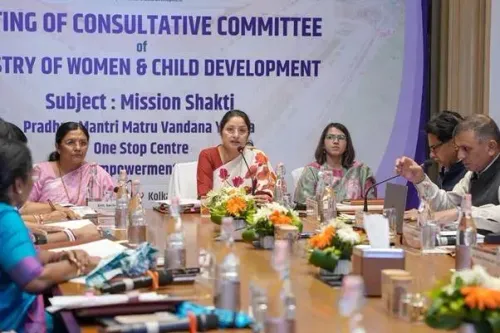
Gujarat is taking its Nari Adalat model — which has resolved over 99% of roughly 45,000 cases at district and taluka level — into tribal villages for the first time. The 10-Panchayat pilot under Mission Shakti, each led by a woman Sarpanch, is a deliberate bet that local justice access can be most transformative where formal institutions are furthest away.
Key Takeaways
Gujarat is launching a Nari Adalat pilot at the Gram Panchayat level in 10 tribal districts under the Centre's Mission Shakti scheme.
All 10 selected Gram Panchayats are led by women Sarpanches , spanning districts including Narmada , Dahod , Mahisagar , Chhota Udepur , Aravalli , and Banaskantha .
Around 270 Nari Adalats currently operate across Gujarat at district and taluka levels, having resolved over 44,800 of approximately 45,000 cases — a resolution rate above 99% .
The pilot is being implemented under Women and Child Development Minister Manisha Vakil .
The Gujarat State Commission for Women proposed the 10 Panchayats; results will be assessed to guide a potential wider rural rollout.
Gujarat is set to extend its Nari Adalat grievance redressal network to the grassroots level, launching a pilot programme across 10 tribal Gram Panchayats under the Centre's Mission Shakti scheme. The initiative, announced on 22 September 2026, brings the women-centric alternative justice mechanism — previously operating only at district and taluka levels — directly into villages, with all 10 selected Panchayats led by women Sarpanches.
What the Pilot Covers
The 10 Gram Panchayats selected for the pilot span tribal districts across the state: Garudeshwar and Chikda in Narmada; Singvad, Limdi, and Kaliya in Dahod; Kothamba in Mahisagar; Kadwal in Chhota Udepur; Radhanesda in Vav-Tharad; Shamalpur in Aravalli; and Jalotra in Banaskantha. The Gujarat State Commission for Women proposed the shortlist, which the state government then formally approved.
The women Sarpanches helming these Panchayats are Sarojben Babubhai Vasava (Garudeshwar), Lataben Mahendra Vasava (Chikda), Lakhi Balubhai Vahonia (Singvad), Sheela Vijaykumar Mori (Limdi), Pushpa Bhavin Machhar (Kaliya), Nita Vishalkumar Patel (Kothamba), Ujli Hamsingh Rathwa (Kadwal), Laxmi Devji Koli (Radhanesda), Sangeeta Mahendra Patel (Shamalpur), and Galbi Mahesh Chaudhary (Jalotra).
How Nari Adalats Work
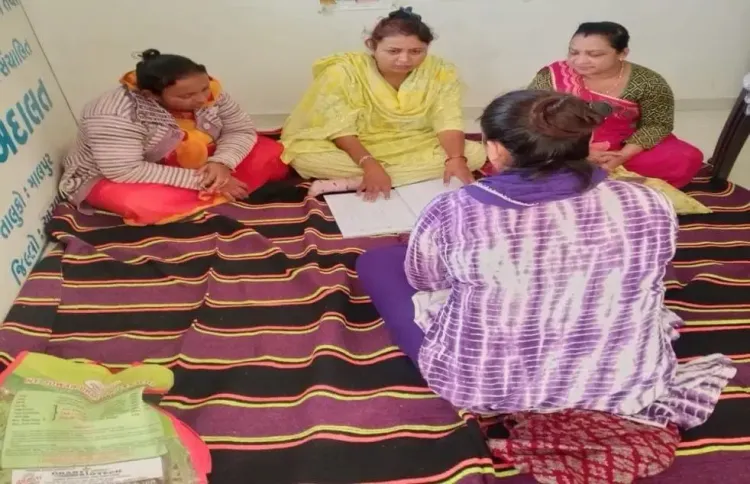
Under the Mission Shakti framework, Nari Adalats function as an alternative grievance redressal mechanism relying on negotiation, mediation, and reconciliation with mutual consent — providing women with low-cost, accessible avenues without the procedural burden of formal courts. The state government resolution framing the initiative describes them as an alternative justice mechanism designed to be both approachable and locally rooted.
The pilot is being implemented under the guidance of Women and Child Development Minister Manisha Vakil. Priority was given to tribal districts with the stated aim of reaching women in rural and remote areas who face the greatest barriers to conventional legal recourse.
Track Record at District and Taluka Level
Gujarat currently has around 270 Nari Adalats functioning at the district and taluka levels. These bodies have collectively received approximately 45,000 cases, of which around 44,800 — more than 99% — have been resolved or settled, according to the state government. The state government cited this resolution rate as the basis for scaling the mechanism down to the Panchayat level.
Notably, Gujarat has maintained an institutional framework for Nari Adalats at the state, district, and taluka levels for several years, making this village-level extension a natural progression rather than a structural overhaul.
What Happens Next
The state government has indicated that outcomes from the 10-Panchayat pilot will be assessed before any wider rural rollout. The experience gathered is expected to inform how the initiative is scaled across Gujarat's broader tribal and rural belt. The convergence of women-led Panchayats with the Nari Adalat mechanism is intended to reinforce both pillars — administrative representation and local justice access — simultaneously.
Point of View
But it will face a sterner test in villages where social pressure, power hierarchies, and limited legal literacy can skew 'mutual consent' outcomes. The critical question the pilot must answer is not whether cases get 'resolved', but whether the resolutions hold and whether the most vulnerable women — those with the least social capital — are the ones initiating them.
NationPress
22 Sept 2026
Frequently Asked Questions
What are Nari Adalats and how do they work?
Nari Adalats are women-centric alternative grievance redressal forums operating under the Centre's Mission Shakti scheme. They resolve disputes through negotiation, mediation, and reconciliation with mutual consent, offering women a low-cost and accessible avenue outside the formal court system.
Which Gram Panchayats have been selected for the Nari Adalat pilot in Gujarat?
The 10 selected Panchayats are Garudeshwar and Chikda (Narmada), Singvad, Limdi and Kaliya (Dahod), Kothamba (Mahisagar), Kadwal (Chhota Udepur), Radhanesda (Vav-Tharad), Shamalpur (Aravalli), and Jalotra (Banaskantha). All are located in tribal districts and are led by women Sarpanches.
Why has Gujarat prioritised tribal districts for this pilot?
The state government has stated that the aim is to ensure women in rural and tribal areas — who face greater barriers to formal legal recourse — have access to a local mechanism for resolving grievances. Tribal districts were given priority precisely because institutional access there is most limited.
What is the track record of Nari Adalats in Gujarat so far?
Around 270 Nari Adalats functioning at the district and taluka levels have collectively received approximately 45,000 cases, of which over 44,800 — more than 99% — have been resolved or settled, according to the state government. This record was cited as the basis for expanding the mechanism to the village level.
What happens after the pilot concludes?
The state government has said the experience of the 10 pilot Panchayats will be assessed before any broader rural rollout. The findings are expected to guide future implementation of Nari Adalats at the Gram Panchayat level across Gujarat's tribal and rural regions.