SC seeks Allahabad HC report on Lakhimpur Kheri trial judge conduct
Synopsis
The Supreme Court has escalated concerns about the Lakhimpur Kheri trial — flagging a judge who allegedly took up cases from other courts, issued a non-bailable warrant against a sick eyewitness, and presided over a missing site plan. With the Allahabad HC now tasked to investigate and report in a sealed cover, the fairness of one of India's most politically sensitive criminal trials is under direct judicial scrutiny.
Key Takeaways
The Supreme Court on 22 September directed the Allahabad High Court to investigate allegations against the trial judge in the 2021 Lakhimpur Kheri violence case .
A bench led by CJI Surya Kant sought the high court's report in a sealed cover .
Advocate Prashant Bhushan alleged the trial judge issued a non-bailable warrant against an ill eyewitness and that a key site plan had gone missing from court records.
The court directed the Uttar Pradesh government to submit details of a senior, experienced prosecutor to handle the case.
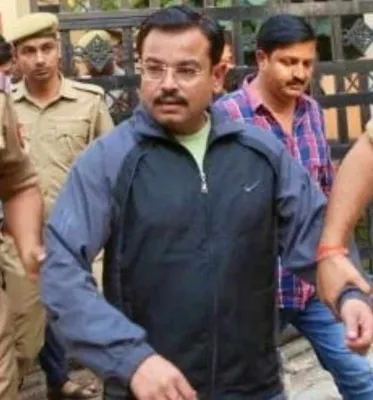
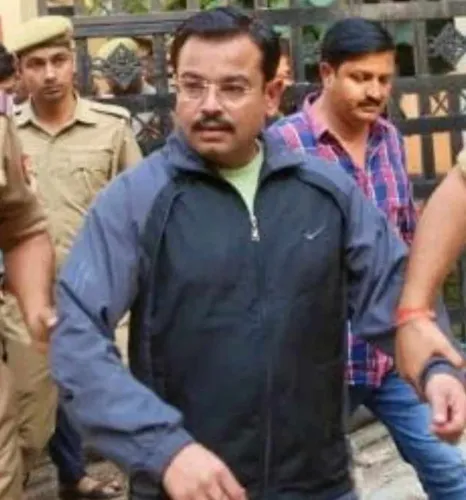
The October 2021 violence in Lakhimpur Kheri killed eight people , with prime accused Ashish Mishra alias Monu at the centre of the trial.
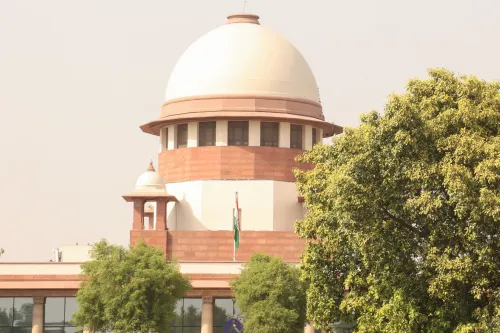
The Supreme Court on Tuesday, 22 September directed its registry to forward an application alleging misconduct by the trial judge overseeing the 2021 Lakhimpur Kheri violence case to the Allahabad High Court for appropriate action, seeking a response in a sealed cover. The apex court continues to monitor the criminal proceedings arising from the October 2021 violence in which eight people were killed.
What the Court Directed
A bench comprising Chief Justice of India (CJI) Surya Kant, Justice Joymalya Bagchi, and Justice V. Mohana was hearing matters related to prime accused Ashish Mishra alias Monu. The bench ordered its registry to transmit a copy of the application to the Allahabad High Court, noting that administrative control over the trial judge rests with the high court — not the Supreme Court.
The court stated: 'The Registry is directed to forward a copy of the application to the Allahabad High Court with a request to look into the matter and take appropriate remedial action. The High Court will forward a report to this court in sealed cover pursuant to action that may be taken by Hon'ble the Chief Justice.'
Allegations Raised Against the Trial Judge
Advocate Prashant Bhushan, appearing for the complainants and victims, raised several serious concerns about the conduct of the trial. He alleged that the trial judge had taken up cases assigned to other courts — including matters under the Narcotic Drugs and Psychotropic Substances (NDPS) Act and the Scheduled Castes and Scheduled Tribes (Prevention of Atrocities) Act — and had granted relief to accused persons in those proceedings.
Bhushan further alleged that eyewitness Sher Singh, who was unable to appear before the trial court due to illness and had submitted a medical certificate, was issued a non-bailable warrant by the trial judge. He additionally claimed that police subsequently approached the witness's parents, following which the witness expressed unwillingness to testify. Bhushan also flagged the alleged disappearance of a site plan relevant to the Lakhimpur Kheri case from the trial court record.
Concerns Over Public Prosecutor and Witness Protection
The victims' counsel raised further concerns over the replacement of the public prosecutor handling the case, alleging that the newly appointed prosecutor had limited experience. The Supreme Court took note and directed the Uttar Pradesh government to place on record the details of a senior and experienced prosecutor who could be assigned to the trial.
Bhushan argued that allowing the present trial judge to continue could result in a 'gross miscarriage of justice' and urged the court to order a change of judge. The Supreme Court's earlier directions had already flagged the slow pace of the trial and instructed the trial court to take lawful steps to secure witness attendance under the witness protection mechanism.
Background: The 2021 Lakhimpur Kheri Violence
The case stems from violence that erupted in Lakhimpur Kheri, Uttar Pradesh, in October 2021 during protests against a visit by Uttar Pradesh Deputy Chief Minister Keshav Prasad Maurya. According to the Uttar Pradesh Police FIR, four protesting farmers were allegedly mowed down by an SUV in which Ashish Mishra — son of then Union Minister Ajay Mishra — was present. The violence claimed a total of eight lives, including other individuals beyond the four farmers.
The Supreme Court has been monitoring the trial closely, and Tuesday's directions signal growing judicial scrutiny over how the proceedings are being managed at the district court level. The next move now rests with the Allahabad High Court, which must investigate the allegations and submit its findings under seal.
Point of View
But it also delays accountability. The litany of alleged irregularities — from a non-bailable warrant against a sick eyewitness to a missing site plan — points to systemic pressure on a trial that has already moved at a glacially slow pace. What is conspicuously absent from the court's order is a hard timeline for the sealed report; without one, the high court's 'appropriate action' could remain vague indefinitely. In a case of this political weight, procedural correctness must not become a shield for indefinite delay.
NationPress
22 Sept 2026
Frequently Asked Questions
What did the Supreme Court order in the Lakhimpur Kheri case on 22 September?
The Supreme Court directed its registry to forward allegations against the trial judge in the Lakhimpur Kheri violence case to the Allahabad High Court, asking it to investigate and submit a report in a sealed cover. The bench, led by CJI Surya Kant, also asked the Uttar Pradesh government to provide details of a senior prosecutor for the trial.
What allegations were made against the Lakhimpur Kheri trial judge?
Advocate Prashant Bhushan alleged that the trial judge took up cases assigned to other courts — including NDPS and SC/ST Act matters — and granted relief to accused persons in those cases. He also alleged the judge issued a non-bailable warrant against an ill eyewitness who had submitted a medical certificate, and that a site plan relevant to the case had gone missing from court records.
Who is Ashish Mishra and what is his role in the Lakhimpur Kheri case?
Ashish Mishra, also known as Monu, is the prime accused in the 2021 Lakhimpur Kheri violence. According to the Uttar Pradesh Police FIR, four protesting farmers were allegedly mowed down by an SUV in which he was present during protests against a visit by UP Deputy Chief Minister Keshav Prasad Maurya. The violence killed eight people in total.
Why did the Supreme Court refer the matter to the Allahabad High Court instead of acting itself?
The Supreme Court noted that administrative control over the trial judge lies with the Allahabad High Court, not the apex court, making the high court the appropriate authority to investigate and act on the allegations. The Supreme Court has asked the high court to report back in a sealed cover.
What is the current status of the Lakhimpur Kheri violence trial?
The trial is ongoing and under active Supreme Court monitoring. The apex court has previously expressed concern over the slow pace of proceedings and directed the trial court to secure witness attendance under the witness protection mechanism. Fresh concerns over judicial conduct and prosecutor experience have now prompted referral to the Allahabad High Court.