How Did the Odisha Bandh by NKSS Affect Normal Life?
Synopsis
The Odisha Bandh called by the Naba Nirman Krushak Sangathan had a significant impact on the state, affecting transport and educational institutions while commerce largely continued. The protests highlighted issues in paddy procurement and power sector management, rallying support from various political factions and sparking public unrest.
Key Takeaways
Partial impact of the Odisha Bandh felt across the state.
Protests focused on paddy procurement and utility charges.
Support from various political factions indicates widespread concern.
Normal operations resumed in commercial sectors after initial disruptions.
Authorities face increasing pressure to address farmer grievances.
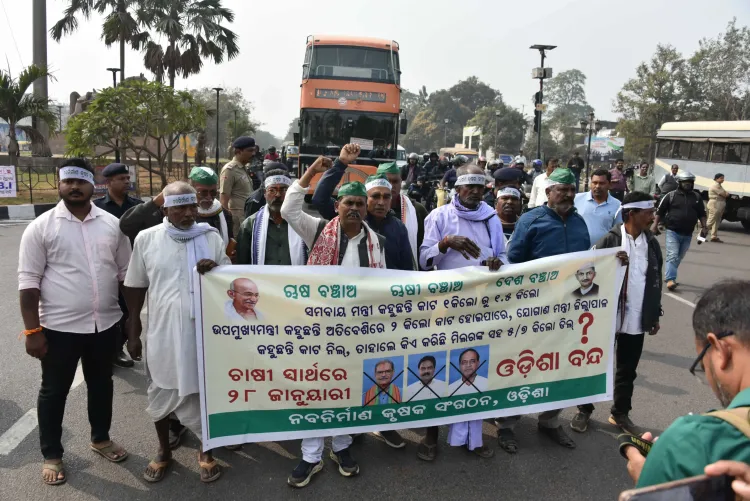
Bhubaneswar, Jan 28 (NationPress) The statewide bandh initiated by the Naba Nirman Krushak Sangathan (NNKS) on Wednesday had a partial effect on daily activities across Odisha. This organization observed an eight-hour Odisha Bandh from 6 a.m. to 2 p.m. in response to disarray at state-run mandis and significant mismanagement in the paddy procurement system.
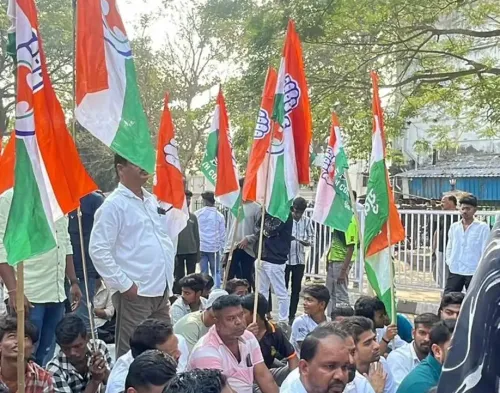
In addition to this, the farmers' group protested against the alleged coercive installation of electricity smart meters and the imposition of hefty fines on vehicle owners related to the Pollution Under Control Certificate (PUCC). It’s important to note that the opposition parties, including the Congress, Left parties, and other supportive groups, expressed their solidarity with the NNKS's bandh call.
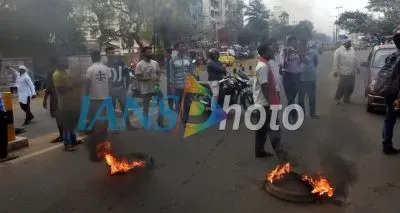
Interestingly, the main opposition party, Biju Janata Dal (BJD), also showed its moral support for the bandh. Despite the protests and picketing by NNKS members and Congress, many commercial establishments remained operational. Even in Bhubaneswar, shops and malls resumed normal operations after 11 a.m.
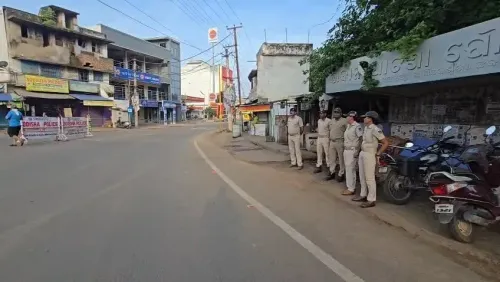
However, most educational institutions closed due to the bandh call, and private bus services were suspended in various areas, causing a partial disruption in public transport. Emergency and medical services, however, continued without interruption, and train services across the state remained unaffected.
Deputy Commissioner of Police (DCP) Jagmohan Meena reported to the media that around 11 a.m., demonstrators held rallies at multiple locations in Bhubaneswar, culminating at the Master Canteen area, where police concluded the rally.
He mentioned that several protesters, including some leaders of the organization, were detained as a precautionary measure and taken to the Commissionerate Police Control Office.
“More than 50 individuals were taken into custody from various locations and transported in buses to the control office to prevent disruption of traffic and public movement,” the DCP stated.
Meanwhile, NNKS leader Akshaya Kumar criticized the state government for neglecting the plight of farmers, daily wage workers, and regular citizens. He alleged that despite claims of economic growth, the benefits are not reaching those at the grassroots level.
“Farmers are compelled to sell their produce at mandis at significant losses. What should be approximately 40 quintals is recorded as merely 10 quintals officially. They haven’t received a token. Instead of resolving these problems, the police are being utilized to silence our voices,” Kumar remarked.
He further asserted that exorbitant fines are being levied on ordinary citizens under the PUC certificate system, placing an additional financial burden on motorists.
Regarding the power sector, he accused Tata Power of “exploiting consumers” through what he termed as unreasonable and unjustified charges. He claimed these issues have garnered widespread public support throughout Odisha.
“The government is ignoring the people's voices. If our concerns continue to be disregarded, this movement will only intensify in the coming days,” Kumar warned.
Point of View
This bandh signifies a growing discontent among farmers and working-class citizens, raising important questions about governance and accountability. The involvement of various political entities indicates that these issues resonate widely, making it crucial for authorities to address them promptly to prevent further unrest.
NationPress
29 Jul 2026
Frequently Asked Questions
What were the reasons behind the Odisha Bandh?
The Odisha Bandh was called due to issues like chaos at state-run mandis, mismanagement in paddy procurement, and the forceful installation of electricity smart meters, along with heavy fines related to the Pollution Under Control Certificate.
How did the bandh affect daily life in Odisha?
The bandh led to the closure of educational institutions, disruption of private bus services, while many commercial establishments remained open, particularly after 11 a.m.
Which political parties supported the bandh?
The opposition parties including Congress, Left parties, and the Biju Janata Dal offered their support to the NNKS's bandh call.
What is the stance of the NNKS regarding the government?
The NNKS claims that the government has been neglecting the struggles of farmers and ordinary citizens, alleging that benefits of economic development are not reaching the grassroots level.
What actions were taken by the police during the protests?
The police detained over 50 protesters, including some leaders of NNKS, to maintain public order and prevent disruption of traffic.