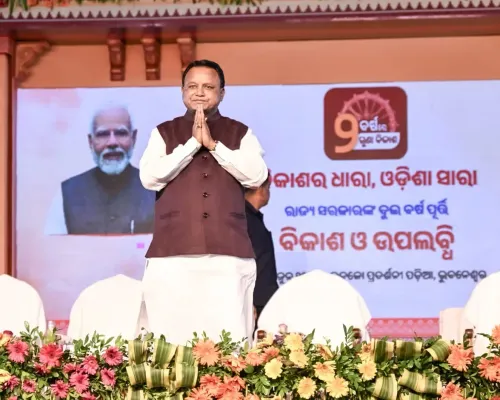
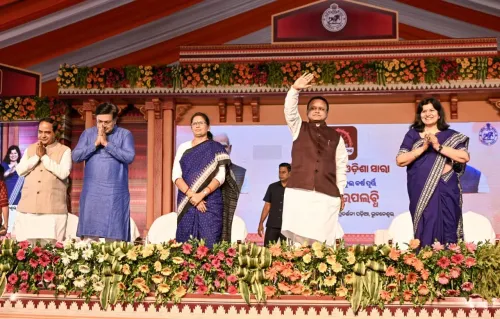
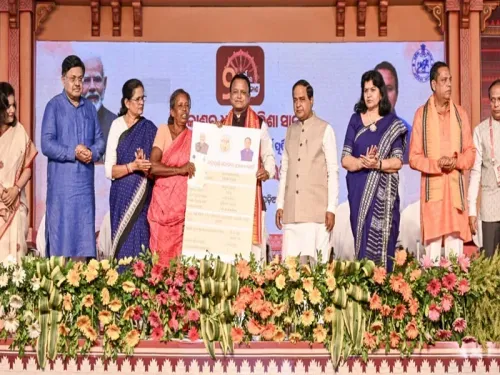
CM Majhi launches Mukhyamantri Annapurna Yojana, doubles free rice to 10 kg
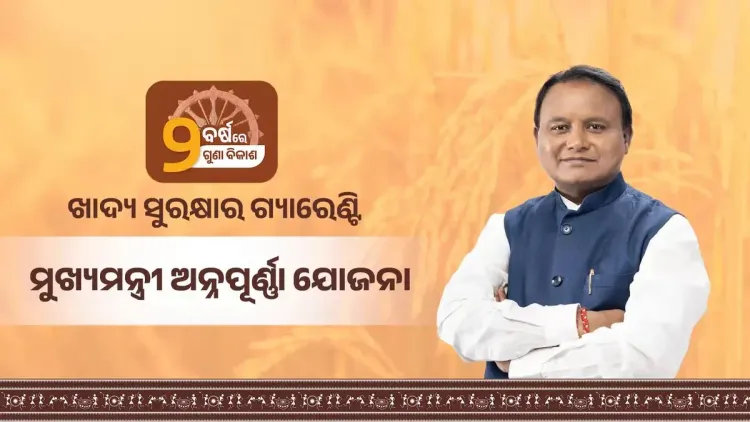
Synopsis
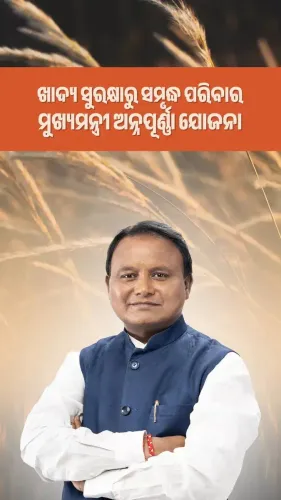
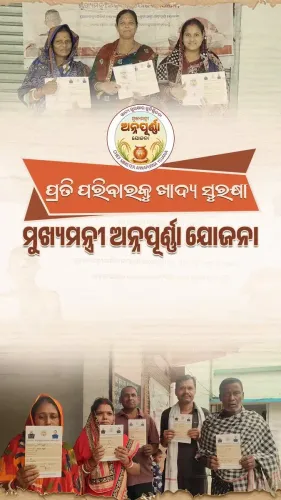
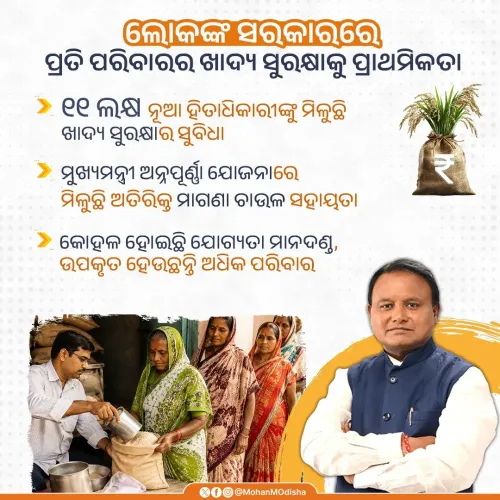
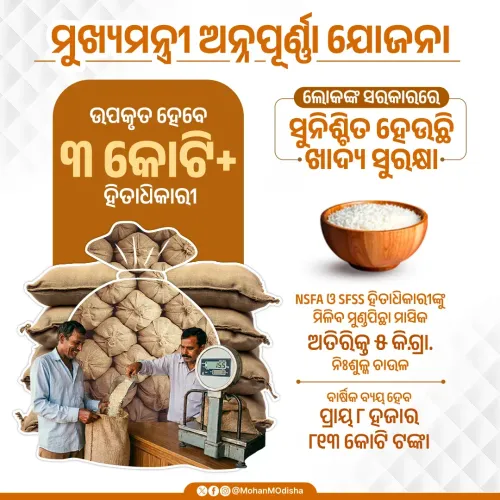
Odisha Chief Minister Mohan Charan Majhi has launched the 'Mukhyamantri Annapurna Yojana', combining the central government's 5 kg PMGKAY allocation with an additional 5 kg state contribution to provide eligible beneficiaries 10 kg of free rice every month, marking two years of BJP rule in the state.
Key Takeaways
Mukhyamantri Annapurna Yojana launched by Odisha CM Mohan Charan Majhi on 12 June 2026 .
Each eligible beneficiary will receive 10 kg of free rice per month — 5 kg from the Centre under PMGKAY and 5 kg additional from the state .
The scheme is framed as a 'double engine government' initiative, reflecting coordination between the BJP state and central administrations .
Beneficiaries are NFSA-enrolled households , with a stated focus on the most economically marginalised families.
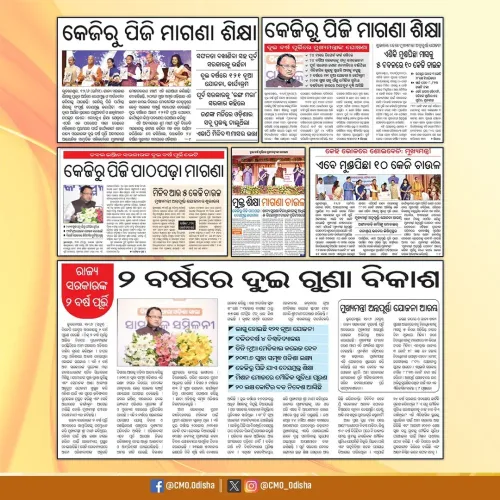
The launch coincides with the second anniversary of the BJP government in Odisha , marked by the hashtag #2YearsofLokankaSarakar .
State budget allocations and district-level rollout timelines remain to be officially detailed.
Odisha Chief Minister Mohan Charan Majhi on Friday, 12 June 2026 announced the launch of the 'Mukhyamantri Annapurna Yojana', a state welfare scheme that doubles the monthly free rice entitlement for eligible beneficiaries to 10 kilograms by adding a state-funded 5 kg top-up over and above the 5 kg already provided by the central government.
Context
Posting in Odia on 12 June 2026, CM Majhi invoked the blessings of Mahaprabhu Shri Jagannath O Maa Annapurna (Lord Jagannath and Goddess Annapurna) as the spiritual foundation for the scheme. He framed the initiative as a 'mahaa sankalp' (great resolve) of service and dedication, with the stated goal of making every family at the last rung of society self-reliant and food-secure.
The scheme's name and divine invocation are deliberate: Annapurna is the Hindu goddess of food and nourishment, and Lord Jagannath — whose principal shrine is at Puri, Odisha — is a central cultural identity marker for the state. The hashtags #2YearsofLokankaSarakar and #BikasharaDharaOdishaSara signal that the launch is timed to mark two years of the BJP government in Odisha.
Policy Backdrop
The scheme is structured as a top-up to the PM Garib Kalyan Anna Yojana (PMGKAY), the central government's flagship food security programme that has provided 5 kg of free foodgrains per month to National Food Security Act (NFSA) beneficiaries since its launch in March 2020 and has been extended in phases through 2028. By adding an equal 5 kg state contribution, Odisha doubles the effective monthly entitlement to 10 kg of rice at zero cost per eligible beneficiary.
CM Majhi explicitly credited the 'double engine government' — a phrase denoting alignment between the state and central BJP administrations — as the driving force behind the scheme. BJP-governed states have increasingly supplemented PMGKAY with state-funded grain top-ups as a coordinated welfare strategy, and Odisha, which transitioned to BJP rule in June 2024, is now joining that pattern. The National Food Security Act, 2013 remains the underlying legal framework that defines eligible priority households.
Stakeholders and Impact
The primary beneficiaries are NFSA-enrolled households across Odisha, particularly low-income and below-poverty-line families who depend on the public distribution system for food security. The scheme specifically targets families at the 'last row of society,' in the CM's words, signalling a focus on the most economically marginalised segments.
The state exchequer will bear the cost of the additional 5 kg per beneficiary per month, making district-level procurement and delivery logistics a key operational challenge. State budget allocations and the rollout timeline across Odisha's 30 districts will determine how quickly the enhanced entitlement reaches households.
What's Next
The government's immediate task is to operationalise distribution through existing fair price shops under the public distribution system. Observers will watch for official notifications detailing eligibility criteria, beneficiary enrolment processes, and the financial outlay earmarked in the state budget for the scheme's sustenance.
As Odisha marks two years of BJP governance, the Mukhyamantri Annapurna Yojana sets a benchmark for welfare delivery that the state government will likely use as a political and administrative reference point heading into future electoral cycles. The scheme's success will hinge on last-mile delivery infrastructure and the accuracy of beneficiary data.
Point of View
Visible welfare narrative — one that credits both Bhubaneswar and New Delhi simultaneously. By doubling the grain entitlement rather than introducing a wholly new scheme, CM Majhi minimises administrative friction while maximising political optics at the two-year mark of his government. The divine branding — invoking Lord Jagannath and Goddess Annapurna — roots a technocratic food policy in Odisha's deep cultural identity, a strategy that tends to resonate strongly in the state's rural belt. The scheme's credibility will ultimately rest on whether the additional 5 kg reaches beneficiaries reliably, which makes the forthcoming budget allocation and PDS logistics the real test of the announcement.
NationPress
19 Sept 2026
Frequently Asked Questions
What is Mukhyamantri Annapurna Yojana in Odisha?
Mukhyamantri Annapurna Yojana is an Odisha state government scheme launched by CM Mohan Charan Majhi that provides eligible NFSA beneficiaries a total of 10 kg of free rice per month by adding a state-funded 5 kg allocation on top of the 5 kg already provided by the central government under PMGKAY.
Who are the beneficiaries of Mukhyamantri Annapurna Yojana?
The scheme targets households enrolled under the National Food Security Act (NFSA) in Odisha, with a focus on low-income and economically marginalised families who rely on the public distribution system.
How much free rice will Odisha give per month under the new scheme?
Under the Mukhyamantri Annapurna Yojana, each eligible beneficiary will receive 10 kg of free rice every month — 5 kg from the central PMGKAY programme and an additional 5 kg contributed by the Odisha state government.
What is the 'double engine government' referred to in the Odisha rice scheme?
'Double engine government' is a BJP phrase describing the coordination between a BJP-led state government and the BJP-led central government to jointly deliver welfare schemes, as seen in Odisha where the state tops up the Centre's PMGKAY grain allocation.
When was Mukhyamantri Annapurna Yojana launched in Odisha?
Odisha CM Mohan Charan Majhi announced the launch of the Mukhyamantri Annapurna Yojana on 12 June 2026, coinciding with two years of the BJP government in the state.