Odisha CM Majhi Chairs Cabinet Meet, Clears Key Proposals
Synopsis
Odisha Chief Minister Mohan Charan Majhi on 2 July 2026 announced that the state cabinet cleared multiple important proposals aimed at accelerating all-round development and improving the lives of Odisha's residents, reinforcing the BJP government's core governance agenda.
Key Takeaways
Chief Minister Mohan Charan Majhi chaired an Odisha State Cabinet meeting on 2 July 2026 that approved several significant proposals.
Majhi described the decisions as 'visionary and people-centric,' aimed at improving the standard of living of Odisha's residents.
The BJP government has positioned accelerated development as its central agenda since assuming power in June 2024 , ending 24 years of BJD rule.
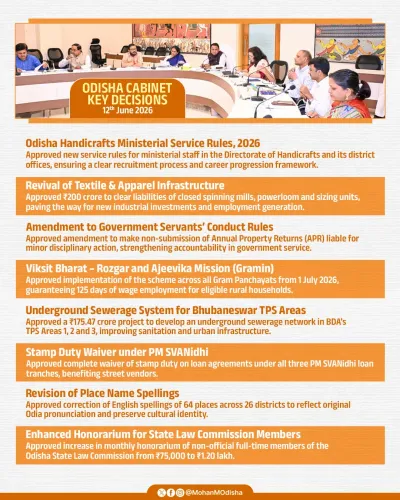
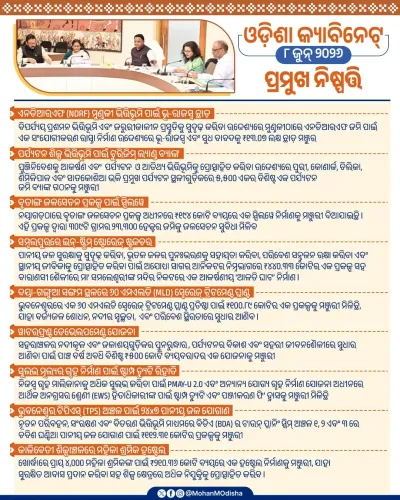
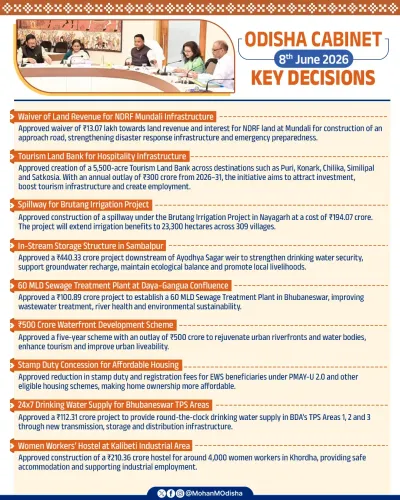
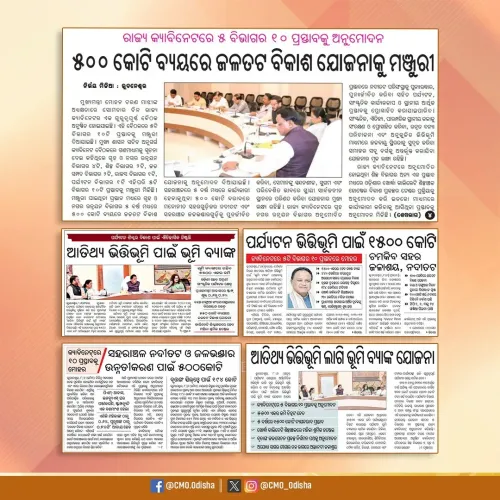
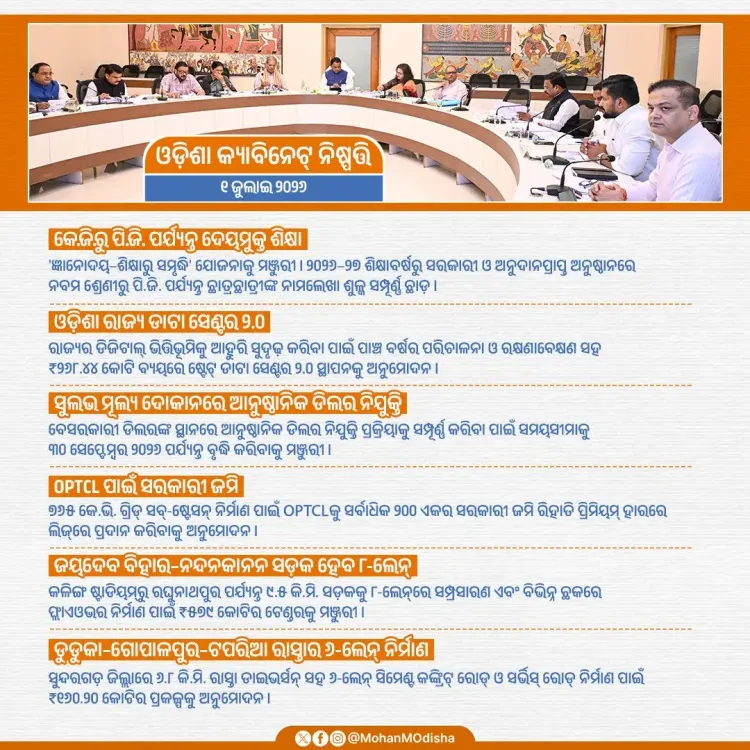
Specific details of the approved proposals — including sectors covered and financial allocations — are yet to be officially disclosed.
Detailed rollout timelines and scheme specifics are expected through subsequent government communications or assembly sessions.
Odisha Chief Minister Mohan Charan Majhi on Thursday, 2 July 2026 announced that the Odisha State Cabinet had approved several important proposals aimed at accelerating the all-round development of the state. Majhi described the decisions as 'visionary and people-centric,' asserting they would bring meaningful change to the lives of Odisha's residents and reinforce the government's commitment to building a prosperous state.
Context
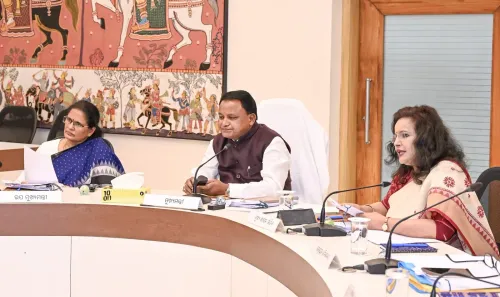
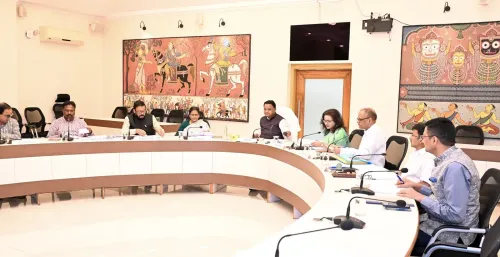
Posting in Odia on his official X account, Chief Minister Majhi wrote that the cabinet meeting had cleared multiple significant proposals 'ରାଜ୍ୟର ସର୍ବାଙ୍ଗୀନ ବିକାଶ' [for the all-round development of the state]. He added that these decisions would strengthen the resolve to build a 'prosperous Odisha' while improving the standard of living of the state's people. The post was accompanied by two images, widely understood to be visuals from the cabinet session.
The announcement follows the pattern of periodic cabinet meetings held by the BJP government in Bhubaneswar, where batches of policy proposals are cleared in a single sitting before detailed rollout communications are issued.
Policy Backdrop
Mohan Charan Majhi assumed office as Chief Minister in June 2024, leading the Bharatiya Janata Party's first-ever government in Odisha after the party ended 24 years of Biju Janata Dal rule in the state. Since taking charge, the Majhi cabinet has positioned accelerated development as its central governing agenda, seeking to distinguish its policy direction from the preceding administration.
Indian state cabinets routinely consolidate approvals across infrastructure, social welfare, and administrative reform in single meetings. Specific scheme details, beneficiary counts, and budgetary allocations are typically disclosed through subsequent government press releases or assembly floor statements.
Stakeholders and Impact
The primary beneficiaries of any cabinet-approved proposals are Odisha's approximately 4.6 crore residents, spanning sectors that the state government has flagged as development priorities. Without a detailed list of the approved proposals being shared in the post itself, the direct sectoral impact — whether in agriculture, infrastructure, health, or education — remains to be confirmed through official government communications.
Opposition parties and civil society groups in the state are likely to scrutinise the fine print of each approved proposal once the government releases a comprehensive list, particularly given the broad language used in the announcement.
What's Next
The Odisha government is expected to release a detailed account of the proposals cleared at this cabinet meeting, including implementation timelines and financial outlays. Such disclosures typically emerge through official press briefings by the Chief Minister's Office or through statements in the state assembly. Observers will watch for whether the approvals signal new flagship schemes or amendments to existing programmes inherited from the prior administration.
The pace at which these decisions translate into ground-level implementation will be a key indicator of the BJP government's administrative capacity ahead of its mid-term governance review.
Point of View
Aspirational framing of governance decisions before sector-specific details are released. For a BJP administration still consolidating its first term in a state it governed for the first time from 2024, such announcements serve a dual purpose — signalling administrative momentum to voters and staking out policy distance from the long-dominant BJD. The absence of specifics in the public post, however, limits accountability scrutiny in the immediate cycle. The real test will come when implementation timelines and budgetary allocations are made public, allowing analysts to assess whether these approvals represent substantive policy shifts or incremental continuations of existing programmes.
NationPress
2 Jul 2026
Frequently Asked Questions
What did the Odisha cabinet approve on 2 July 2026?
The Odisha State Cabinet, chaired by Chief Minister Mohan Charan Majhi, approved several important proposals on 2 July 2026 aimed at accelerating the all-round development of the state, though specific details of the proposals are yet to be officially released.
Who is Mohan Charan Majhi?
Mohan Charan Majhi is the Chief Minister of Odisha and a BJP leader who took office in June 2024, leading the party's first-ever government in the state after ending 24 years of BJD rule.
How long has BJP been in power in Odisha?
The BJP came to power in Odisha following the 2024 assembly elections, ending 24 years of Biju Janata Dal governance under Naveen Patnaik. Mohan Charan Majhi was sworn in as Chief Minister in June 2024.
When will the details of Odisha cabinet decisions be made public?
The Odisha government is expected to release a detailed list of approved proposals, including implementation timelines and financial outlays, through official press briefings or state assembly statements in the days following the cabinet meeting.
What is the focus of the Odisha BJP government's development agenda?
Since assuming power in June 2024, the Majhi-led BJP government in Odisha has emphasised accelerated all-round development — spanning infrastructure, welfare, and administrative reform — as its core governance priority.