Odisha CM Majhi sets 11 GW renewable energy target by 2030
Synopsis
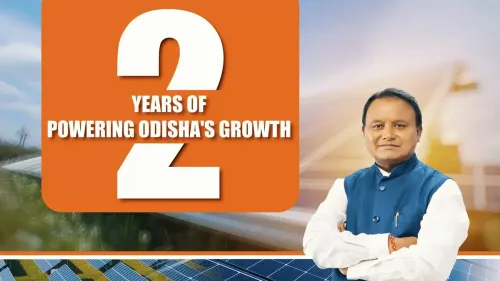
The Chief Minister's Office of Odisha announced that the state is targeting 11 GW of renewable energy by 2030, deploying smart grids and digital substations to modernise its power sector under CM Mohan Charan Majhi — a major pivot for a historically coal-dependent state.
Key Takeaways
Odisha has set a target of 11 gigawatts of renewable energy capacity by 2030 .
Chief Minister Mohan Charan Majhi , in office since 2024 , is leading the state's energy sector modernisation drive.
The government is deploying smart grids and digital substations to upgrade transmission and distribution infrastructure.
Odisha's push aligns with India's national goal of 500 GW non-fossil fuel capacity by 2030.
The shift marks a significant strategic turn for a state historically anchored to coal-based energy .
A coal-rich state is rewriting its energy story. The Chief Minister's Office of Odisha announced on Friday, August 7, 2026, that the state is pushing aggressively toward clean energy expansion — with a target of 11 gigawatts of renewable energy capacity by 2030 — under the leadership of Chief Minister Mohan Charan Majhi.
From coal country to clean-power frontier
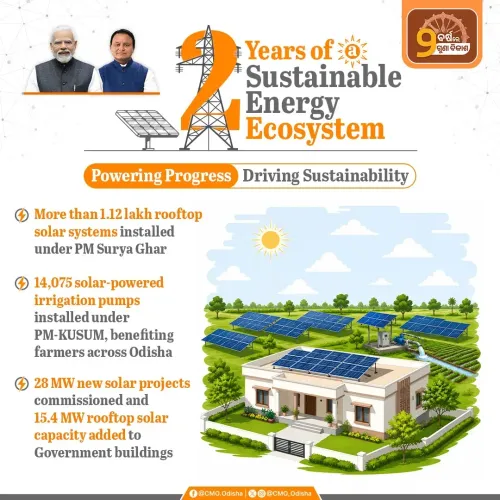
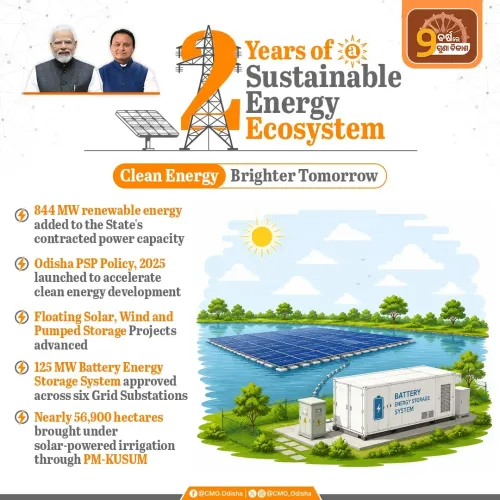
Odisha has long been synonymous with coal. Its mines have powered much of eastern India for decades. Now, the state government is signalling a deliberate pivot — modernising the electricity grid through smart grid technology and digital substations while scaling up solar, wind, and other renewable sources. The CMO's post stated that the energy sector is 'taking a new direction' (ନୂଆ ଦିଗ) with the spread of clean and renewable power under the people's government.
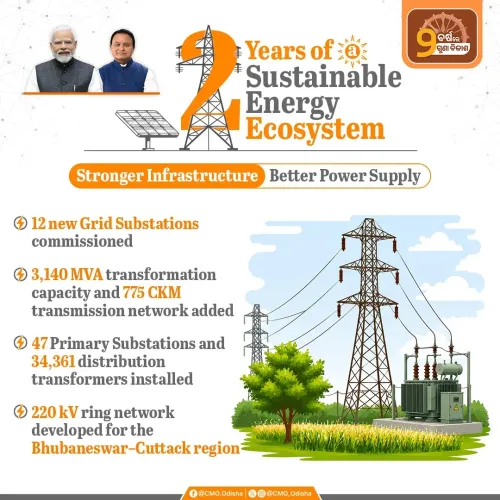
Smart grids and digital substations at the core
The push isn't just about generation. Odisha's modernisation drive targets the transmission and distribution backbone — the infrastructure that determines whether power actually reaches homes and industries reliably. Smart grids reduce outages, cut aggregate technical and commercial losses, and enable two-way energy flow essential for rooftop solar integration. Digital substations replace ageing electromechanical equipment with faster, data-driven controls. Together, they form the nervous system of a modern electricity network.
Majhi's push within India's 500 GW national goal
India has committed to building 500 gigawatts of non-fossil fuel capacity by 2030 — one of the world's most ambitious energy transition pledges. Every state must carry a share of that load. Odisha's stated 11 GW renewable target positions it as a meaningful contributor to that national framework, not merely a passive recipient of central policy. CM Majhi, who assumed office in 2024, has framed this energy modernisation as central to building a 'prosperous Odisha' (ସମୃଦ୍ଧ ଓଡ଼ିଶା).
Multiple Indian states — from Rajasthan to Tamil Nadu — are racing to add renewable capacity and upgrade grids simultaneously. What makes Odisha's case notable is the scale of the structural shift: a state whose economic identity was built on fossil fuel extraction is now staking its energy future on the sun and wind. The tendering and commissioning timelines for new projects through 2030 will be the real test of whether these targets translate into operational megawatts.
Point of View
Framing clean power as the engine of 'prosperous Odisha' ties infrastructure ambition directly to electoral identity. The smart grid and digital substation emphasis also suggests the government understands that generation targets alone are hollow without a reliable delivery network. Whether tendering timelines hold and private capital follows will determine if this remains an aspirational headline or becomes a structural transformation.
NationPress
7 Aug 2026
Frequently Asked Questions
What is Odisha's renewable energy target by 2030?
Odisha has set a target of 11 gigawatts of renewable energy capacity by 2030 , as announced by the Chief Minister's Office under CM Mohan Charan Majhi.
What is a smart grid and why is Odisha deploying one?
A smart grid uses digital technology to monitor and manage electricity flow in real time, reducing outages and enabling integration of rooftop solar. Odisha is deploying smart grids and digital substations to modernise its ageing power infrastructure.
Who is Mohan Charan Majhi and what is his role in Odisha's energy push?
Mohan Charan Majhi is the Chief Minister of Odisha since 2024 . He is leading the state government's drive to modernise the power sector and expand renewable energy capacity as part of his 'prosperous Odisha' vision.
How does Odisha's renewable target fit into India's national energy goals?
India has committed to 500 GW of non-fossil fuel capacity by 2030 . Odisha's 11 GW target is a state-level contribution to this national framework, reflecting the broader energy transition underway across Indian states.
What makes Odisha's clean energy shift significant?
Odisha is historically a major coal-producing state. Its pivot toward renewable energy and grid modernisation represents a structural economic and energy transition, making it a notable case in India's clean power journey.