Odisha CMO Boosts Ragi Farmers With ₹210/Quintal Extra Aid
Synopsis
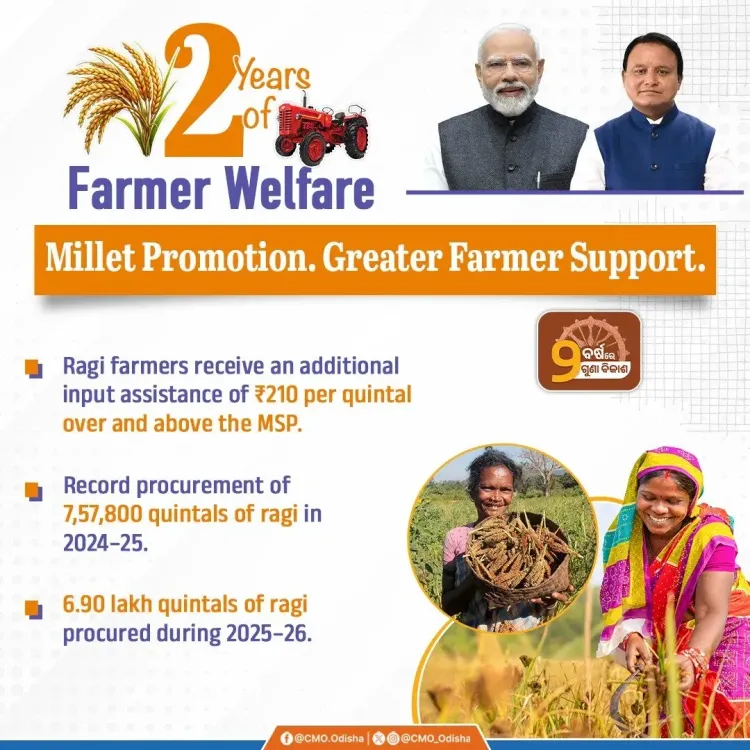
The Chief Minister's Office of Odisha has announced an additional input assistance of ₹210 per quintal over MSP for ragi farmers, backed by record procurement, as the state deepens its commitment to millet cultivation, climate resilience, and tribal farmer welfare.
Key Takeaways
The Chief Minister's Office of Odisha announced enhanced support for ragi and millet farmers on 10 July 2026 .
Farmers will receive an additional ₹210 per quintal over the central Minimum Support Price for ragi.
The government cited record procurement of millets in recent years as evidence of programme momentum.
The Odisha Millets Mission , launched around 2016-17 , underpins the state's long-running push to revive millet cultivation in tribal and rainfed districts.
The policy targets climate-resilient and nutritious crop promotion, aligning with national nutri-cereal goals.
Tribal and rainfed district farmers in Odisha's southern and western regions are the primary beneficiaries.
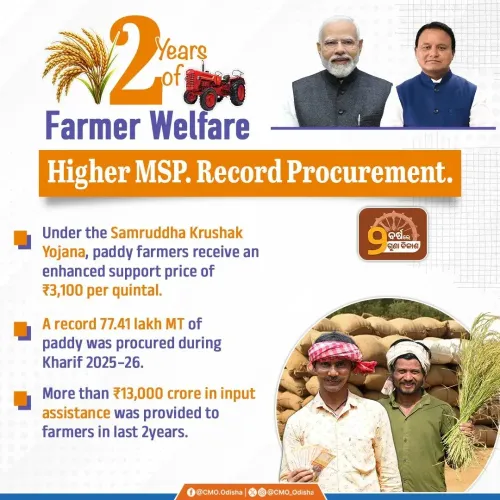
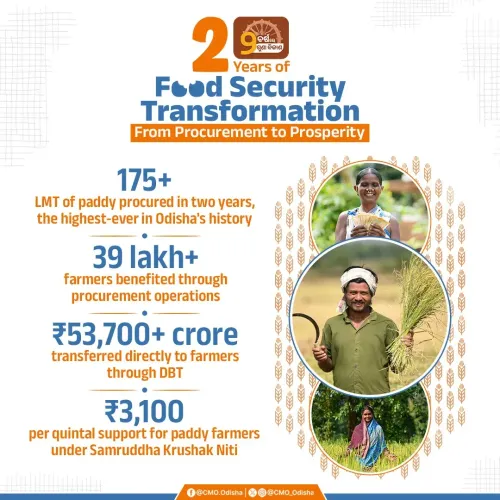
The Chief Minister's Office of Odisha announced on 10 July 2026 that the state government is intensifying support for millet cultivation, offering ragi farmers an additional input assistance of ₹210 per quintal over the Minimum Support Price alongside record procurement in recent years.
Context
The official post from CMO Odisha stated: 'Odisha is giving a fresh boost to millet farming and strengthening support for Ragi farmers. With an additional input assistance of ₹210 per quintal over MSP and record procurement in recent years, the Government is creating better income opportunities for millet growers while promoting climate-resilient and nutritious crops across the State.' The announcement was made under the hashtags referencing two years of the current government and its agricultural welfare agenda.
The state's push for ragi is part of a broader commitment to climate-resilient agriculture and nutritional security, particularly in rainfed and tribal districts where millets have historically been a staple crop but had suffered from decades of neglect in procurement systems.
Policy Backdrop
Odisha has been investing in millet revival since the launch of the Odisha Millets Mission around 2016-17, which aimed to restore ragi and other millets to their place in the agricultural economy through subsidies, market linkages, and nutrition campaigns. The mission targeted tribal farming communities in the state's rainfed belts, where millets are better suited than paddy to local agro-climatic conditions.
The state's supplementary procurement mechanism — offering support over and above the central MSP — is designed to make millet cultivation financially competitive with paddy, the dominant crop in Odisha's public procurement system. This approach mirrors efforts by several Indian states to diversify away from the rice-wheat procurement cycle in response to both climate pressures and public health goals.
The central government's promotion of millets as 'nutri-cereals' and India's hosting of the International Year of Millets in 2023 gave further policy momentum to such state-level interventions, embedding millet support within a national food security and climate adaptation framework.
Stakeholders and Impact
Ragi farmers — many of them tribal cultivators in Odisha's southern and western districts — stand to benefit most directly from the enhanced input assistance. The additional ₹210 per quintal over MSP provides a price signal that incentivises farmers to expand millet acreage, reducing dependence on more water-intensive crops during increasingly erratic monsoon seasons.
Beyond farm incomes, the push for ragi carries nutritional implications. Ragi is rich in calcium, iron, and dietary fibre, and its promotion aligns with state and central government goals to address malnutrition among vulnerable populations, including children and women in tribal areas. Procurement at remunerative prices also supports the supply of ragi into mid-day meal and public distribution initiatives.
What's Next
Attention will now turn to kharif season 2026 procurement targets and whether the state will revise input assistance rates further in the next agricultural policy cycle or state budget. The government's ability to sustain record procurement volumes while maintaining price support will be a key test of the programme's long-term viability.
As climate variability continues to stress traditional paddy cultivation, Odisha's millet policy could emerge as a replicable model for other eastern Indian states seeking to balance farmer income support with ecological resilience.
Point of View
The ruling dispensation is also signalling that farm welfare and climate adaptation are central to its political identity. The emphasis on 'record procurement' suggests the state is building an evidence trail to justify deeper budgetary commitment to the Odisha Millets Mission in coming years. If sustained, this model of supplementary price support combined with assured procurement could set a precedent for other eastern Indian states navigating the twin pressures of agrarian distress and climate stress.
NationPress
10 Jul 2026
Frequently Asked Questions
What is the additional input assistance for ragi farmers in Odisha?
The Odisha government is providing an additional input assistance of ₹210 per quintal over the Minimum Support Price for ragi farmers, as announced by the Chief Minister's Office on 10 July 2026.
What is the Odisha Millets Mission?
The Odisha Millets Mission is a state initiative launched around 2016-17 to revive millet cultivation, especially ragi, in tribal and rainfed districts through subsidies, market linkages, and nutrition campaigns.
Why is Odisha promoting ragi and millet farming?
Odisha is promoting ragi and millets because they are climate-resilient and nutritious crops well-suited to rainfed conditions. The state aims to improve tribal farmer incomes, reduce dependence on water-intensive paddy, and support public health goals.
Who benefits from Odisha's ragi support scheme?
The primary beneficiaries are ragi and millet farmers , particularly tribal cultivators in Odisha's southern and western rainfed districts who grow these crops as a traditional staple.
How does Odisha's millet support compare with central government policy?
Odisha's additional ₹210 per quintal state-level assistance supplements the central government's MSP, going beyond the national floor price. This aligns with the central push for millets as 'nutri-cereals' that gained momentum during India's International Year of Millets in 2023 .