Odisha CMO Launches Unified Pension Portal for All

Synopsis
Odisha's Chief Minister's Office launched the Unified Pension Management Portal (UPMP) and activated the Madhubabu Pension Yojana in saturation mode on November 10, 2026, pledging faster, transparent pension delivery for the state's elderly, widows, and persons with disabilities.
Key Takeaways
The Unified Pension Management Portal (UPMP) was launched by Odisha's CMO on November 10, 2026 to consolidate pension applications, disbursements, and monitoring.
The Madhubabu Pension Yojana — covering senior citizens, widows, and persons with disabilities — is now being implemented in saturation mode to reach every eligible individual.
The reform prioritises transparency, simplicity, and speed in welfare payments, addressing historic delays in pension disbursal.
Saturation mode shifts the burden from beneficiaries applying to the administration proactively identifying and enrolling eligible citizens.
The government framed the launch as a fulfilled campaign promise, using the Odia hashtag meaning 'the era of waiting for allowances is over.'
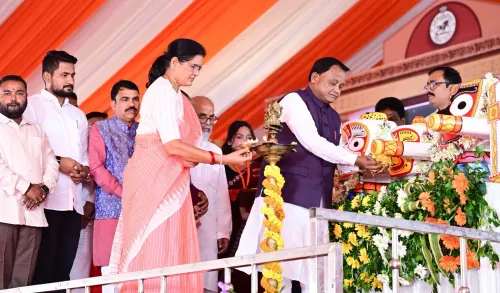
The long wait is over for millions of Odisha's most vulnerable citizens. The Chief Minister's Office of Odisha announced on Tuesday, November 10, 2026 a sweeping overhaul of the state's social security pension architecture — launching the Unified Pension Management Portal (UPMP) and shifting the flagship Madhubabu Pension Yojana into 'saturation mode', a signal that no eligible beneficiary will be left behind.
What the UPMP Changes for Pension Seekers
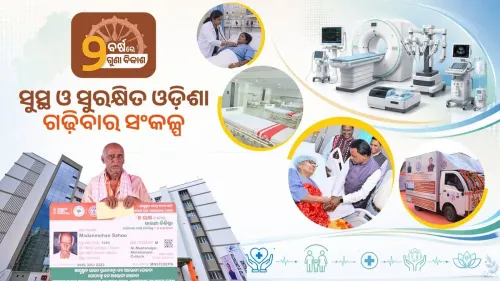
The CMO's post, written in Odia, declared that the 'people's government' was giving the highest priority to social security and a 'dignified life for every individual' — ସମ୍ମାନଜନକ ଜୀବନଧାରଣ (a life lived with dignity). The UPMP is designed to consolidate pension applications, disbursements, and grievance tracking onto a single digital platform, cutting through the maze of paperwork and multiple departmental touch-points that have historically delayed payments to elderly citizens, widows, and persons with disabilities.
Transparency, simplicity, and speed are the three stated pillars of the new portal. For a beneficiary in a remote block of Odisha who once waited months for a pension to be credited — often because of data mismatches or departmental lag — the promise of a unified digital pipeline is consequential.
Madhubabu Pension Yojana in Saturation Mode
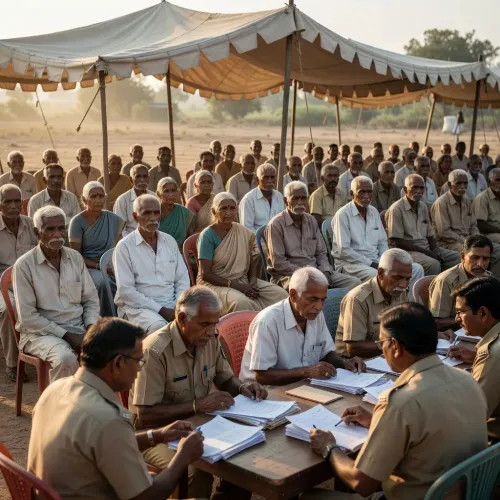
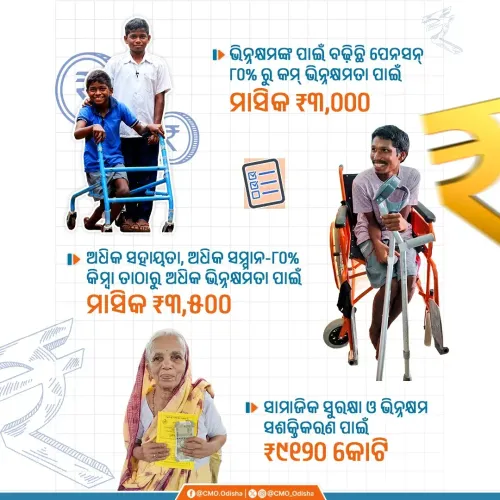
Running parallel to the portal launch is the decision to implement the Madhubabu Pension Yojana in what officials are calling 'saturation mode'. The scheme provides monthly pensions to senior citizens, widows, and persons with disabilities across Odisha. Saturation mode means the state is actively targeting all eligible individuals — not waiting for applications to trickle in, but proactively identifying and enrolling those who qualify.
This is a meaningful policy posture. Exclusion errors — where genuinely eligible people are dropped from welfare rolls due to documentation gaps or awareness barriers — have been a persistent criticism of pension delivery across Indian states. The saturation approach attempts to invert that burden: the administration finds the beneficiary, not the other way around.
A Political Promise Given a Deadline
The hashtags attached to the post leave little ambiguity about the political framing: #PensionForAll, #promisedelivered, and the Odia-language tag #ଭତ୍ତାପାଇଁଅପେକ୍ଷାରଯୁଗଶେଷ — literally, 'the era of waiting for allowances is over.' The ruling dispensation in Odisha is positioning this reform as the fulfilment of a campaign commitment, anchored in the broader state narrative of people-centric governance.
Odisha has a track record of periodic expansions in social security coverage, with digitisation increasingly central to delivery reform. The UPMP builds on that lineage but represents a consolidation step — fewer portals, cleaner data, faster disbursal — rather than an entirely new scheme. The real test will be in the rollout numbers: processing timelines, grievance volumes, and how quickly saturation mode translates into actual enrolment of previously excluded beneficiaries.
Point of View
Recognising that scheme design means little if disbursal machinery fails. By framing this as a promise delivered, the Odisha government is using social security as a political proof-of-concept ahead of ongoing governance benchmarking. The saturation approach is the sharper signal: it moves pension access from a demand-driven model to a supply-driven one, which, if executed well, could meaningfully reduce the exclusion errors that have long plagued India's social security ecosystem. The UPMP's real test will be whether grievance volumes and processing lags fall measurably in the months ahead.
NationPress
10 Nov 2026
Frequently Asked Questions
What is the Unified Pension Management Portal (UPMP) in Odisha?
The UPMP is a new digital platform launched by the Odisha government to consolidate pension applications, disbursements, and grievance tracking in one place, making the process faster and more transparent for beneficiaries.
What is the Madhubabu Pension Yojana and who is eligible?
The Madhubabu Pension Yojana is an Odisha state scheme that provides monthly pensions to senior citizens, widows, and persons with disabilities. It is one of the state's flagship social security programmes.
What does 'saturation mode' mean for Madhubabu Pension Yojana?
Saturation mode means the government will proactively identify and enrol all eligible individuals rather than waiting for them to apply, aiming to eliminate exclusion errors where deserving beneficiaries are left out.
When was the UPMP launched in Odisha?
The Chief Minister's Office of Odisha announced the launch of the UPMP on November 10, 2026.
How will the UPMP improve pension delivery in Odisha?
By bringing applications, disbursements, and monitoring onto a single portal, the UPMP aims to reduce delays caused by multiple departmental hand-offs, minimise data mismatches, and provide a single point for beneficiaries to track their pension status.