Odisha Govt Pushes Crop Diversification & PMFBY to Boost Farmer Income

Synopsis
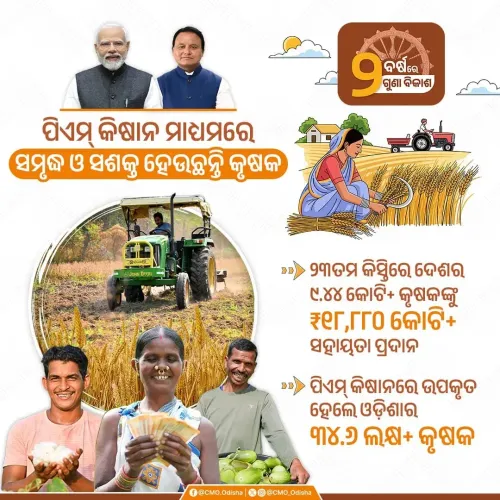
The Chief Minister's Office of Odisha announced on 30 October 2026 that the state government is focusing on crop diversification and the Pradhan Mantri Fasal Bima Yojana to increase farmers' incomes and make agriculture more rewarding for the state's estimated 10 million farming households.
Key Takeaways
The Odisha state government has announced a dual focus on crop diversification and Pradhan Mantri Fasal Bima Yojana (PMFBY) to boost farmer incomes.
PMFBY , launched by the Central government in 2016 , provides premium subsidies and technology-backed claims for yield losses due to natural calamities.
Odisha's heavy reliance on paddy makes it especially vulnerable to climate shocks; PMFBY offers a financial safety net for Kharif and Rabi farmers.
Crop diversification towards pulses, oilseeds, and horticulture aligns with India's national goal of doubling farmers' income.
Key metrics to watch: PMFBY enrollment data for the current Kharif season and any state budget allocations for diversified cropping pilots.
With paddy monoculture leaving millions of Odia farmers exposed to every monsoon gamble, the Odisha state government has doubled down on two interlocking strategies — crop diversification and the Pradhan Mantri Fasal Bima Yojana (PMFBY) — to raise farm incomes and make agriculture genuinely profitable, the Chief Minister's Office of Odisha announced on Friday, 30 October 2026.
The CMO posted in Odia: 'ଫସଲ ବିବିଧକରଣ ଓ ପ୍ରଧାନମନ୍ତ୍ରୀ ଫସଲ ବୀମା ଯୋଜନା ଉପରେ ଗୁରୁତ୍ୱ ଦେଉଛନ୍ତି ରାଜ୍ୟ ସରକାର' — 'the state government is emphasising crop diversification and the Pradhan Mantri Fasal Bima Yojana with the aim of increasing farmers' income and making agriculture more profitable.'Why PMFBY Matters for Odisha's Agrarian Economy
Launched by the Central government in 2016, PMFBY replaced the older National Agricultural Insurance Scheme and the Modified NAIS with a significantly improved framework: premium subsidies shared between the Centre and states, satellite-based crop cutting experiments, and faster claim settlements for yield losses caused by natural calamities. For a coastal state like Odisha — perennially in the crosshairs of cyclones, floods, and droughts — the scheme addresses an existential vulnerability for its farming communities.
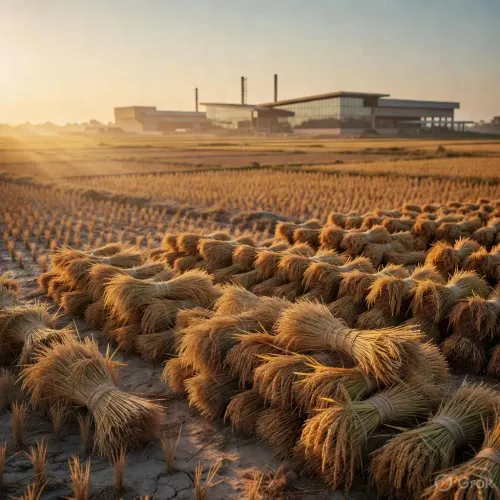
Odisha's farming sector is heavily paddy-dependent, a pattern that amplifies income volatility when rains fail or prices dip. PMFBY enrollment in both Kharif and Rabi seasons becomes the financial safety net that allows a farmer to take the next season's risk at all.
The Crop Diversification Imperative
Insurance alone, however, cannot generate prosperity — it can only limit ruin. That is precisely why crop diversification forms the second pillar of the state's push. Across India, multiple states have been steering farmers away from water-intensive paddy towards pulses, oilseeds, and horticulture, crops that command higher market returns, consume less groundwater, and reduce soil degradation over time.
Odisha's emphasis on diversification aligns directly with the national goal of doubling farmers' income — a target that demands not just better yields but a fundamental shift in what gets grown, and for which markets. Moving smallholders from subsistence paddy to commercially oriented crops requires both the confidence that losses are insured and access to extension support for new cropping patterns.
The Stakes for Kharif and Rabi Seasons Ahead
The immediate watchpoint is enrollment momentum. Higher PMFBY uptake during the ongoing Kharif season — and the forthcoming Rabi cycle — would signal whether the state's outreach is translating into on-ground action. Any new state budget allocations or pilot projects targeting specific districts for diversified cropping will be the next concrete test of how serious this commitment runs.
Odisha has roughly 10 million farming households. If even a fraction of them can de-risk their livelihoods through insurance and diversify into higher-value crops, the aggregate income impact could be substantial — and visible well before the next harvest season arrives.
Point of View
Not stated intent. States that have successfully de-risked farming have paired insurance schemes with hands-on extension services and assured market linkages, steps the CMO's announcement does not yet detail. The push fits neatly into the BJP-led Central government's doubling-farmers-income framework, suggesting Bhubaneswar is keen to align with New Delhi's agricultural priorities — a dynamic worth watching given Odisha's evolving political landscape after the 2024 assembly transition. Whether this translates into measurable income gains will depend on district-level execution over the next two crop seasons.
NationPress
30 Oct 2026
Frequently Asked Questions
What is Pradhan Mantri Fasal Bima Yojana (PMFBY)?
PMFBY is a Central government crop insurance scheme launched in 2016 that provides premium subsidies and compensates farmers for yield losses caused by natural calamities such as floods, droughts, and cyclones. It replaced the older National Agricultural Insurance Scheme and Modified NAIS with improved technology-based assessment and faster claim settlements.
Why is Odisha focusing on crop diversification?
Odisha's agriculture is heavily dependent on paddy, which exposes farmers to income volatility from climate shocks and price fluctuations. Diversifying into pulses, oilseeds, and horticulture offers higher market returns, uses less water, and aligns with India's national goal of doubling farmers' incomes.
How does PMFBY help farmers in Odisha specifically?
Odisha is frequently affected by cyclones, floods, and droughts, making crop insurance critical for the state's roughly 10 million farming households. PMFBY allows farmers to claim compensation for yield losses, reducing the risk of indebtedness after a bad season and enabling them to invest in the next crop cycle.
What should I watch for next regarding Odisha's farm policy?
Key indicators will be PMFBY enrollment figures for the ongoing Kharif season and the upcoming Rabi season, as well as any state budget announcements allocating funds to crop diversification pilots or extension support programmes for farmers shifting away from paddy.
Is crop diversification a national trend in India?
Yes. Multiple states across India have been encouraging farmers to move away from water-intensive paddy towards pulses, oilseeds, and horticulture as part of national agricultural reforms aimed at reducing water stress, improving soil health, and raising farm incomes.