CM Mohan Yadav: MP govt stands with farmers via PMFBY

Synopsis
The Chief Minister's Office of Madhya Pradesh invoked the Pradhan Mantri Fasal Bima Yojana on 22 July 2026, asserting that the state government stands with farmers during every natural calamity by providing financial support through the central crop insurance scheme.
Key Takeaways
The Chief Minister's Office of Madhya Pradesh posted on 22 July 2026 reaffirming state support for farmers during natural disasters.
Pradhan Mantri Fasal Bima Yojana (PMFBY) , launched in 2016 , is the central scheme being highlighted as the primary financial relief mechanism.
Madhya Pradesh is a major agrarian state with high exposure to monsoon variability, making crop insurance critical for its farming population.
The post tagged both the Union Ministry of Agriculture and the MP Agriculture Department , reflecting Centre-state coordination.
Farmers pay a capped premium of as low as 1.5 per cent (Rabi) and 2 per cent (Kharif) under PMFBY, with the rest shared between Centre and state.
Enrollment figures and claim settlement ratios for the 2026-27 crop seasons will be the key indicators to watch.
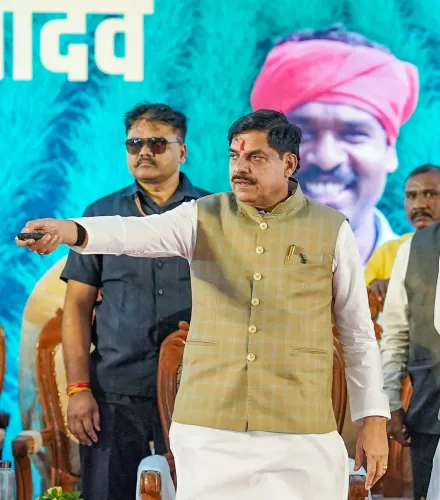
The Chief Minister's Office of Madhya Pradesh, on Wednesday, 22 July 2026, reaffirmed the state government's commitment to standing by farmers during every natural calamity, highlighting the Pradhan Mantri Fasal Bima Yojana (PMFBY) as the primary instrument for delivering financial relief to lakhs of cultivators across the state.
The post, attributed to the office of Chief Minister Dr. Mohan Yadav, declared in Hindi: 'Har aapda mein kisanon ke saath khadi hai sarkar' ('The government stands with farmers in every disaster'), underscoring PMFBY as the channel through which economic support is being channelled to agricultural households.
Context
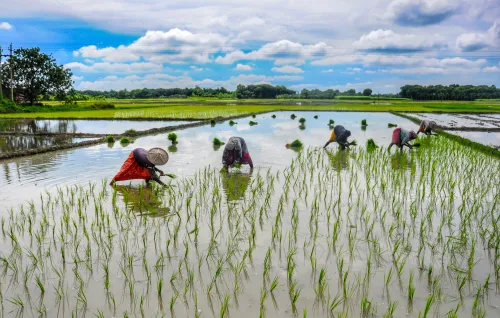
Madhya Pradesh is one of India's largest agrarian states, with a substantial share of its population dependent on rain-fed farming. Crops such as soybean, wheat, and pulses dominate the agricultural landscape, making the state particularly vulnerable to monsoon variability, unseasonal rains, hailstorms, and drought. During periods of weather-related distress, the state government's messaging around farmer welfare schemes takes on added political and policy significance. The post tagged @AgriGoI (the Union Ministry of Agriculture and Farmers Welfare) and @minmpkrishi (the Madhya Pradesh Agriculture Department), signalling coordinated communication between the state and the central government on the issue.Policy Backdrop
Pradhan Mantri Fasal Bima Yojana was launched by the central government in 2016, replacing a set of earlier, fragmented crop insurance programmes. Its design aimed to provide comprehensive financial protection to farmers against losses arising from natural calamities, pest attacks, and disease outbreaks, while also streamlining claim settlement timelines. The scheme operates on a cost-sharing model between the Union government and state governments, with farmers paying a capped premium — as low as 1.5 per cent for Rabi crops and 2 per cent for Kharif crops — while the remaining premium burden is split between the Centre and the state. Madhya Pradesh has historically recorded high enrollment under PMFBY, driven by the scale of its soybean and wheat cultivation and the state administration's active outreach to farming communities.Stakeholders and Impact
The primary beneficiaries of PMFBY in Madhya Pradesh are smallholder and marginal farmers who lack the financial buffer to absorb crop losses without external support. For these households, insurance payouts can be the difference between replanting the next season and falling into debt. The Ministry of Agriculture and Farmers Welfare at the Union level designs and funds the scheme, while state agriculture departments — in this case the Madhya Pradesh Agriculture Department — handle ground-level enrollment, awareness drives, and liaison with insurance companies for claim processing. The coordination visible in this post reflects the standard federal architecture through which PMFBY is implemented.What's Next
Attention will now turn to enrollment figures and claim settlement ratios for the 2026-27 Kharif and Rabi seasons in Madhya Pradesh. Analysts and farmer groups will watch whether the government's stated commitment translates into timely payouts, particularly if the current monsoon season brings significant crop damage. Any supplementary state budget announcements on additional input subsidies or enhanced insurance coverage would be the logical next step in the policy arc the government is signalling.Point of View
Who took office in December 2023, sustaining farmer confidence ahead of seasonal crop cycles is both a governance priority and a political imperative in a state where the agrarian vote is decisive. The tagging of both the Union agriculture ministry and the state department points to a deliberate effort to project Centre-state synergy on farmer welfare. The real test, however, will be whether claim settlement ratios for the 2026-27 seasons match the messaging.
NationPress
21 Oct 2026
Frequently Asked Questions
What is Pradhan Mantri Fasal Bima Yojana and how does it help farmers in Madhya Pradesh?
Pradhan Mantri Fasal Bima Yojana (PMFBY) is a central government crop insurance scheme launched in 2016 that protects farmers against financial losses from natural calamities, pests, and diseases. In Madhya Pradesh, the scheme covers major crops like soybean, wheat, and pulses, with farmers paying a low capped premium while the Centre and state share the remaining cost.
Who is the Chief Minister of Madhya Pradesh in 2026?
Dr. Mohan Yadav has been serving as the Chief Minister of Madhya Pradesh since December 2023 and oversees state-level implementation of central agricultural welfare schemes including PMFBY.
How much premium do farmers pay under PMFBY?
Under PMFBY, farmers pay a maximum premium of 2 per cent of the sum insured for Kharif crops and 1.5 per cent for Rabi crops. The remaining premium burden is shared between the central and state governments.
Why does Madhya Pradesh have high PMFBY enrollment?
Madhya Pradesh has historically reported high PMFBY enrollment because of its large-scale cultivation of rain-fed crops such as soybean, wheat, and pulses, which are highly vulnerable to monsoon variability and weather shocks.
What should farmers in Madhya Pradesh watch for regarding PMFBY in 2026-27?
Farmers and observers should monitor enrollment deadlines and claim settlement ratios for the 2026-27 Kharif and Rabi seasons , as well as any state budget announcements on supplementary input subsidies or enhanced insurance coverage.