Odisha CM Office: 10 kg Free Rice for 3.28 Cr Beneficiaries
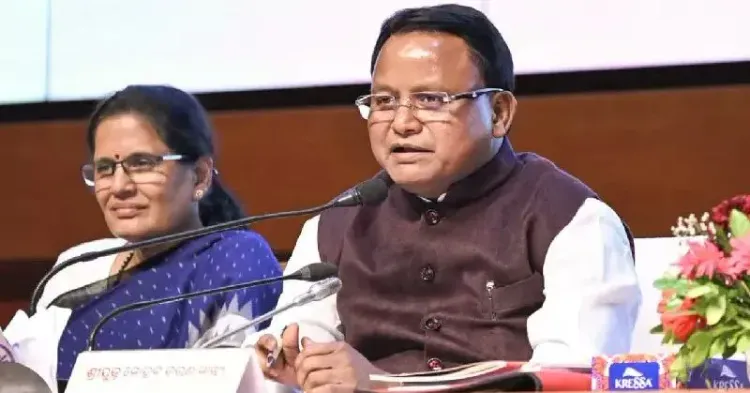
Synopsis
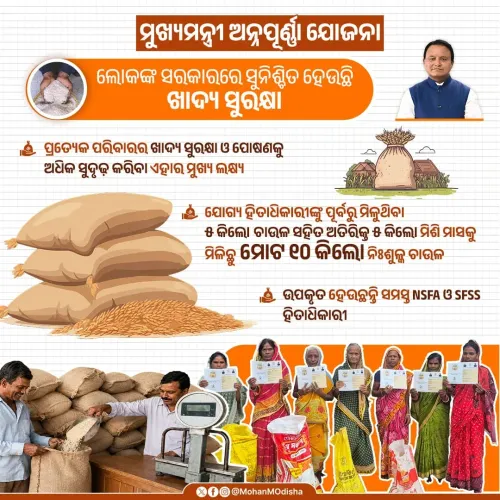
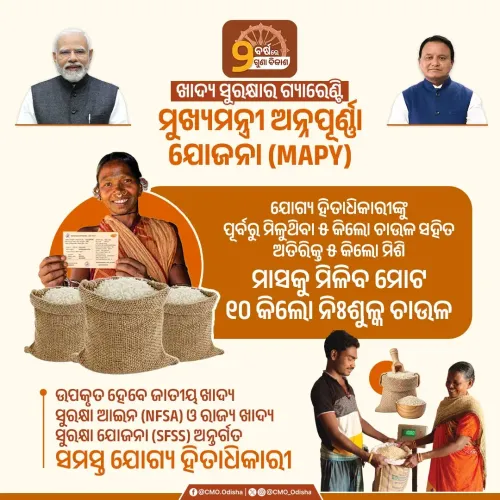
The Chief Minister's Office of Odisha announced on 13 June 2026 that the state is doubling free rice allocations to 10 kg per person, benefiting 3.28 crore residents. The move significantly exceeds the central NFSA floor of 5 kg and marks a major expansion of Odisha's public distribution welfare architecture.
Key Takeaways
The Chief Minister's Office of Odisha announced on 13 June 2026 that free rice allocation is being doubled to 10 kg per person .
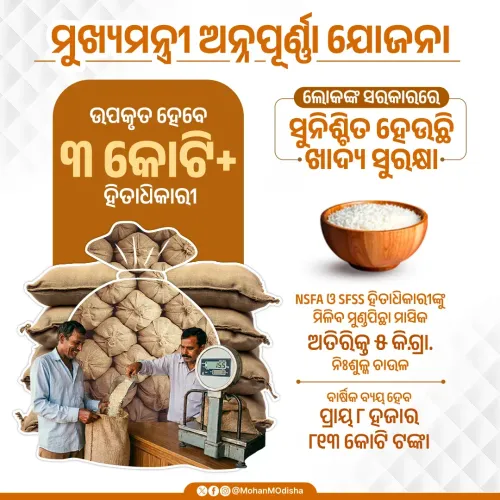
3.28 crore people in Odisha are set to benefit from the expanded food security scheme.
The central National Food Security Act, 2013 entitles beneficiaries to 5 kg of subsidised grain per month ; the state's move doubles this entitlement.
Odisha has a large rural and tribal population historically dependent on the public distribution system for food security.
The fiscal and logistical details — including rollout timeline and budgetary provision — are yet to be formally disclosed.
The announcement could benchmark food security expansion for other eastern Indian states with similar demographic profiles.
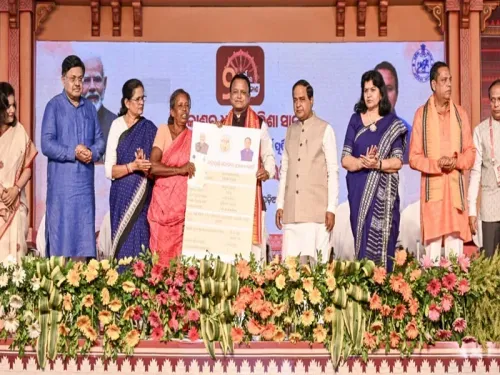
The Chief Minister's Office of Odisha announced on Saturday, 13 June 2026 that the state is doubling its free rice allocation to 10 kg per person under its public distribution system, with 3.28 crore people set to benefit from the expanded entitlement.
Context
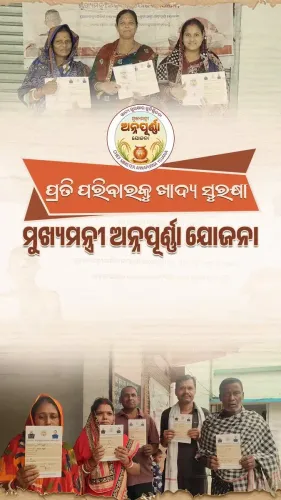
The announcement, shared by the CMO Odisha official account, declares that Odisha is doubling food security cover for its residents — raising the free rice allocation to 10 kg per beneficiary. The state frames this as a significant expansion of its welfare commitment to low-income and rural households.
Odisha has a large rural and tribal population that has historically depended on the public distribution system for food security. The state implemented the National Food Security Act (NFSA) from 2013 onward, which entitled priority households to 5 kg of subsidised rice per person per month under the central scheme.
Policy Backdrop
The National Food Security Act, 2013 remains the legislative backbone of subsidised grain delivery across India, mandating coverage for up to 75 per cent of rural and 50 per cent of urban populations. States retain the authority to supplement central allocations with their own grain quotas funded from state budgets.
Odisha has periodically expanded its PDS architecture beyond the central floor — including enhanced coverage for tribal districts and additional allocations during periods of economic stress. The current announcement, if implemented at the scale stated, would effectively double the per-person entitlement beyond what the NFSA mandates, representing a substantial increase in state food subsidy expenditure.
Indian states have used such PDS enhancements as part of broader welfare consolidation strategies, with announcements often timed around budget cycles or ahead of legislative sessions where fiscal priorities are reviewed.
Stakeholders and Impact
The primary beneficiaries are 3.28 crore residents of Odisha — predominantly low-income households, agricultural labourers, and tribal communities in the state's interior and coastal districts. For these households, the PDS constitutes a critical buffer against food insecurity and price volatility in open markets.
The expansion also carries fiscal implications for the state government. Doubling the free rice allocation will require a proportionate increase in procurement, storage, and distribution capacity through the state's Food Supplies and Consumer Welfare infrastructure. Civil society groups and nutrition advocates tracking malnutrition indicators in Odisha — particularly among children and women in tribal belts — will watch implementation closely.
What's Next
The key questions now centre on the rollout timeline, the mechanism through which the doubling is operationalised within the existing ration-card framework, and the budgetary provision that underwrites the expanded entitlement. The next assembly session and state budget review will be closely watched for formal legislative and fiscal backing of the announcement.
If the 10 kg free rice scheme is rolled out as announced, it would position Odisha among the more generous PDS regimes in India and could set a benchmark for food security expansion in other eastern states with comparable demographic profiles.
Point of View
Signalling an assertive use of state fiscal space to deepen food security. With 3.28 crore beneficiaries, the scale is politically consequential — it touches nearly three-quarters of the state's population and reinforces a pattern of competitive welfare expansion seen across Indian states. The move will be scrutinised for its fiscal sustainability, particularly given Odisha's dependence on central transfers and mineral royalties to fund social expenditure. It also raises the bar for opposition parties and neighbouring states to respond with comparable commitments ahead of future electoral cycles.
NationPress
29 Jul 2026
Frequently Asked Questions
How much free rice will Odisha give under the new scheme?
Under the expanded scheme announced by the Chief Minister's Office of Odisha, each beneficiary will receive 10 kg of free rice — double the earlier allocation.
How many people will benefit from Odisha's free rice scheme?
3.28 crore people in Odisha are set to benefit from the doubled free rice entitlement announced by the state government on 13 June 2026.
What is the National Food Security Act and how does Odisha's scheme differ?
The National Food Security Act, 2013 entitles priority households to 5 kg of subsidised food grains per person per month from the central government. Odisha's new announcement doubles this to 10 kg for free , supplementing the central entitlement through state resources.
When was Odisha's food security doubling announced?
The announcement was made by the Chief Minister's Office of Odisha on Saturday, 13 June 2026 , via the official CMO account on X.
Which communities in Odisha benefit most from the PDS expansion?
Low-income households, agricultural labourers, and tribal communities — particularly in Odisha's interior and coastal districts — are the primary beneficiaries of the expanded public distribution system.