Odisha CM Office Launches WEP Plan, MSME Parks in Ganjam & Kalahandi
Synopsis
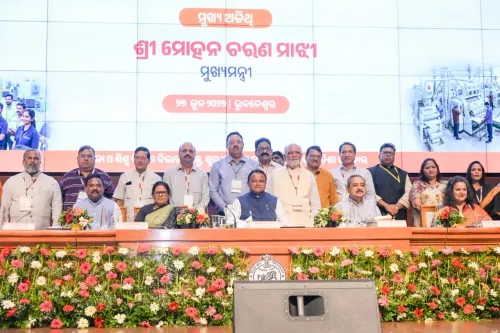
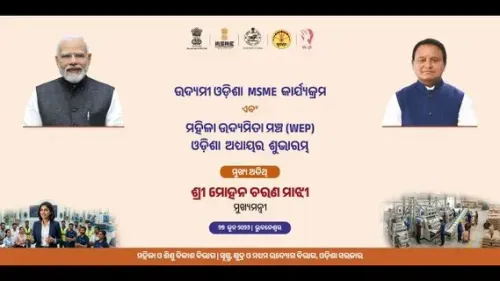
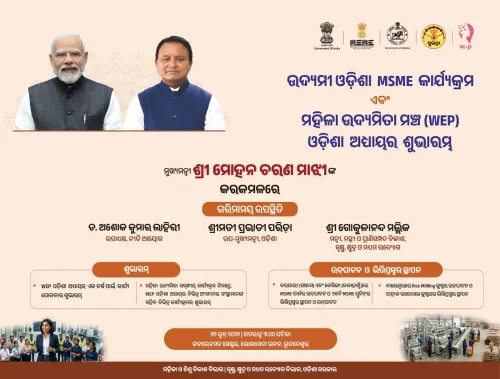
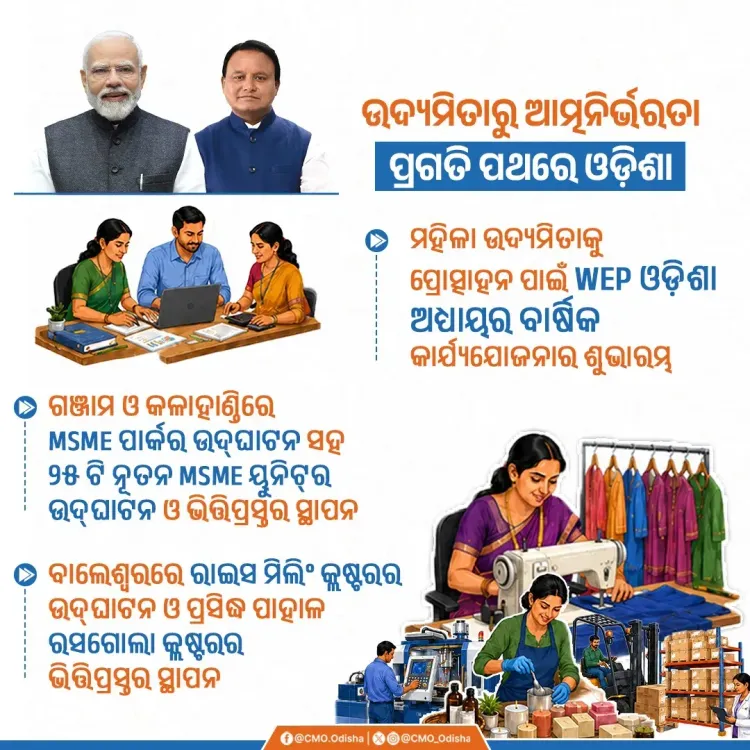
The Chief Minister's Office of Odisha on 27 June 2026 launched the WEP Odisha annual action plan, inaugurated MSME parks in Ganjam and Kalahandi, and laid foundation stones for 25 new MSME units and agro-processing clusters in Balasore, including the GI-tagged Pahala Rasagola Cluster.
Key Takeaways
The WEP Odisha annual action plan was officially launched on 27 June 2026 to support women-led enterprises across the state.
MSME parks were inaugurated in Ganjam and Kalahandi districts to provide ready industrial infrastructure.
Foundation stones were laid for 25 new MSME units across Odisha, expanding the small enterprise base.
A Rice Milling Cluster in Balasore received its foundation stone to boost agro-processing and paddy value addition.
The Pahala Rasagola Cluster in Balasore was launched to organise traditional sweet makers around the GI-tagged product and strengthen market linkages.
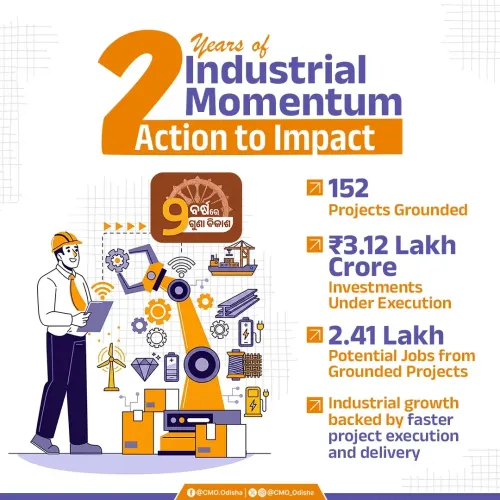
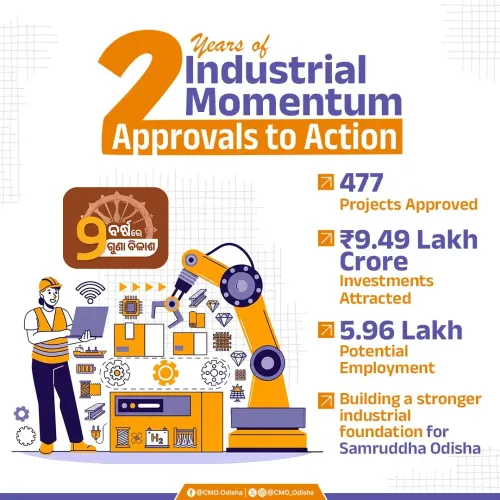
The announcements were made under the #2YearsofLokankaSarakar campaign marking two years of the current Odisha government.
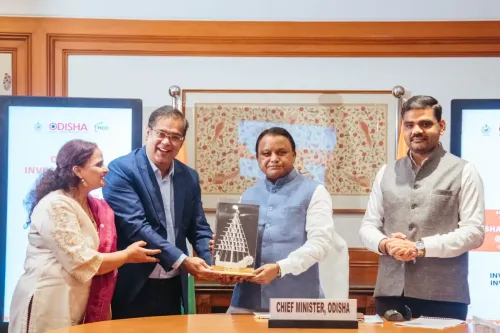
The Chief Minister's Office of Odisha on Saturday, 27 June 2026, announced a cluster of industrial initiatives marking a significant push for entrepreneurship and employment generation across the state, including the launch of the WEP Odisha annual action plan, inauguration of MSME parks in Ganjam and Kalahandi, and foundation-laying for key agro-processing clusters in Balasore.
Context
The official post from the Chief Minister's Office declared: 'ଆତ୍ମନିର୍ଭର ଉଦ୍ୟମିତା ହେଉଛି ସମୃଦ୍ଧ ଓଡ଼ିଶାର ଦୃଢ଼ ଆଧାର' — meaning 'Self-reliant entrepreneurship is the strong foundation of a prosperous Odisha.' The announcement came under the government's #2YearsofLokankaSarakar banner, marking two years of the current administration. Alongside the MSME parks, the government inaugurated and laid the foundation stone for 25 new MSME units across the state, signalling a broad-based effort to decentralise industrial activity beyond the coastal urban belt.
Policy Backdrop
The Women Entrepreneurship Platform (WEP) Odisha chapter is a dedicated initiative to support and scale women-led micro, small, and medium enterprises across the state. The launch of its annual action plan provides a structured roadmap for expanding outreach, skilling, and market linkages for women entrepreneurs in the coming year. Odisha has pursued dispersed industrialisation through sector-specific MSME parks and cluster development since its 2016 Industrial Policy Resolution, aiming to raise the manufacturing share of the state's gross domestic product. The current wave of infrastructure creation in Ganjam and Kalahandi — the latter a predominantly tribal and agrarian district — reflects a deliberate effort to address regional economic imbalances between coastal and interior Odisha.
Stakeholders and Impact
The Ganjam MSME Park and Kalahandi MSME Park are designed to host manufacturing and processing units, providing ready infrastructure that reduces the entry barrier for small entrepreneurs. In Balasore, the foundation stone was laid for a Rice Milling Cluster to strengthen value addition in paddy-producing areas, as well as for the Pahala Rasagola Cluster — an initiative to organise traditional sweet makers around the geographically-indicated Pahala Rasagola and improve their market linkages. Women entrepreneurs, agro-processing units, and small manufacturers across these districts stand to benefit most directly from the new infrastructure and cluster support.
What's Next
Attention will now turn to the operationalisation of the two new MSME parks and the pace at which units begin functioning within them. Employment data from the 25 newly inaugurated MSME units over the next 12 to 18 months will serve as a key indicator of the programme's on-ground impact. The Odisha government's broader ambition — mirroring the national Atmanirbhar Bharat framework — is to make self-employment and small enterprise the engine of inclusive growth, with traditional product clusters like the Pahala Rasagola initiative pointing toward the cultural economy as a viable development pathway.
Point of View
Using tangible industrial events to project a narrative of economic momentum. The choice of Kalahandi — historically associated with poverty and agrarian distress — for an MSME park is politically significant, signalling an intent to address interior Odisha's development deficit. The inclusion of the Pahala Rasagola Cluster alongside conventional manufacturing parks suggests the state is broadening its definition of industry to include the cultural and food economy, a model gaining traction in other Indian states. Whether these initiatives translate into sustained employment will depend on the pace of operationalisation and the depth of market linkages created for cluster participants.
NationPress
26 Sept 2026
Frequently Asked Questions
What is WEP Odisha and what does its annual action plan do?
WEP Odisha is the state chapter of the Women Entrepreneurship Platform, which supports women-led micro, small, and medium enterprises. Its annual action plan sets out a structured roadmap for expanding outreach, skilling, and market access for women entrepreneurs across Odisha during the year.
Where are the new MSME parks in Odisha located?
The two new MSME parks inaugurated on 27 June 2026 are located in Ganjam and Kalahandi districts of Odisha. They are designed to host manufacturing and processing units and reduce infrastructure barriers for small entrepreneurs.
What is the Pahala Rasagola Cluster in Balasore?
The Pahala Rasagola Cluster is a government-backed cluster development initiative centred on the GI-tagged Pahala Rasagola sweet. Its foundation stone was laid in Balasore on 27 June 2026 to organise traditional sweet makers and improve their market linkages and production standards.
How many MSME units were inaugurated in Odisha on 27 June 2026?
The Chief Minister's Office of Odisha announced the inauguration and foundation-laying of 25 new MSME units across the state on 27 June 2026, as part of a broader push for decentralised industrial development.
What is the significance of #2YearsofLokankaSarakar for Odisha's industry policy?
The hashtag marks two years of the current Odisha government and was used to frame the 27 June 2026 industrial announcements as governance milestones, highlighting MSME parks, cluster launches, and the WEP plan as evidence of economic progress under the administration.