Odisha flood alert: Rivers swell as low-pressure system triggers heavy rain across 21 blocks
Synopsis
Odisha is bracing for another flood surge as a Bay of Bengal low-pressure system pushes rivers above warning levels across 21 blocks and six districts. With cumulative rainfall already 32.1 per cent above normal since June, the state has mobilised 67 rescue teams and released ₹170.30 crore in relief funds — but the IMD's next 24-hour forecast signals the worst may not be over.
Key Takeaways
A fresh low-pressure system over the Bay of Bengal has triggered heavy rainfall across Odisha , placing the state on high alert on 24 August .
The Baitarani River at Akhuapada and the Jalaka River at Mathani were flowing above the warning mark as of 9 am Monday .
21 blocks across Baleshwar, Bhadrak, Jajpur, Kendrapada, Kalahandi, and Koraput have been affected, with relief camps established.
The state has deployed 67 rescue teams (15 ODRAF, 8 NDRF, 44 Fire and Emergency Services) and released ₹170.30 crore from the SDRF.
Cumulative rainfall since 1 June stands at 32.1 per cent above normal ; the highest single reading was 169.4 mm at Joda Block, Keonjhar.
The IMD has forecast heavy to very heavy rainfall in Sundargarh, Jharsuguda, Bargarh, Sambalpur, Subarnapur, and Boudh over the next 24 hours .
The Odisha government on Monday, 24 August placed the state on high alert as a fresh low-pressure system over the Bay of Bengal triggered heavy rainfall, pushing major rivers above warning levels and affecting 21 blocks across six districts. The State Emergency Operation Centre (SEOC), operating under the Office of the Special Relief Commissioner (SRC), said the overall situation remains under control, with round-the-clock monitoring in place.
Weather System and IMD Forecast
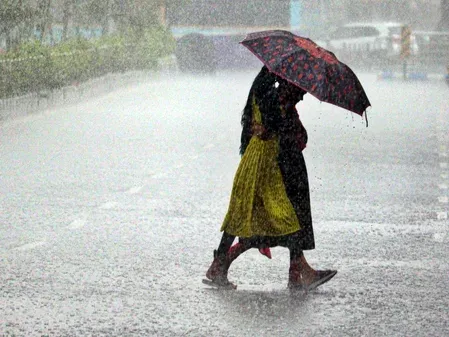
According to the India Meteorological Department (IMD), the low-pressure area — which originally formed over north coastal Odisha and adjoining areas — has since shifted to Gangetic West Bengal and adjoining north Odisha, and is expected to move northwestwards over the next 24 hours. The IMD has warned of heavy to very heavy rainfall at isolated places over Sundargarh, Jharsuguda, Bargarh, Sambalpur, Subarnapur, and Boudh districts, accompanied by thunderstorms, lightning, and gusty winds of 40–50 kmph.
Heavy rainfall is also likely across Baleshwar, Debagada, Anugola, Kendujhar, Mayurbhanj, Nuapada, Balangir, Kalahandi, Kandhamala, Nabarangpur, Rayagada, Koraput, Malkangiri, Gajapati, Ganjam, and Nayagarh districts, the weather agency added.
Rainfall Data and River Levels
The state recorded an average of 32.9 mm of rainfall in the last 24 hours, with the highest single-block reading of 169.4 mm logged at Joda Block in Keonjhar district. Cumulative rainfall from 1 August to 24 August has reached 327.0 mm, which is 18.6 per cent above normal. Since 1 June, the state has received 32.1 per cent excess rainfall — a prolonged wet spell that is straining river systems across the state.
Water levels in the Baitarani River at Akhuapada and the Jalaka River at Mathani were flowing slightly above the warning mark as of 9 am on Monday. More than 100 mm of rainfall was recorded in eight blocks and one urban local body, while rainfall between 50 mm and 100 mm was recorded in 73 blocks and six stations across four urban local bodies.
Rescue Deployment and Relief Operations
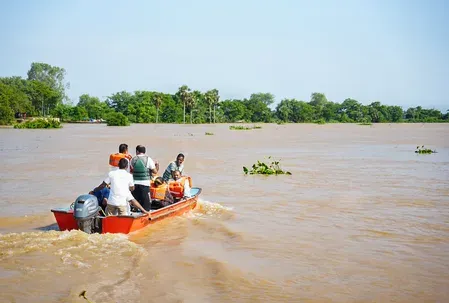
To manage the emerging flood situation, the state has deployed 67 specialised rescue teams — comprising 15 ODRAF, 8 NDRF, and 44 Fire and Emergency Services units — across affected areas. Relief camps have been established in the impacted blocks of Baleshwar, Bhadrak, Jajpur, Kendrapada, Kalahandi, and Koraput districts.
The government has released ₹170.30 crore in phases from the State Disaster Response Fund (SDRF) to fund relief camp operations and ongoing response. Additionally, 1,562.81 metric tonnes of cattle feed have been dispatched to affected districts. The SEOC is coordinating closely with all District Emergency Operation Centres (DEOCs).
Government Advisory and Preparedness
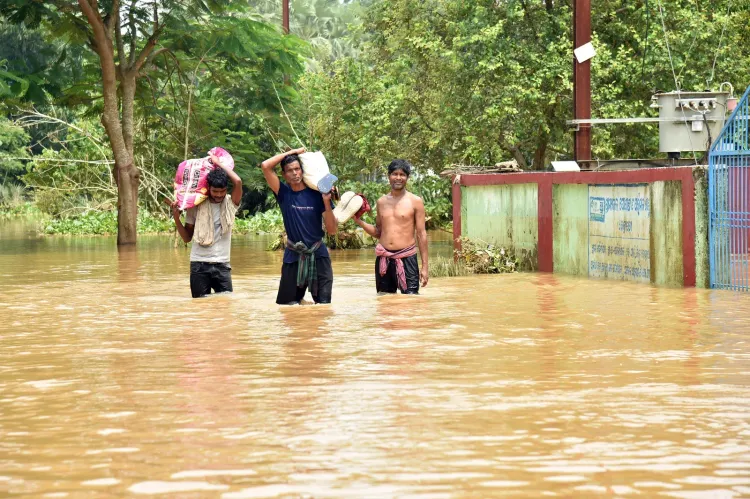
District administrations have been directed to maintain strict surveillance over low-lying areas vulnerable to inundation, landslides, and damage to standing crops and kutcha structures. Notably, this is the latest in a series of flood stress events this monsoon season, with the state already running 32.1 per cent above normal rainfall since June — a figure that underscores the cumulative pressure on drainage and river infrastructure.
The state government has assured that the administration remains fully prepared to respond to any eventuality and protect lives and property across the affected regions.
Point of View
And each new low-pressure system carries disproportionate risk. The state's reliance on warning-level thresholds as the primary trigger for evacuation also deserves scrutiny — by the time rivers breach warning marks, displacement of vulnerable communities in kutcha structures is already a near-certainty. Proactive evacuation protocols, rather than reactive ones, may be the next frontier for Odisha's disaster management model.
NationPress
9 Oct 2026
Frequently Asked Questions
What is causing the flood alert in Odisha on 24 August?
A fresh low-pressure system that formed over north coastal Odisha and adjoining areas of the Bay of Bengal has triggered heavy to very heavy rainfall, pushing rivers above warning levels across 21 blocks in six districts. The system has since moved to Gangetic West Bengal but continues to influence rainfall patterns in Odisha.
Which rivers are above the warning level in Odisha?
The Baitarani River at Akhuapada and the Jalaka River at Mathani were both flowing slightly above the warning mark as of 9 am on Monday, 24 August. District administrations have been instructed to monitor these and other water bodies closely.
How many rescue teams has Odisha deployed?
The state has deployed 67 specialised rescue teams, comprising 15 ODRAF units, 8 NDRF teams, and 44 Fire and Emergency Services units. These teams are managing localised waterlogging, rescue operations, and relief camp support across affected districts.
How much relief funding has the Odisha government released?
The government has released ₹170.30 crore in phases from the State Disaster Response Fund (SDRF) to support relief camp operations and emergency response. Additionally, 1,562.81 metric tonnes of cattle feed have been dispatched to affected districts.
Which districts in Odisha are most at risk from the current low-pressure system?
The IMD has flagged Sundargarh, Jharsuguda, Bargarh, Sambalpur, Subarnapur, and Boudh for heavy to very heavy rainfall with thunderstorms and winds of 40–50 kmph in the next 24 hours. A wider set of districts — including Baleshwar, Koraput, Malkangiri, Gajapati, and Ganjam — are also on heavy-rainfall watch.