Odisha orders fire safety audit in schools after Lucknow coaching centre blaze

Synopsis
Triggered by the deadly Lucknow coaching centre fire, Odisha has launched a statewide fire safety crackdown across all schools, colleges, and skill centres — with joint inspection teams, mandatory mock drills, and a hard 15-day deadline for district-level action reports. The move signals a rare instance of one state's tragedy prompting immediate preventive action in another.
Key Takeaways
OSDMA issued a statewide fire safety inspection directive on 24 June , triggered by the fatal Lucknow coaching centre blaze .
All District Collectors and DDMA Chairpersons have been ordered to launch immediate field inspections of educational institutions and coaching centres.
Joint teams will verify Fire Safety Certificates , NOCs , and the functionality of extinguishers, smoke detectors, alarms, and emergency lighting.
Institutions must designate trained Fire Safety Wardens and Nodal Officers , and conduct quarterly fire safety drills.
District Collectors must submit an Action Taken Report within 15 days , covering institutions inspected, deficiencies found, and corrective steps taken.
Special focus has been placed on high-risk multi-storied buildings and congested urban campuses .
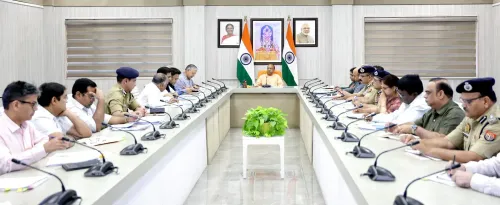
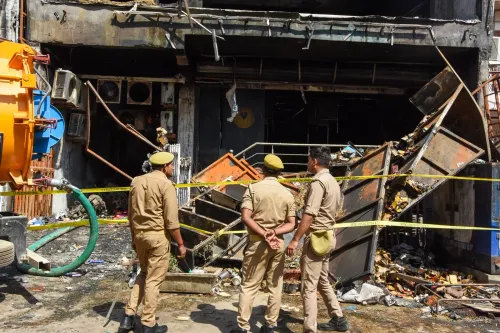
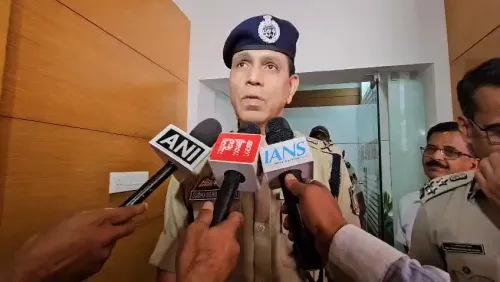
The Odisha State Disaster Management Authority (OSDMA) on Wednesday, 24 June directed an immediate fire safety audit across all educational institutions, coaching centres, and skill development hubs in the state, following the deadly blaze at a coaching centre in Lucknow that claimed several lives, including those of students. The directive was issued to all District Collectors and Chairpersons of District Disaster Management Authorities (DDMAs) statewide.
What the Directive Mandates
Rajesh Prabhakar Patil, Special Relief Commissioner and Managing Director of OSDMA, emphasised in the official order that the safety of students, trainees, faculty, and support staff is paramount. Local authorities have been instructed to launch immediate field inspections to ensure strict compliance with the Odisha Fire Prevention and Fire Safety Rules, 2017, the Odisha Fire Prevention and Fire Safety (Amendment) Rules, 2025, and all other applicable safety regulations.
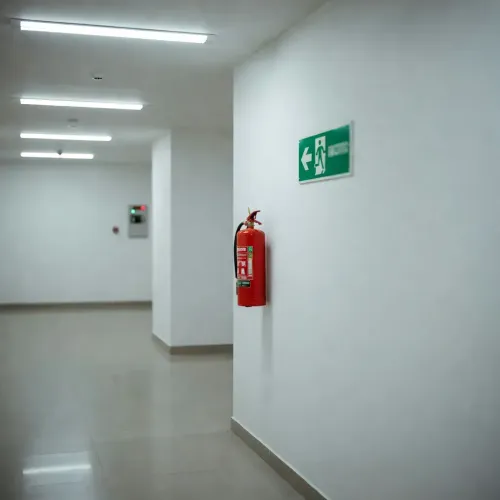
Joint inspection teams will verify the validity of existing Fire Safety Certificates and No-Objection Certificates (NOCs). Inspectors will also check the functionality of fire safety equipment — including extinguishers, smoke detectors, alarms, and emergency lighting systems. Institutions have been directed to keep evacuation routes clear of combustible materials, ensure regular electrical maintenance, and provide adequate emergency exits with proper signage.
High-Risk Buildings Under Special Scrutiny
Inspection drives will pay particular attention to high-risk multi-storied complexes and congested urban spaces, which pose elevated evacuation challenges. All exits, staircases, corridors, and emergency escape routes must remain unobstructed at all times, and doors along evacuation routes must open outward for rapid egress during emergencies.
Notably, this directive comes as a new academic session begins across Odisha — a period when institutions see peak student occupancy, raising the stakes for fire preparedness.
Active Readiness Over Passive Compliance
The order explicitly calls for a shift from passive compliance to active readiness. As stated in the directive: 'Academic and training institutions must transition from passive compliance to active readiness by conducting regular fire safety awareness programmes for students, trainees, teachers, instructors, and support staff, preferably every quarter.'
Each institution is required to officially designate and train Fire Safety Wardens and Nodal Officers. Structured mock drills are to be organised in coordination with Fire Services authorities and local administrations. Institutions must also prepare and prominently display institution-specific Emergency Response and Evacuation Plans, along with up-to-date contact details for Fire Services, Police, Health Departments, and the District Emergency Operation Centre (DEOC).
Multi-Agency Monitoring and Accountability
A multi-agency monitoring mechanism has been put in place, with joint inspection teams drawn from the Revenue, Fire Services, School and Mass Education, Higher Education, and Skill Development departments, as well as local authorities. Institutions found deficient in fire safety arrangements face immediate action and must rectify shortcomings within a stipulated timeframe.
District Collectors have been asked to submit an Action Taken Report (ATR) within 15 days, detailing the number of institutions inspected, deficiencies identified, and corrective steps taken. The Lucknow tragedy has clearly set a deadline-driven accountability clock ticking across Odisha's district administrations.
Point of View
But the real test is follow-through — India has a long record of post-tragedy circulars that expire before the ink dries. The 15-day ATR deadline and multi-agency inspection mechanism are structural positives, yet the order stops short of mandating third-party audits or public disclosure of inspection outcomes. Without transparency on which institutions fail and whether closures follow, this risks being another compliance exercise on paper. The Lucknow fire is not an outlier; it is part of a pattern of under-regulated, overcrowded coaching centres nationwide — and Odisha's response, however prompt, addresses symptoms more than the systemic regulatory gap.
NationPress
24 Jun 2026
Frequently Asked Questions
Why did OSDMA order fire safety inspections in Odisha schools and coaching centres?
OSDMA issued the directive on 24 June following the deadly fire at a coaching centre in Lucknow that killed several people, including students. The authority ordered immediate audits across all educational institutions and skill development hubs in Odisha as a preventive measure.
What will inspectors check during the fire safety audit?
Joint inspection teams will verify the validity of Fire Safety Certificates and NOCs, and check the functionality of extinguishers, smoke detectors, alarms, and emergency lighting. They will also ensure evacuation routes are unobstructed and that institutions have proper emergency signage and exit doors that open outward.
Which institutions are covered under the OSDMA directive?
The directive covers all educational institutions, coaching centres, and skill development hubs across Odisha. Special attention is being given to high-risk multi-storied complexes and congested urban campuses.
What are institutions required to do under the new order?
Institutions must designate and train Fire Safety Wardens and Nodal Officers, conduct quarterly fire safety awareness programmes, organise periodic mock drills with Fire Services, and display institution-specific Emergency Response and Evacuation Plans. They must also maintain updated emergency contact details for Fire Services, Police, and Health Departments.
What is the deadline for compliance reporting?
District Collectors must submit an Action Taken Report (ATR) within 15 days, detailing the number of institutions inspected, deficiencies identified, and corrective steps taken. Institutions found deficient must rectify shortcomings within a stipulated timeframe or face immediate action.