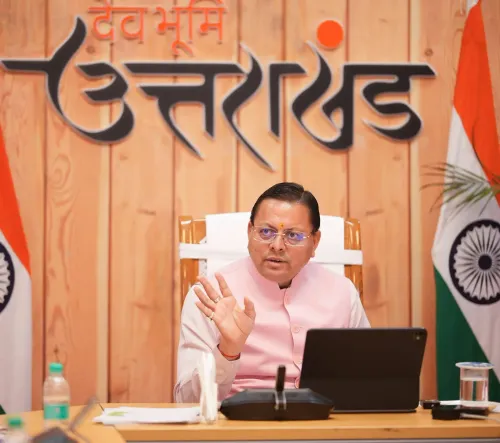
CM Dhami Orders Fire Safety Audit of All Public Buildings in Uttarakhand
Synopsis
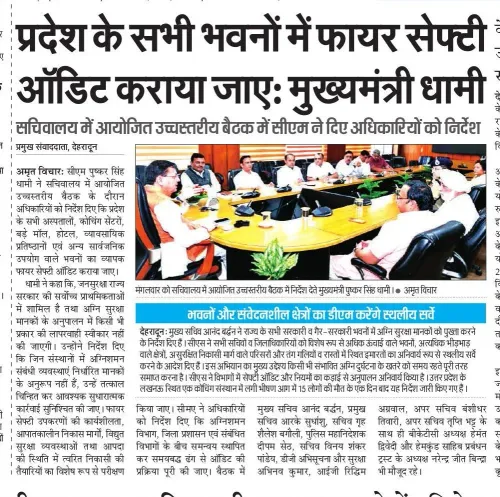
Uttarakhand Chief Minister Pushkar Singh Dhami has ordered a state-wide fire safety audit of all hospitals, malls, hotels, coaching centres, and commercial buildings. Officials must identify non-compliant institutions and ensure immediate corrective action, covering firefighting equipment, emergency exits, electrical safety, and evacuation readiness.
Key Takeaways
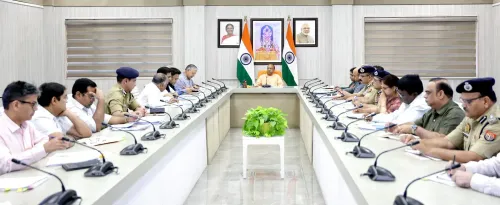
CM Pushkar Singh Dhami chaired a high-level secretariat meeting on 23 June 2026 and issued the fire safety audit directive.
The audit covers all hospitals, coaching centres, malls, hotels, commercial establishments, and public buildings across Uttarakhand .
Officials must immediately identify institutions not meeting prescribed fire safety standards and enforce corrective action.
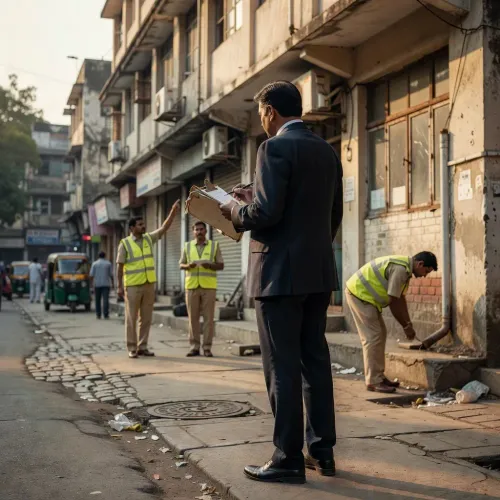
The audit will specifically examine firefighting equipment functionality, emergency exit routes, electrical safety systems, and evacuation preparedness.
The directive is grounded in the Disaster Management Act, 2005 and the National Building Code of India, 2016 .
Compliance reports from district authorities are the expected next step, with potential legislative follow-up on fire services rules.
Uttarakhand Chief Minister Pushkar Singh Dhami on Tuesday, 23 June 2026, directed senior officials at a high-level secretariat meeting to conduct comprehensive fire safety audits across all hospitals, coaching centres, malls, hotels, commercial establishments, and other public buildings throughout the state. The directive mandates immediate identification and corrective action against institutions that fall short of prescribed fire safety standards.
What the Directive Says
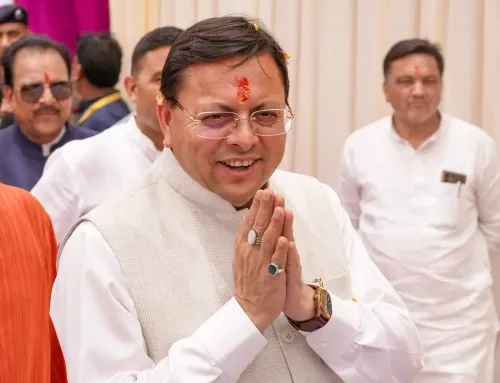
Posting on X, CM Dhami stated that officials have been instructed — 'प्रदेशभर के सभी अस्पतालों, कोचिंग सेंटरों, मॉल, होटल, व्यावसायिक प्रतिष्ठानों एवं अन्य सार्वजनिक भवनों का व्यापक फायर सेफ्टी ऑडिट कराने के निर्देश दिए हैं' ['comprehensive fire safety audits of all hospitals, coaching centres, malls, hotels, commercial establishments and other public buildings across the state have been ordered']. The audit is to specifically test the operational status of firefighting equipment, emergency exit routes, electrical safety systems, and rapid evacuation preparedness in disaster scenarios. Institutions found non-compliant are to be flagged immediately for remedial action.
Policy Backdrop
The directive draws on the framework established by the Disaster Management Act, 2005, which mandates emergency preparedness protocols for Indian states. The National Building Code of India, 2016 further updated fire safety norms specifically covering hospitals, hotels, educational institutions, and commercial buildings, forming the legal baseline against which the audits will be measured. Uttarakhand also has a standing State Disaster Management Authority that addresses recurring natural and man-made risks in the Himalayan region.
Stakeholders and Impact
The order directly affects a wide cross-section of operators and administrators — from hospital management and hotel chains to coaching centre owners and mall developers across Uttarakhand's districts. Non-compliant establishments face the prospect of mandatory corrective measures, which could include temporary operational restrictions until safety standards are met. The breadth of the audit — spanning healthcare, education, hospitality, and retail — signals a state-wide enforcement sweep rather than a sector-specific review.
What's Next
Compliance reports from district authorities will be the immediate deliverable, with officials expected to submit findings on institutions that fail to meet prescribed standards. Analysts tracking state governance will also watch whether the audit exercise leads to proposed amendments in Uttarakhand's fire services rules in an upcoming legislative session. The broader national pattern suggests that such directives, when followed through with enforcement, have a measurable impact on reducing fire-related casualties in public spaces.
Point of View
Where high-profile building fire incidents nationally tend to prompt reactive but wide-ranging compliance crackdowns. The directive's breadth — covering healthcare, education, hospitality, and retail simultaneously — suggests the administration is seeking visible enforcement optics as much as systemic reform. The real test will be whether district-level compliance reports translate into sustained regulatory action or remain a one-cycle exercise. For a Himalayan state with a large seasonal tourism footprint, robust fire safety enforcement in hotels and commercial spaces carries particular public safety weight.
NationPress
22 Sept 2026
Frequently Asked Questions
What did CM Dhami order regarding fire safety in Uttarakhand?
CM Pushkar Singh Dhami directed officials to conduct comprehensive fire safety audits of all hospitals, coaching centres, malls, hotels, commercial establishments, and public buildings across Uttarakhand, with immediate corrective action required for non-compliant institutions.
Which buildings are covered under the Uttarakhand fire safety audit?
The audit covers all hospitals, coaching centres, malls, hotels, commercial establishments, and other public buildings throughout Uttarakhand.
What will the fire safety audit in Uttarakhand check?
The audit will specifically test the operational status of firefighting equipment, emergency exit routes, electrical safety systems, and rapid evacuation preparedness in the event of a disaster.
What law governs fire safety compliance in Indian public buildings?
The Disaster Management Act, 2005 and the National Building Code of India, 2016 together form the primary legal framework for fire safety compliance in hospitals, hotels, educational institutions, and commercial buildings across India.
What happens to buildings that fail the fire safety audit in Uttarakhand?
Institutions found to have fire safety arrangements that do not meet prescribed standards are to be immediately identified by officials and subjected to necessary corrective action, as per CM Dhami's directive.