CM Dhami Orders 1,000 Forest Guard Hires, Forest Fire Crackdown
Synopsis
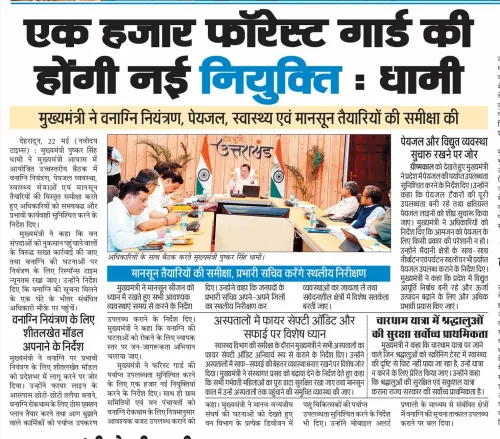
Uttarakhand CM Pushkar Singh Dhami on 22 May 2026 ordered 1,000 new forest guard appointments, statewide rollout of the Shitalakhet fire-control model, a one-hour incident response mandate, and strict action on water tanker black-marketeering, alongside hospital fire audits and Char Dham pilgrim health screening directives.
Key Takeaways
One-hour response rule: Officials must reach a forest fire site within one hour of receiving an alert.
1,000 new appointments: CM Dhami ordered 1,000 new forest guard recruitments to strengthen ground-level fire response.
Shitalakhet Model: The community-based Shitalakhet Model of forest fire control is to be implemented statewide.
Van Panchayats empowered: Village committees and Van Panchayats to receive budgetary support for fire prevention as per rules.
Pilgrim safety: Devotees found unfit in health screening at Char Dham entry points are to be counselled against proceeding with the yatra.
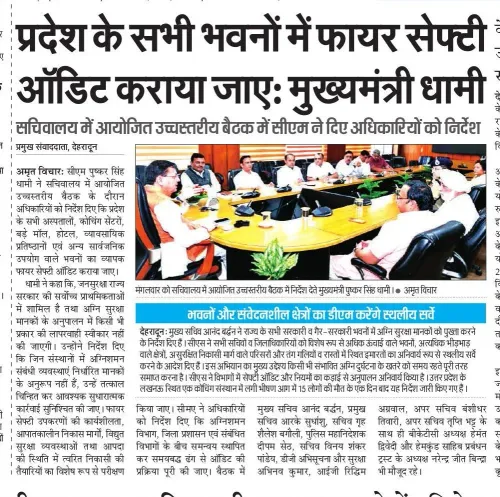
Hospital audits: Mandatory fire safety audits ordered for all hospitals across the state.
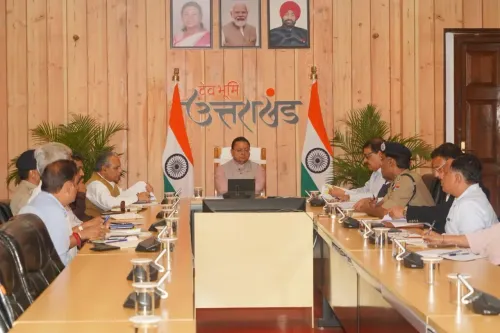
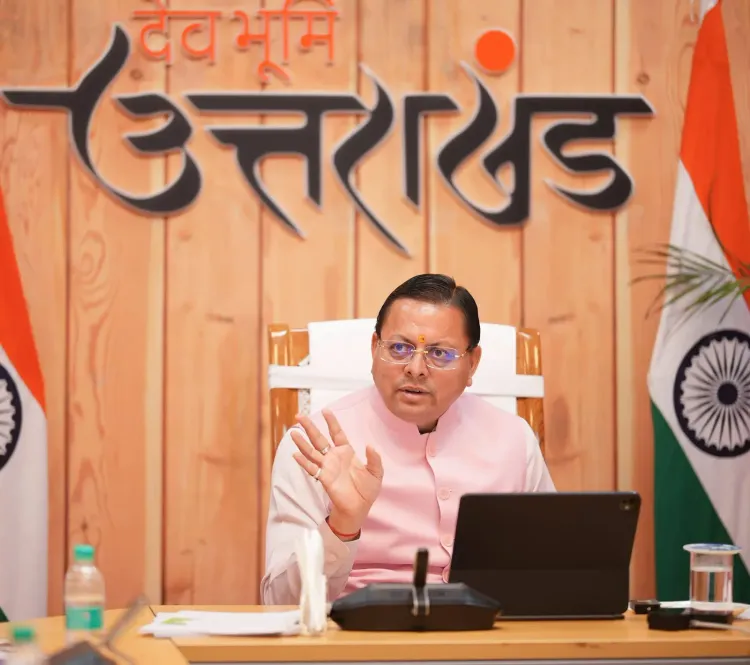
Uttarakhand Chief Minister Pushkar Singh Dhami on Friday, 22 May 2026, chaired a high-level review at his official residence covering forest fire control, drinking water supply, health services, and monsoon preparedness, issuing a series of directives to senior officials aimed at tightening the state's response to summer emergencies.
Context
At the meeting, CM Dhami directed officials that those damaging forest resources must face strict action, and that response time to forest fire incidents must be kept to a minimum. He set a clear benchmark: 'वनाग्नि की सूचना मिलने के एक घंटे के भीतर संबंधित अधिकारी मौके पर पहुंचें' — 'The concerned officer must reach the site within one hour of receiving information about a forest fire.'
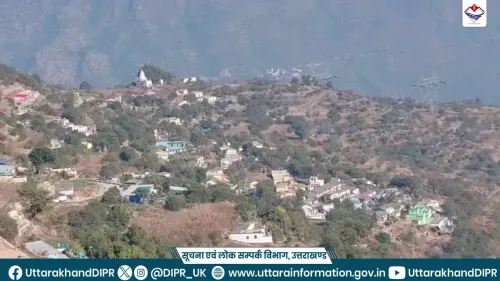
Uttarakhand faces recurring summer forest fires driven by dry conditions, dense pine forests, and human activity. Annual pre-monsoon review meetings have become a fixture of state administration, combining enforcement measures with community-level participation through institutions such as Van Panchayats.
Policy Backdrop
CM Dhami directed officials to push for statewide implementation of the Shitalakhet Model of forest fire control — a community-based approach that has drawn attention as an effective local intervention. He ordered 1,000 new forest guard appointments to ensure adequate ground-level presence across the state.
Village committees and Van Panchayats — traditional forest councils with deep roots in Uttarakhand's hill communities — are to be provided the necessary budget as per rules for fire prevention activities. This approach of pairing enforcement with community empowerment reflects a broader pattern seen across successive state administrations.
On water and power, officials were directed to maintain uninterrupted drinking water and electricity supply across all urban and rural areas during the summer season. Dhami specifically ordered strict action against black-marketeering of water tankers, a recurring complaint during peak summer months.
Stakeholders and Impact
Backup arrangements for water and power supply are to be ensured at Char Dham Yatra route points, hospitals, and other critical institutions. The Char Dham Yatra — the annual pilgrimage to Badrinath, Kedarnath, Gangotri, and Yamunotri — draws hundreds of thousands of devotees each summer, placing significant pressure on the state's infrastructure and health systems.
On health, officials were directed to mandatorily conduct fire safety audits of all hospitals and to promote institutional deliveries. A notable directive concerned pilgrim safety: officials were told to counsel devotees who are found unfit during screening tests at Char Dham entry points not to proceed with the yatra, a measure aimed at reducing pilgrimage-related health emergencies.
Forest communities, rural residents dependent on uninterrupted water supply, health institutions, and lakhs of pilgrims travelling the Char Dham route stand as the primary stakeholders in the directives issued at the review.
What's Next
The key indicators to watch will be the pace of the 1,000 forest guard recruitments and the rollout of the Shitalakhet Model across districts before peak summer and the onset of the monsoon. Hospital fire safety audits and the implementation of pilgrim health screening at Char Dham entry points will serve as measurable benchmarks for follow-through. With the monsoon approaching, the state's ability to transition swiftly from fire-season protocols to flood and landslide preparedness will be a further test of the administrative machinery CM Dhami has sought to activate through this review.
Point of View
But the specificity of the directives — a one-hour response mandate, a named community model, a four-digit recruitment target — suggests an attempt to move beyond routine exercises toward measurable accountability. Embedding the Shitalakhet Model into state policy and tying Van Panchayat budgets to fire prevention aligns with a broader national push to leverage community institutions for environmental governance. The Char Dham pilgrim screening directive is politically significant: it places the onus of safety on the administration rather than leaving it to individual devotees, which could reduce health emergency numbers but also invites scrutiny if pilgrims are turned away. Whether these directives translate into ground-level change before peak summer will be the real test of the Dhami government's administrative reach.
NationPress
5 Oct 2026
Frequently Asked Questions
What is the Shitalakhet Model for forest fire control in Uttarakhand?
The Shitalakhet Model is a community-based approach to forest fire prevention and control developed in Uttarakhand that CM Dhami has now ordered to be implemented statewide. It involves local participation and swift ground-level response to contain fires before they spread.
How many new forest guards will be recruited in Uttarakhand?
CM Dhami has directed that 1,000 new forest guard appointments be made to ensure adequate staffing for forest fire response across Uttarakhand.
What is the new rule for responding to forest fires in Uttarakhand?
Officials have been directed that the concerned officer must reach the site of a forest fire within one hour of receiving information about the incident.
What health measures have been ordered for Char Dham Yatra 2026?
Officials have been directed to counsel pilgrims who are found unfit during health screening tests at Char Dham entry points not to proceed with the yatra, alongside ensuring backup water and power supply along the entire pilgrimage route.
What action has CM Dhami ordered against water tanker black-marketeering?
CM Dhami directed officials to take strict action against the black-marketeering of water tankers during the summer season to ensure equitable drinking water supply across urban and rural areas of Uttarakhand.