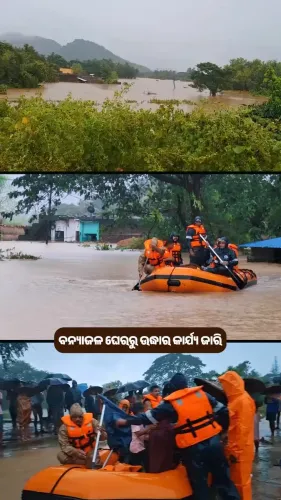
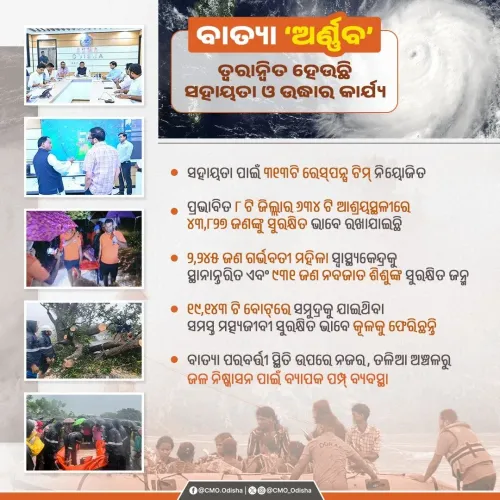
Odisha CMO: Pregnant Woman Rescued from Cyclone Arnab
Synopsis
During Cyclone Arnab, Odisha's Chief Minister's Office confirmed a pregnant woman from Rajakund village was safely rescued, with emergency operations continuing statewide. The update reflects Odisha's established zero-casualty disaster management model built after the 1999 super cyclone.
Key Takeaways
The Chief Minister's Office of Odisha confirmed a pregnant woman from Rajakund village was safely evacuated during Cyclone Arnab on 29 October 2026 .
The CMO declared public protection as the 'highest priority' of the state government in its official communication.
Rescue and emergency assistance operations were confirmed to be ongoing across affected areas.
Odisha's disaster response infrastructure traces back to the 1999 super cyclone , after which the OSDMA was established.
During Cyclone Fani (2019) , Odisha evacuated over one million people in under 48 hours , establishing its zero-casualty model.
Real-time official updates form a core part of Odisha's crisis communication strategy during Bay of Bengal cyclones.
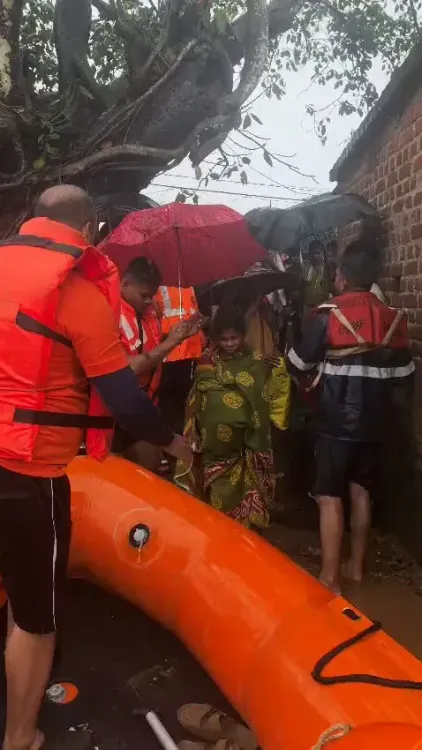
As Cyclone Arnab bore down on Odisha's coast, rescue teams did not wait — they moved. The Chief Minister's Office of Odisha confirmed on Thursday, 29 October 2026 that a pregnant woman from Rajakund village had been safely evacuated during the height of the storm, underscoring the state government's declared priority: public safety above all else.
The post, written in Odia, stated: 'ଲୋକଙ୍କ ସରକାରରେ ଜନସୁରକ୍ଷା ହିଁ ସର୍ବୋଚ୍ଚ ପ୍ରାଥମିକତା' — 'In a people's government, public protection is the highest priority.' It confirmed that rescue operations were ongoing to ensure the safety of residents and provide emergency assistance.Rajakund rescue — one woman, the whole model on display
The evacuation of a pregnant woman mid-cyclone is precisely the kind of operation Odisha's disaster apparatus was built for. After the catastrophic 1999 super cyclone killed nearly 10,000 people, the state established the Odisha State Disaster Management Authority (OSDMA) to coordinate evacuations, operate early-warning systems, and pre-position rapid response teams along vulnerable stretches of the Bay of Bengal coast.
The model drew global attention during Cyclone Fani in 2019, when over one million people were evacuated in under 48 hours, keeping fatalities remarkably low. The Rajakund rescue fits that same template — identify the most vulnerable, move them first, communicate publicly in real time.
Why the CMO posts these updates — and why it matters
Real-time official communication during a cyclone serves two purposes simultaneously: it signals operational effectiveness to a nervous public, and it places accountability on record. When the CMO confirms a pregnant woman has been safely extracted from an affected village by name, it is both a reassurance and a proof-of-concept — rescue operations are not stalled, and no group is being left behind.
Odisha's coastal districts, home to dense fishing communities and farming populations, remain acutely exposed to Bay of Bengal storms that intensify rapidly. The government's investment in cyclone shelters, trained local response teams, and multi-agency coordination has made granular, village-level rescues like this one a routine rather than an exception — and that is exactly the point.
Rescue work, the CMO confirmed, continues. The priority now shifts to damage assessment, relief camp management, and ensuring no one remains stranded once Arnab passes.
Point of View
Not just an operational bulletin — it positions the government as responsive to the most vulnerable at the most dangerous moment. The state's two-decade investment in disaster infrastructure, from OSDMA to pre-positioned shelters, means these real-time rescues are now policy outcomes made visible. For a ruling dispensation, publicising granular rescues mid-storm is also politically astute: it demonstrates administrative competence where citizens are watching most closely. The Arnab response will likely be measured against the Fani benchmark, making every confirmed rescue both a humanitarian act and a data point.
NationPress
29 Oct 2026
Frequently Asked Questions
What happened during Cyclone Arnab in Odisha?
During Cyclone Arnab on 29 October 2026, Odisha's government conducted rescue operations across affected areas, including the safe evacuation of a pregnant woman from Rajakund village. The Chief Minister's Office confirmed that emergency assistance was ongoing.
Who was rescued from Rajakund village during Cyclone Arnab?
A pregnant woman from Rajakund village was safely evacuated by rescue teams during Cyclone Arnab, as confirmed by the Chief Minister's Office of Odisha on 29 October 2026.
How does Odisha manage cyclone disasters?
Odisha manages cyclone disasters through the Odisha State Disaster Management Authority (OSDMA), established after the devastating 1999 super cyclone. The state uses early warning systems, pre-positioned rapid response teams, and cyclone shelters to minimise casualties — a model that gained global recognition during Cyclone Fani in 2019.
What is Odisha's zero-casualty cyclone model?
Odisha's zero-casualty model involves mass pre-emptive evacuations, early warning systems, and community-level disaster preparedness. During Cyclone Fani in 2019, over one million people were evacuated in under 48 hours, keeping fatalities very low and setting a national benchmark.
Is Cyclone Arnab dangerous for Odisha?
Cyclone Arnab prompted active rescue and evacuation operations in Odisha as of 29 October 2026, according to the state's Chief Minister's Office. Rescue work was confirmed to be ongoing, with the government prioritising public safety and emergency assistance.