J&K can compete with Tier 2 cities for GCC investment: Omar Abdullah
Synopsis
At the inaugural J&K GCC Summit 2026 in Jammu, Chief Minister Omar Abdullah made a pointed case for the region as a serious contender for Global Capability Centre investments — not by chasing Hyderabad or Bengaluru, but by competing with India's Tier 2 and Tier 3 cities, backed by fresh Ease of Doing Business legislation and a growing pool of locally trained talent.
Key Takeaways
Chief Minister Omar Abdullah addressed the inaugural J&K GCC Summit 2026 at IIM Jammu on 9 October 2026 , virtually from New Delhi.
He positioned J&K as a competitive GCC destination, targeting Tier 2 and Tier 3 city rivals rather than established hubs like Hyderabad or Bengaluru.
The summit drew participation from 45 organisations , 55+ industry leaders , and over 300 delegates .
J&K's new Ease of Doing Business legislation has been signed into law by the Lieutenant Governor following passage in the Legislative Assembly.
Abdullah highlighted institutions including IIM Jammu , IIT Jammu , and University of Kashmir as pillars of a local talent pipeline for the GCC sector.
The government aims to engage with NASSCOM on a sustained basis and has invited companies to explore J&K's investment potential.
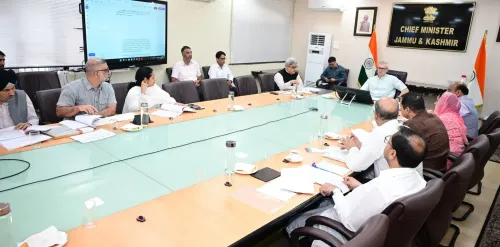
Jammu and Kashmir Chief Minister Omar Abdullah on Friday, 9 October 2026, declared that Jammu and Kashmir (J&K) has the potential to emerge as a competitive destination for Global Capability Centre (GCC) companies, challenging established tech hubs by positioning the region alongside India's rising Tier 2 and Tier 3 cities. He made the remarks while addressing the inaugural session of the J&K GCC Summit 2026, held at IIM Jammu, virtually from New Delhi.
Summit Overview and Objectives
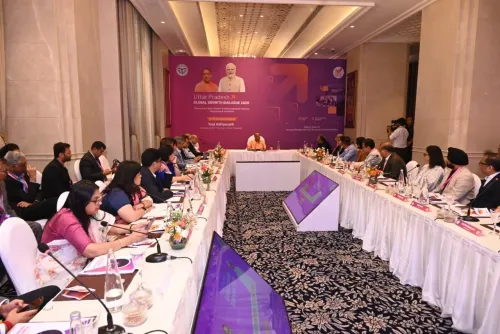
The two-day summit, themed 'Unlocking J&K's GCC Potential for Building Growth Ecosystem and Catalysing Investment', brought together representatives from government, industry and academia to explore pathways for expanding J&K's footprint in India's fast-growing GCC sector. The event drew participation from around 45 organisations, more than 55 industry leaders, and over 300 delegates. Its overarching aim is to strengthen engagement between policymakers, industry and academia, and translate J&K's latent potential into investment, innovation, and employment.
What Omar Abdullah Said
Calling upon industry leaders to look beyond conventional hubs, Omar Abdullah emphasised that the government is committed to creating a competitive, business-friendly ecosystem. 'We have to make J&K a place that is competitive, a place that is attractive to do business, a place where you can make money, and a place where we can compete with Tier 2 and Tier 3 cities around the country,' he said.
He drew a parallel between the evolution of GCCs in India — from call centres and business process outsourcing operations to centres of innovation and enterprise — and J&K's own transformation over the past three to three-and-a-half decades. 'The story of GCCs in India is a story of evolution, as is the story of J&K,' Abdullah noted, adding that J&K's emergence as a topic in GCC investment conversations represented a significant shift.
Acknowledging the region's ongoing perception challenge rooted in its turbulent past, he said the government was actively working to address it through investments across industry, manufacturing, agriculture, tourism, and emerging technology sectors. He stressed that J&K need not replicate the growth paths of Hyderabad, Bengaluru, or Chennai, but could benefit from their experiences. 'Coming late to the party is disappointing, but it is not always disadvantageous. We can learn from the experiences of others. We don't have to reinvent the wheel. We have to use it better,' he said.
Talent Retention and Skilled Workforce
A recurring theme in Abdullah's address was the imperative to retain local talent. He highlighted the presence of premier institutions in the region — IIM Jammu, IIT Jammu, Shri Mata Vaishno Devi University, the University of Jammu, the University of Kashmir, and the Islamic University of Science and Technology — as a foundation for a skilled, job-ready workforce. He noted that these institutions were producing well-educated young people who were often compelled to seek opportunities outside J&K, including in the GCC sector, due to limited local prospects.
The establishment of GCCs within J&K, he argued, could help retain this talent pool, generate quality employment, and connect the region's educated youth to the technology-driven economy.
Policy Push and Ease of Doing Business
On the policy front, Abdullah pointed to the passage of comprehensive Ease of Doing Business legislation during the recent session of the J&K Legislative Assembly. The legislation has since received the assent of the J&K Lieutenant Governor and become law. He acknowledged that ground-level implementation would be critical and said the government would undertake further improvements based on experience.
He also expressed the government's intent to build sustained engagement with NASSCOM and other industry stakeholders, citing J&K's connectivity by road, rail and air, and its climatic conditions, as inherent advantages that could be developed into a compelling business proposition.
Measured Ambitions and the Road Ahead
Rather than setting an ambitious near-term target for GCC numbers, Abdullah struck a measured note. 'We'd be quite happy to have one first GCC. One will lead to five. Five will lead to ten. And the story will grow from there,' he said, stressing that the government wanted investors to choose J&K on the strength of its business potential, not sympathy for its past. He expressed hope that the summit would mark the beginning of a long-term association between J&K and the GCC industry, and that emerging technologies would open new economic opportunities for the region.
Point of View
Not Bengaluru — and that realism is its strength. The region's talent exodus to established tech corridors is a well-documented problem, and GCCs offer one of the few credible structural fixes. Yet the gap between summit ambition and on-ground delivery has widened before: the new Ease of Doing Business law is a necessary condition, not a sufficient one. What investors will ultimately look for is consistent administrative follow-through, which J&K has historically struggled to demonstrate. The real test of the summit's worth will not be delegate counts, but whether a first GCC anchor actually signs, operates, and publicly validates the region — because in investment attraction, proof always beats pitch.
NationPress
9 Oct 2026
Frequently Asked Questions
What is the J&K GCC Summit 2026?
The J&K GCC Summit 2026 is a two-day conference held at IIM Jammu, themed 'Unlocking J&K's GCC Potential for Building Growth Ecosystem and Catalysing Investment'. It brings together government, industry, and academic representatives to explore how J&K can attract Global Capability Centre investments and create technology-driven employment.
What did Chief Minister Omar Abdullah say at the GCC Summit?
Omar Abdullah called on industry leaders to consider J&K as an emerging GCC destination, arguing the region could compete with India's Tier 2 and Tier 3 cities. He stressed the need for commercial viability, cited new Ease of Doing Business legislation, and highlighted J&K's growing pool of locally trained graduates from institutions like IIM Jammu and IIT Jammu.
Why is J&K positioning itself as a GCC destination?
Rising operational costs in larger cities like Bengaluru and Hyderabad have opened opportunities for emerging destinations. J&K aims to leverage this shift by offering a competitive business environment, skilled local talent, and improving connectivity, while using the GCC sector to retain educated youth who currently migrate for work.
What policy steps has J&K taken to attract GCC investment?
J&K's Legislative Assembly recently passed comprehensive Ease of Doing Business legislation, which has received the assent of the Lieutenant Governor and become law. The government has also expressed intent to build sustained engagement with NASSCOM and other industry stakeholders to support GCC establishment and expansion in the region.
How many organisations participated in the J&K GCC Summit 2026?
Around 45 organisations, more than 55 industry leaders, and over 300 delegates participated in the J&K GCC Summit 2026. The summit aims to identify concrete pathways for translating J&K's potential into investment, innovation, and sustainable employment.