Did Omar Abdullah Criticize Golgotias University for Showcasing a Chinese Robotic Dog at AI Summit?

Synopsis
Jammu and Kashmir Chief Minister Omar Abdullah has publicly condemned Golgotias University for exhibiting a Chinese robotic dog at the AI summit, claiming it as their own. This incident raises serious questions about academic integrity and innovation. The event has drawn criticism from various political leaders, highlighting issues of authenticity in educational claims.
Key Takeaways
Omar Abdullah publicly criticized Golgotias University for misrepresenting a robotic dog.
The incident highlights concerns about authenticity in educational claims.
Rahul Gandhi also criticized the AI summit for its focus on foreign products.
Golgotias University faced backlash and was asked to withdraw from the summit.
The university has since called the incident a 'propaganda campaign'.
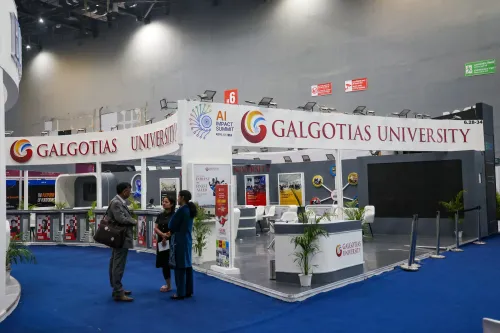
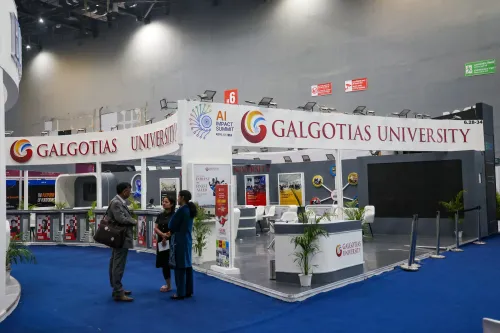
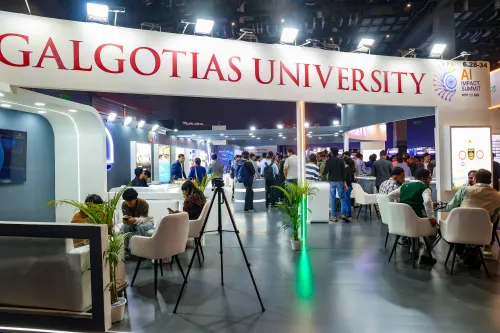
Jammu, Feb 18 (NationPress) The Chief Minister of Jammu and Kashmir, Omar Abdullah, expressed his disapproval on Wednesday regarding Golgotias University in Uttar Pradesh for showcasing a commercially available robotic dog from China at the Artificial Intelligence (AI) summit held in New Delhi while claiming it as a product of the university's innovation.
In a post on X, Abdullah remarked, "Is this what Golgotias instills in its students - to appropriate the work of others and present it as one’s own?"
He further criticized the university's handling of the situation, stating, "When exposed, rather than admitting the mistake and apologizing, excuses are made, and blame is shifted to an employee to safeguard oneself. Thankfully, my education didn’t follow such a path."
Prior to this, senior Congress leader Rahul Gandhi had also criticized the AI summit, commenting on X, "Instead of utilizing India’s talent and data, the AI summit turned into a chaotic PR event - with Indian data being sold off and Chinese products on display."
On Wednesday, Golgotias University was instructed to withdraw from the prominent AI summit in New Delhi after one of its representatives showcased a robotic dog, claiming it to be a university innovation.
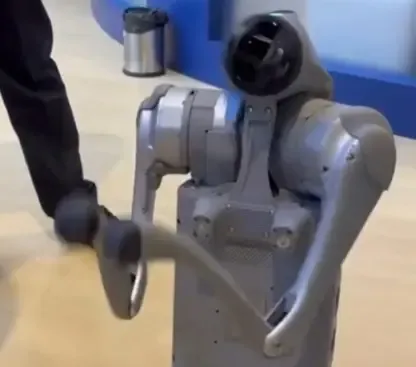
Officials reported that the university was asked to dismantle its exhibit following a statement made by Professor Neha Singh, who asserted that the robotic dog, known as Orion, was developed by the university's Centre of Excellence.
However, internet users quickly recognized the robot as the Unitree Go2, a product from China’s Unitree Robotics, priced from $1,600 and widely utilized in educational and research settings.
On Wednesday, Singh clarified to reporters that she never explicitly asserted that the robotic dog was a creation of the university, but rather indicated it was part of an exhibit.
In a damage control effort, Golgotias University released a statement expressing that the institution was "deeply distressed" and labeled the incident as a "propaganda campaign" intended to generate negativity and undermine the morale of students dedicated to innovation and skill development through global technologies.
Point of View
The incident involving Golgotias University sheds light on critical issues regarding originality and ethical practices in educational institutions. In an era where innovation is paramount, universities must uphold integrity and foster genuine creativity among students. This situation serves as a reminder of the importance of authenticity in academia and the potential long-term effects of misrepresentation.
NationPress
15 Oct 2026
Frequently Asked Questions
What was the controversy involving Golgotias University?
Golgotias University faced criticism for displaying a Chinese-made robotic dog at the AI summit and claiming it as their innovation.
Who criticized the university?
Jammu and Kashmir Chief Minister Omar Abdullah criticized the university for its actions.
What did Rahul Gandhi say about the AI summit?
Rahul Gandhi condemned the AI summit for being disorganized and for showcasing Chinese products instead of leveraging Indian talent.
What was the response of Golgotias University?
The university expressed being 'deeply pained' by the incident and labeled it a 'propaganda campaign'.
What is the name of the robotic dog?
The robotic dog is known as Orion, but it was recognized as the Unitree Go2 from China.