NEET protest crackdown: Opposition MPs file adjournment notices in Parliament over Delhi Police action
Synopsis
Days after Delhi Police used force — including alleged pellet guns and shock batons — against NEET protesters at Jantar Mantar, Opposition MPs have stormed Parliament with adjournment notices. With the Education Minister already resigned and the government tabling an exam-integrity bill the same day, the NEET crisis has moved from the streets to the floor of both Houses.
Key Takeaways
Opposition MPs filed adjournment notices in both Lok Sabha and Rajya Sabha on 27 July 2026 over Delhi Police action against NEET protesters.
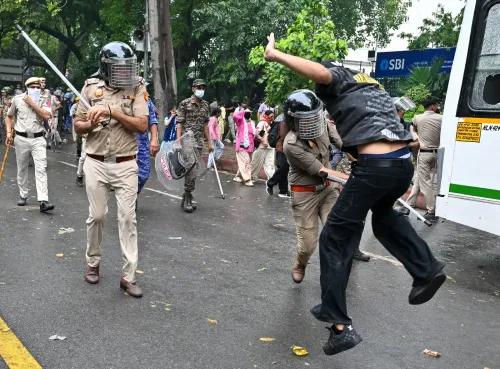
The notices allege use of pellet guns and shock batons against students at Jantar Mantar on 20 July 2026 , causing 'grave injuries including probable loss of eyesight'.
Venugopal, Manickam Tagore, Hibi Eden, and Vijay Vasanth filed notices in the Lok Sabha; Syed Naseer Hussain filed under Rule 267 in the Rajya Sabha.
Baalu demanded an immediate ban on NEET and a formal inquiry into the police action.
Union Education Minister Dharmendra Pradhan resigned on 25 July 2026 , days after protesters demanded his removal.
The Centre was set to introduce the Public Examinations (Prevention of Unfair Means) Amendment Bill, 2026 in Parliament on the same day.
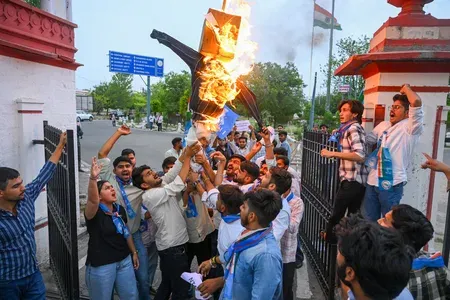
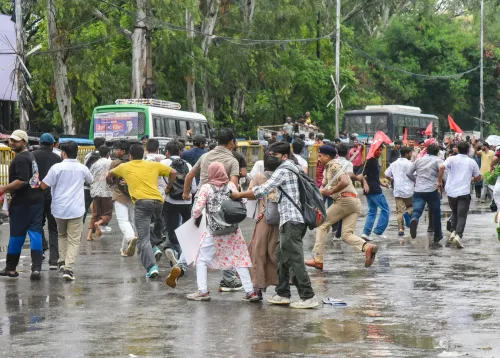
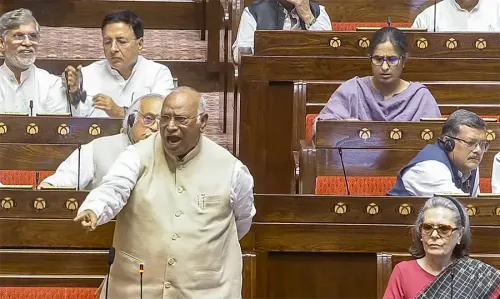
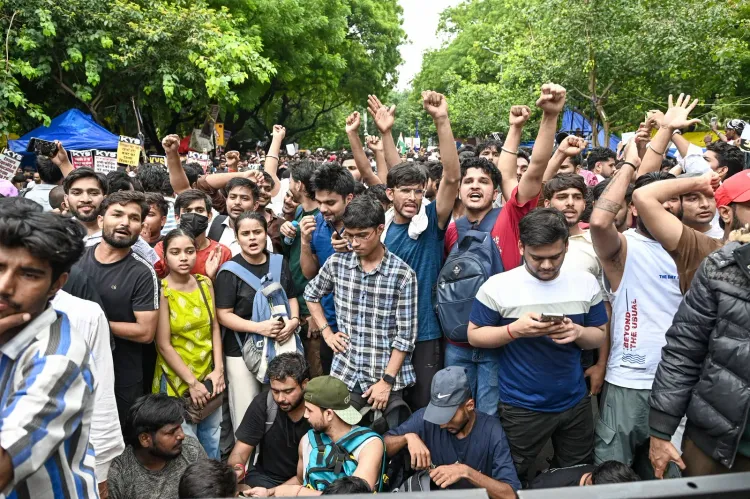
Several Opposition Members of Parliament on Monday, 27 July 2026, submitted adjournment motion notices in both the Lok Sabha and the Rajya Sabha, demanding an urgent debate on what they described as the 'brutal, unprovoked, disproportionate' use of force by the Delhi Police against students who gathered at Jantar Mantar on 20 July 2026 to protest against NEET paper leaks.
What Triggered the Notices
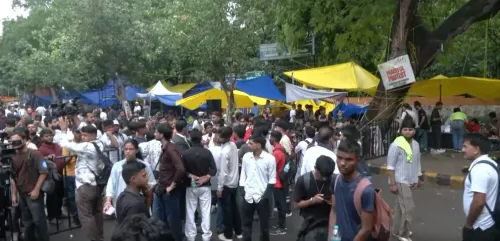
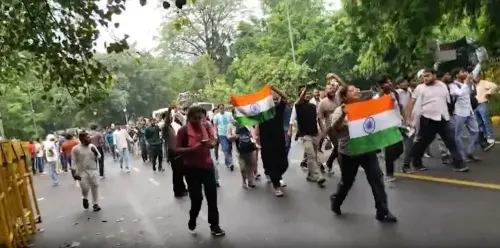
The parliamentary push follows the large-scale 'Sansad Chalo' march held in New Delhi on 20 July, where hundreds of students, mobilised by the Cockroach Janta Party (CJP), demonstrated against NEET paper leaks and broader examination irregularities. The protest later turned violent, resulting in serious injuries to both demonstrators and police personnel. Among the demands raised by protesters was the resignation of Union Education Minister Dharmendra Pradhan, who subsequently stepped down on 25 July 2026.
Allegations of Excessive Force
According to the adjournment notices filed in the Lok Sabha, security personnel allegedly deployed 'excessive and lethal force', including pellet guns and shock batons, against protesters at Jantar Mantar. The notices alleged 'grave injuries, including probable loss of eyesight' suffered by student demonstrators — claims that have not yet been independently verified.
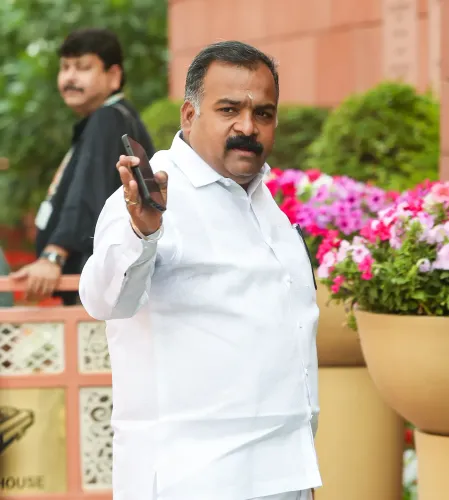
Congress MPs K.C. Venugopal, Manickam Tagore, Hibi Eden, and Vijayakumar alias Vijay Vasanth filed separate notices in the Lok Sabha seeking a debate on the alleged police conduct. In the Rajya Sabha, Congress MP Syed Naseer Hussain submitted a Suspension of Business Notice under Rule 267, calling for an immediate discussion on the alleged excessive use of force against students who were, according to the notice, peacefully protesting.
Dravida Munnetra Kazhagam (DMK) MP T.R. Baalu also filed an adjournment motion notice in the Lok Sabha, going further — demanding an 'immediate ban' on NEET and a formal inquiry into the alleged indiscriminate use of lethal weapons against the protesters.
Government's Legislative Response
Even as Opposition pressure mounts, the Central government was set to introduce the Public Examinations (Prevention of Unfair Means) Amendment Bill, 2026, in Parliament on Monday. The bill is part of the government's stated legislative agenda to tighten the legal framework against paper leaks and examination malpractices — a direct, if indirect, acknowledgement of the systemic concerns that drove students to the streets.
The Broader Context
This is not the first time NEET has triggered a national controversy. Allegations of question paper leaks and irregularities in competitive examinations have recurred over several years, fuelling student anger and political debate. The 20 July protest and the subsequent police action have now brought the issue squarely into Parliament, with the Opposition seeking to hold the government accountable on both the exam integrity failure and the manner in which dissent was handled. The resignation of Education Minister Pradhan adds a significant political dimension to what began as a student grievance.
Whether the adjournment notices are admitted — and whether a structured debate follows — will signal how Parliament chooses to handle one of the more charged confrontations between the state and student demonstrators in recent memory.
Point of View
A ministerial resignation, and a government anti-leak bill — all within a week of the Jantar Mantar crackdown — reveals a political establishment scrambling on multiple fronts simultaneously. The Opposition's focus on police conduct is legitimate, but the more structurally important question is why NEET's integrity failures were not addressed before they reached the streets. The Public Examinations Amendment Bill, introduced the same day Parliament is being asked to debate the crackdown, risks looking like a deflection rather than a reckoning. If Parliament does not get a proper debate on both the exam failure and the force used, the institutional credibility gap — with students who have now seen pellets and batons — will only widen.
NationPress
27 Jul 2026
Frequently Asked Questions
Why did Opposition MPs file adjournment notices in Parliament on 27 July 2026?
Opposition MPs filed adjournment notices in both the Lok Sabha and Rajya Sabha to demand an immediate parliamentary debate on the Delhi Police's use of force against NEET protesters at Jantar Mantar on 20 July 2026. The notices allege the force used was 'brutal, unprovoked, and disproportionate', including pellet guns and shock batons.
What happened at the Jantar Mantar NEET protest on 20 July 2026?
Hundreds of students gathered at Jantar Mantar in New Delhi for the 'Sansad Chalo' march, organised by the Cockroach Janta Party, to protest against NEET paper leaks and examination irregularities. The demonstration turned violent, and security forces used force to disperse the crowd, resulting in serious injuries to both protesters and police personnel.
Which Opposition MPs filed adjournment notices over the NEET crackdown?
Congress MPs K.C. Venugopal, Manickam Tagore, Hibi Eden, and Vijay Vasanth filed notices in the Lok Sabha. Congress MP Syed Naseer Hussain filed a Suspension of Business Notice under Rule 267 in the Rajya Sabha. DMK MP T.R. Baalu also filed an adjournment notice in the Lok Sabha.
Why did Education Minister Dharmendra Pradhan resign?
Dharmendra Pradhan resigned as Union Education Minister on 25 July 2026, days after NEET protesters at Jantar Mantar explicitly demanded his removal over the handling of paper leaks and examination irregularities. The resignation came amid mounting political and public pressure.
What is the Public Examinations (Prevention of Unfair Means) Amendment Bill, 2026?
It is a legislative measure introduced by the Central government in Parliament on 27 July 2026, aimed at strengthening the legal framework against paper leaks and examination malpractices. It was tabled on the same day Opposition MPs sought a debate on the NEET protest crackdown.