CM Fadnavis Pays Tribute to Missile Man APJ Abdul Kalam
Synopsis
Maharashtra Chief Minister Devendra Fadnavis marked the death anniversary of Bharat Ratna Dr. APJ Abdul Kalam on 27 July, honouring the former President and 'Missile Man of India' for his vision, humility, and enduring inspiration to generations of Indians.
Key Takeaways
CM Devendra Fadnavis posted a bilingual tribute in English and Marathi on 27 July , Dr.
Kalam's death anniversary.
APJ Abdul Kalam served as India's 11th President from 2002 to 2007 and is celebrated as the 'Missile Man of India.' Kalam was awarded the Bharat Ratna in 1997 for his contributions to India's missile and space programmes at DRDO and ISRO .
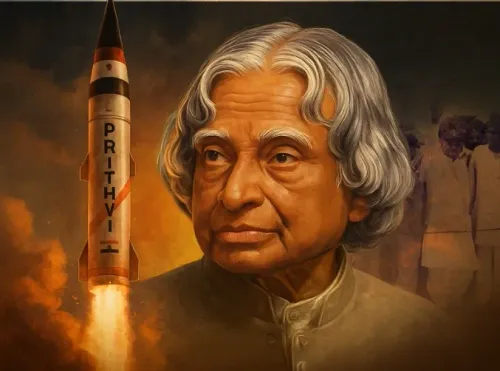
His leadership of the Integrated Guided Missile Development Programme (IGMDP) produced landmark indigenous missiles including Agni and Prithvi.
Annual tributes on 27 July are observed by leaders across party lines, making Kalam one of India's most universally revered public figures.
Commemorative events at scientific and educational institutions across India mark the anniversary each year.
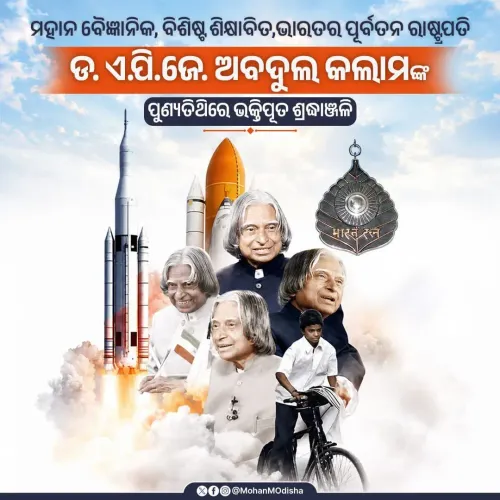
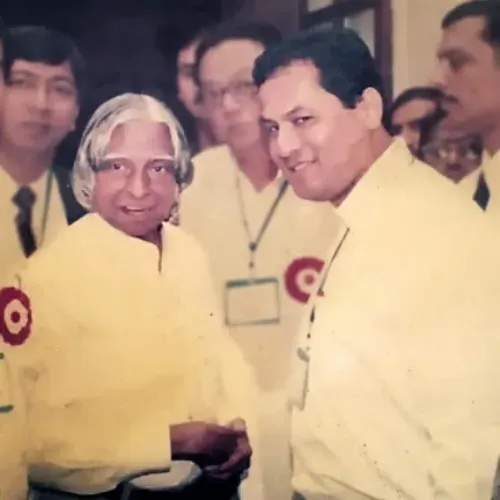
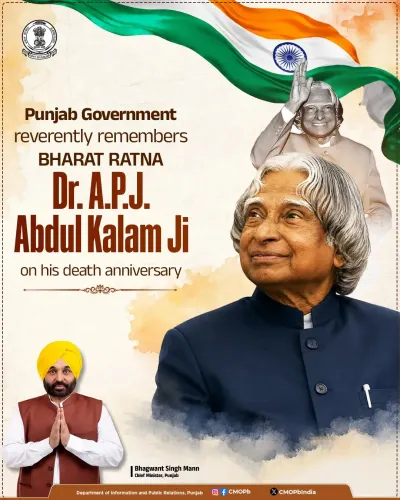
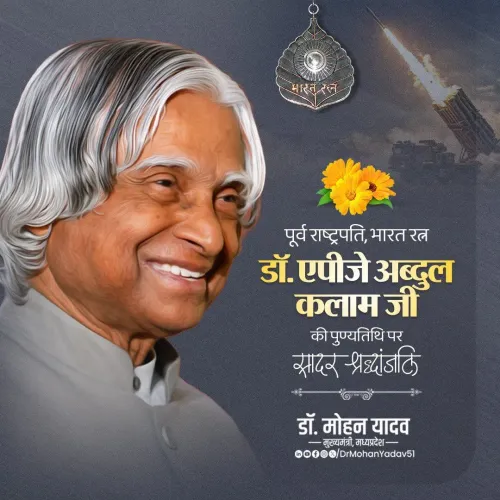
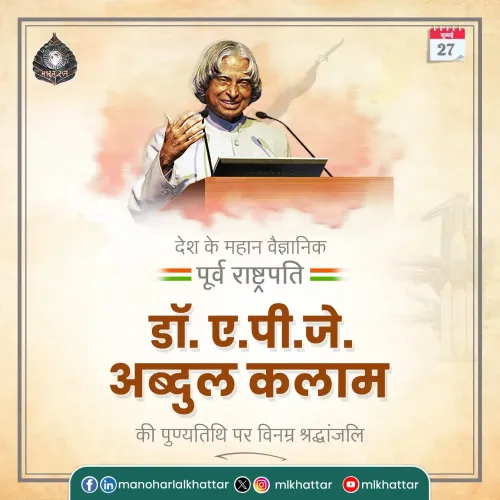
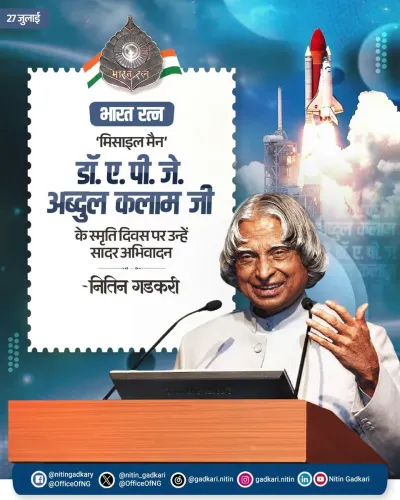
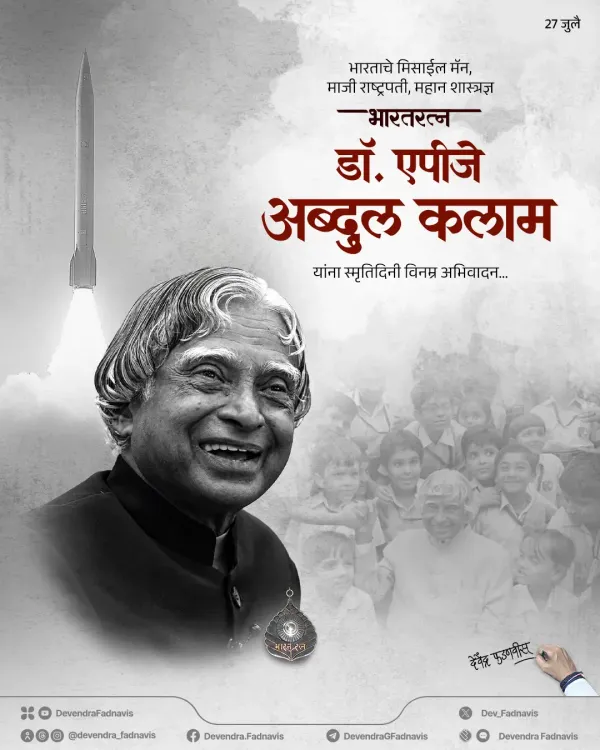
Maharashtra Chief Minister Devendra Fadnavis on Monday, 27 July paid homage to former President and aerospace scientist Bharat Ratna Dr. APJ Abdul Kalam on his death anniversary, honouring the late leader's legacy as the 'Missile Man of India' and a symbol of scientific temper and national pride.
Context
Every year on 27 July, the anniversary of Dr. Kalam's passing in 2015, political leaders, scientists, and citizens across India observe what is widely referred to as his SmrutiDin (remembrance day). CM Fadnavis posted his tribute on X, writing in both English and Marathi: 'Humble tributes to the Former President, one of the greatest scientists and the Missile Man of India, whose vision, humility, and dedication continue to inspire generations.'
In Marathi, he addressed Kalam as 'भारताचे मिसाईल मॅन, माजी राष्ट्रपती, महान शास्त्रज्ञ' — meaning 'India's Missile Man, former President, great scientist' — underscoring the reverence that cuts across linguistic and regional lines in the country.
Policy Backdrop
Dr. Avul Pakir Jainulabdeen Abdul Kalam served as India's 11th President from 2002 to 2007 and was the principal scientific force behind the country's indigenous missile development programme, earning him the enduring title of 'Missile Man.' He was conferred the Bharat Ratna in 1997 — India's highest civilian honour — in recognition of his foundational contributions to defence research and space science.
His work at the Defence Research and Development Organisation (DRDO) and the Indian Space Research Organisation (ISRO) laid the groundwork for programmes such as the Integrated Guided Missile Development Programme (IGMDP), which produced missiles including Agni and Prithvi. Beyond science, Kalam became a celebrated author and public intellectual, widely regarded as a role model for India's youth.
Stakeholders and Impact
Tributes to Dr. Kalam on his death anniversary are observed annually by leaders across the political spectrum, from the Prime Minister to state chief ministers, reflecting his rare status as a unifying national figure. Educational institutions, DRDO establishments, and ISRO centres across the country typically hold commemorative events on this date.
For Maharashtra, a state with a significant base of scientific and technical institutions, invoking Kalam's legacy carries particular resonance — connecting the government's developmental aspirations with the ideal of indigenous scientific achievement. The tribute also speaks directly to students and young professionals whom Kalam famously championed throughout his life.
What's Next
Commemorative programmes at national science and defence institutions are expected to mark the anniversary through the day, with tributes from central government ministers and other state chief ministers also anticipated across social media platforms. The annual remembrance serves as a recurring moment for public discourse on strengthening India's investment in science, technology, and youth education — themes Dr. Kalam championed until his death on 27 July 2015 in Shillong. His vision of a developed India by 2020, articulated in his book India 2020, continues to frame policy conversations on indigenous innovation and self-reliance.
Point of View
While ceremonial in form, reflects a deliberate political grammar common to Indian governance: invoking Dr. Kalam allows leaders to simultaneously celebrate indigenous scientific achievement, appeal to youth, and signal continuity with a figure whose credibility transcends party lines. For a BJP-led government in Maharashtra, aligning with Kalam's legacy of self-reliant defence technology also dovetails neatly with the broader 'Aatmanirbhar Bharat' policy narrative. The cross-party universality of Kalam tributes, however, means such posts carry limited partisan differentiation. What they do reinforce is the state government's visibility on days of national significance — a consistent feature of social-media-era political communication.
NationPress
27 Jul 2026
Frequently Asked Questions
Why is 27 July observed as APJ Abdul Kalam's SmrutiDin?
27 July is observed as Dr. APJ Abdul Kalam's death anniversary, or SmrutiDin, because he passed away on this date in 2015 while delivering a lecture in Shillong. Leaders and institutions across India mark the day with tributes and commemorative events.
Why is APJ Abdul Kalam called the Missile Man of India?
Dr. APJ Abdul Kalam earned the title 'Missile Man of India' for his pivotal role in leading the Integrated Guided Missile Development Programme (IGMDP) at DRDO, which developed indigenous missiles including Agni and Prithvi.
What is Bharat Ratna and when did APJ Abdul Kalam receive it?
The Bharat Ratna is India's highest civilian honour. Dr. APJ Abdul Kalam was conferred the award in 1997 in recognition of his exceptional contributions to India's defence research and space science.
When was APJ Abdul Kalam President of India?
Dr. APJ Abdul Kalam served as the 11th President of India from 2002 to 2007. He was widely known as the 'People's President' for his accessibility and his focus on inspiring India's youth.
What did Maharashtra CM Devendra Fadnavis say about APJ Abdul Kalam?
CM Devendra Fadnavis posted a tribute on X describing Dr. Kalam as 'one of the greatest scientists and the Missile Man of India,' saying his 'vision, humility, and dedication continue to inspire generations.' He also paid tribute in Marathi on the occasion of SmrutiDin.