PM Modi at FICCI centenary: domestic market must fuel global ambition
Synopsis
At FICCI's 100th anniversary convention, Modi told Indian industry that the domestic market must be a confidence-builder, not a safety net — and backed it with a detailed policy scorecard covering corporate tax cuts, GST rationalisation, pharma API gaps, mineral value chains, and an agricultural export push. The message: India's reform momentum is live, and industry must now convert it into global market share.
Key Takeaways
PM Modi addressed the FICCI centenary convention at Bharat Mandapam, New Delhi on 19 November 2026 .
He urged industry to treat the domestic market as a launchpad, not a comfort zone, to compete globally.
Basic corporate tax cut from 30% in 2014 to 22% ; personal income up to ₹12 lakh exempted to boost purchasing power.
India's share in global agricultural exports is only 2%–2.5% , though processed food's share in agri-food exports rose from 13% to over 20% in 12 years .
Modi pushed pharmaceutical companies to build API (ingredient) manufacturing capacity domestically, reducing import dependence.
Industry asked to develop mineral value chain manufacturing and align agriculture strategy with global demand.
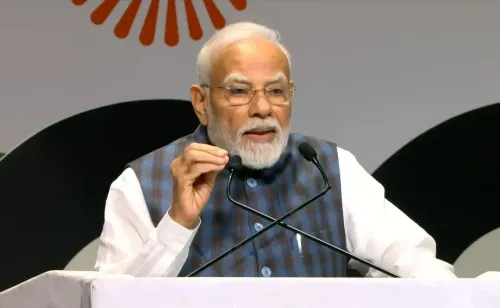
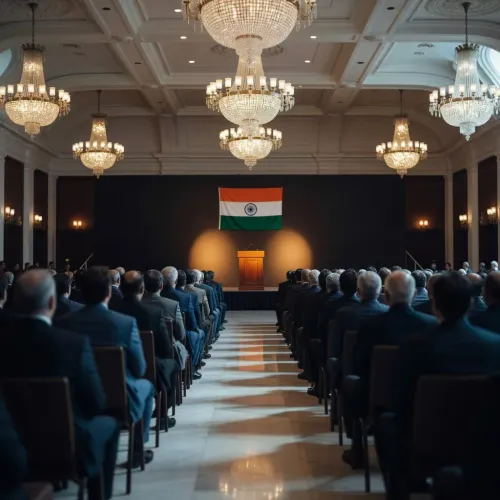
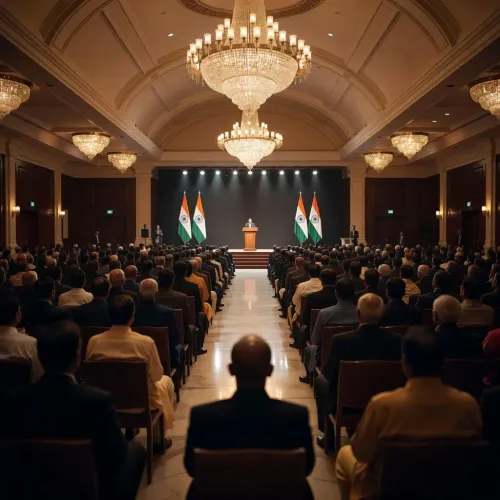
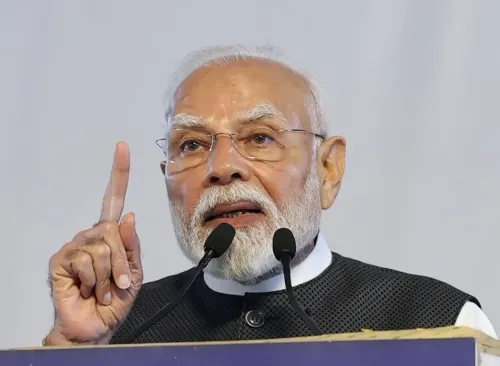
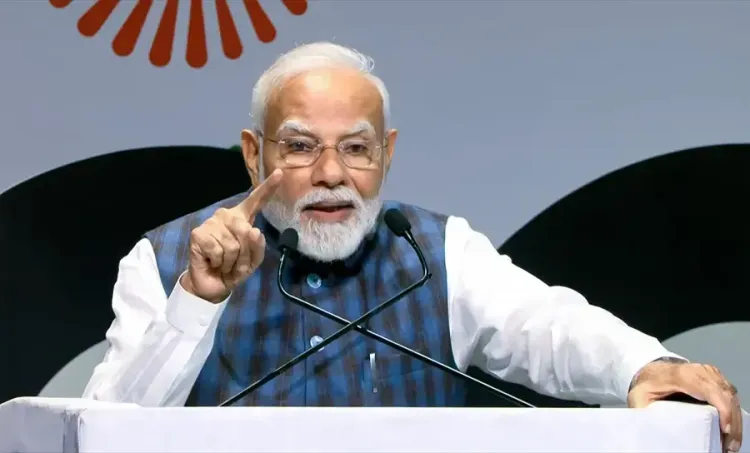
Prime Minister Narendra Modi on Thursday, 19 November 2026, urged Indian industry to treat the domestic market as a launchpad rather than a comfort zone, delivering a wide-ranging address at the Annual General Meeting and Annual Convention of the Federation of Indian Chambers of Commerce and Industry (FICCI) held at Bharat Mandapam, New Delhi. The event marked the centenary of FICCI, one of India's apex industry chambers.
'Our domestic market should not be our comfort zone, as it must give us the confidence to compete in global markets,' Modi said while inaugurating the convention.
Reform Express and global trade ambitions
Modi encouraged industry to leverage India's recent free trade agreements and what he described as the 'Reform Express' momentum to capture overseas opportunities. He said the government has kept its doors open for suggestions and urged businesses to invest in understanding global customer needs, meeting international standards, and building robust distribution networks abroad.
Noting the pace of domestic progress, the Prime Minister said, 'Today in India, the pace of progress is also the fastest, and the speed of coming out of poverty is also unprecedented.'
Pro-business and taxpayer-friendly reforms
Modi detailed a slate of reforms designed to honour what he called the five pillars of national progress — farmers, small entrepreneurs, industry, wealth creators, and taxpayers. Among the measures he highlighted: cutting the basic corporate tax rate from 30% in 2014 to 22%, exempting personal income up to ₹12 lakh to boost purchasing power, simplifying returns and refunds, and reducing GST rates on numerous goods. 'Its direct benefit is going to our industry and business houses,' he said.
Pharma, minerals, and agriculture: sector-specific push
Addressing the pharmaceutical sector, Modi urged companies to identify domestic manufacturing opportunities and invest in new technology and large production plants to gain global competitiveness. 'In finished medicines, we have a strength, and now we will have to build our capability in ingredients as well,' he said — a pointed reference to India's dependence on Active Pharmaceutical Ingredient (API) imports, primarily from China.
On minerals, the Prime Minister called on industry to identify imported grades, develop manufacturing technologies, and build expertise across the mineral value chain. He said the country must develop domestic manufacturing capacity for these products as well.
On agriculture, Modi pointed out that India's share in global agricultural exports stands at just 2% to 2.5% despite the country's scale — a figure he described as far below potential. He noted, however, that processed food's share in agri-food exports has risen from 13% to over 20% over 12 years, and urged industry to draft a joint strategy aligned with global demand, expand investment in agriculture, and build dependable procurement and product lines for overseas markets.
FICCI's centenary and what it signals
Modi acknowledged having attended several FICCI events in the past but said Thursday's occasion was special given the chamber's 100 years of staying alert, evolving with changing times, and contributing to India's economic journey. The choice of Bharat Mandapam — the same venue that hosted the G20 Summit in 2023 — underlined the government's intent to frame the message in a global context.
As India navigates a complex global trade environment marked by shifting alliances and new tariff pressures, the Prime Minister's address sets the tone for what the government expects from domestic industry in the months ahead.
Point of View
But the gap between India's 2–2.5% share of global agricultural exports and its agricultural scale is a structural underperformance that reform alone cannot close overnight. The API manufacturing push is the most substantive sectoral call — India's pharmaceutical sector earns global credibility on finished medicines while remaining quietly dependent on Chinese ingredients, a vulnerability that geopolitical turbulence has repeatedly exposed. The question mainstream coverage glosses over: how much of the 'Reform Express' momentum has translated into verifiable export market share gains, and how much remains a compelling narrative awaiting execution?
NationPress
19 Nov 2026
Frequently Asked Questions
What did PM Modi say at the FICCI centenary convention?
Prime Minister Narendra Modi, speaking at the FICCI centenary convention at Bharat Mandapam on 19 November 2026, urged Indian industry to use the domestic market as a confidence-builder to compete globally rather than treating it as a comfort zone. He highlighted pro-business reforms and called on industry to push into pharma ingredients, mineral manufacturing, and agricultural exports.
What is the 'Reform Express' that Modi referred to?
Modi used the term 'Reform Express' to describe the government's sustained pace of economic and regulatory reforms, including corporate tax cuts, GST rationalisation, and income exemptions. He urged industry to capitalise on this momentum alongside recent free trade agreements to capture overseas market opportunities.
What reforms did Modi highlight at the FICCI event?
Modi cited a reduction in the basic corporate tax rate from 30% in 2014 to 22%, an income exemption of up to ₹12 lakh to boost purchasing power, simplified GST returns and refunds, and lower GST rates on numerous goods as key taxpayer- and business-friendly measures his government has implemented.
Why did Modi stress pharma ingredient manufacturing?
Modi pointed out that while India is strong in finished medicines, it still lacks sufficient domestic capability in Active Pharmaceutical Ingredients (APIs), making the sector dependent on imports. He urged pharma companies to invest in new technology and large production plants to build ingredient manufacturing capacity and achieve full-spectrum global competitiveness.
How does India's share in global agricultural exports compare to its potential?
India's share in global agricultural exports stands at just 2% to 2.5%, which Modi described as far below the country's scale and potential. However, he noted a positive trend: processed food's share in agri-food exports has risen from 13% to over 20% over 12 years, and he urged industry to build on this with a joint global demand-aligned strategy.