Iran defends strikes on US bases, warns regional nations over territory use
Synopsis
Iran has gone on the diplomatic and military offensive simultaneously — formally warning neighbouring states that hosting US forces for strikes on Tehran could constitute an act of aggression under international law, days after the IRGC sent six drones at a US radar installation in Bahrain. With the Strait of Hormuz now explicitly in play, the confrontation has moved well beyond a bilateral US-Iran standoff.
Key Takeaways
Iran's Foreign Ministry on 19 November 2026 defended strikes on US military bases as a legitimate act of self-defence under international law.
Tehran warned regional nations that allowing the US to use their territory for attacks on Iran could itself be treated as an act of aggression.
On 15 November , the IRGC struck a US air defence radar station at the Al-Riffa helicopter base in Bahrain using six drones .
The IRGC declared the Bahrain strike the second phase of its 'decisive and crushing' retaliation for US attacks on Iran's southern coast.
Iran claims the Strait of Hormuz is closed and accused the US of failing to escort oil shipments through it.
Tehran warned of a 'harsher and more crushing response' to any further US aggression, while claiming it has so far shown restraint.
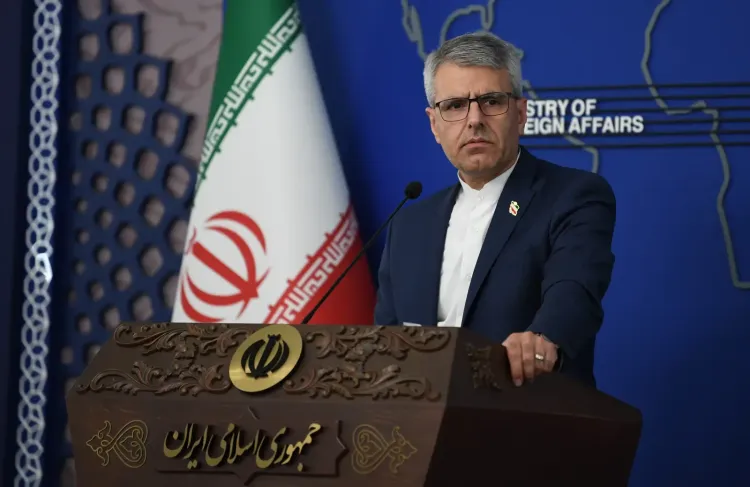
Iran's Foreign Ministry on Thursday, 19 November 2026, formally defended its military strikes on US positions as the country's legitimate right to self-defence, while issuing a pointed warning to regional nations against allowing Washington to use their territory or military infrastructure for operations against Tehran. The statement marks a significant escalation in the diplomatic fallout from recent exchanges of fire between the two countries.
What Tehran Said
In an official ministry statement, Iranian authorities confirmed that Iranian forces had struck US Patriot air defence systems and drone and missile launch platforms at two regional bases that it said were being used to support attacks against Iran. The ministry held Washington directly responsible for what it described as the regional consequences of America's use of force.
Critically, Tehran warned that permitting the US to operate from regional soil against Iran could itself be construed as an act of aggression under international law — a legal framing clearly aimed at putting pressure on Gulf states and other neighbours hosting American military assets.
The IRGC's Bahrain Strike
The ministry's statement followed an earlier operation by Iran's Islamic Revolutionary Guard Corps (IRGC) on 15 November, in which the Corps' aerospace force reportedly targeted a US air defence radar station at the Al-Riffa helicopter base in Bahrain using six drones. The IRGC described this as the second phase of its 'decisive and crushing' retaliatory response to what it called the US Army's 'flagrant aggression' against Iran, according to a statement on its official outlet, Sepah News.
The Strait of Hormuz Dimension
The IRGC also addressed broader tensions in the Strait of Hormuz, alleging that the United States had 'faced complete failure in its plan to smuggle oil in the Strait of Hormuz under the guise of escorting ships.' It accused Washington of attempting to 'divert the international community's attention' through what it called 'small and misguided' actions, while asserting that the strait remains closed. The claim — which was not independently verified — signals that energy supply routes remain a central flashpoint in this confrontation.
Iran's Warning and Stated Restraint
Despite the strikes already carried out, the Iranian Foreign Ministry maintained it has so far 'shown restraint,' stating that Iranian forces have targeted only US military bases and assets in affected countries, rather than broader civilian or infrastructure targets. However, it warned explicitly of a 'decisive response' to any further aggression. The IRGC echoed that warning: 'Any aggression by the US enemy will be met with a harsher and more crushing response.'
What Happens Next
The escalatory language and the specific targeting of Bahrain — home to the US Navy's Fifth Fleet — raises the stakes considerably for regional security architecture. Gulf states that host American forces now face explicit Iranian pressure to restrict or deny that access. How Washington and its regional partners respond to this diplomatic and military pressure in the coming days will determine whether the current exchange of strikes stabilises or widens into a broader conflict.
Point of View
Tehran is attempting to fracture the US's regional basing architecture without directly attacking those nations — yet. The Bahrain strike is a proof of concept, not a ceiling. What is often missed in coverage of these exchanges is the Strait of Hormuz claim: if Iran is genuinely restricting commercial traffic, the economic fallout for global energy markets could dwarf the military dimension. The restraint narrative Tehran is projecting is also worth scrutinising — it is a rhetorical device designed to cast any US counter-move as disproportionate escalation, shifting the burden of de-escalation onto Washington and its allies.
NationPress
19 Nov 2026
Frequently Asked Questions
Why is Iran striking US military bases in the region?
Iran says the strikes are a legitimate act of self-defence in response to US attacks on areas along its southern coast. The Iranian Foreign Ministry has stated that Iranian forces specifically targeted US Patriot air defence systems and drone and missile launch platforms at two regional bases it identifies as supporting those attacks.
What was the IRGC drone attack on Bahrain?
On 15 November 2026, the IRGC's aerospace force attacked a US air defence radar station at the Al-Riffa helicopter base in Bahrain using six drones. The IRGC described it as the second phase of its retaliatory response to what it called US aggression against Iran.
What is Iran's warning to regional countries?
Tehran has warned that allowing the United States to use regional territory and military facilities to conduct attacks against Iran could be treated as an act of aggression under international law. The statement is widely seen as aimed at Gulf states that host US military bases.
What is happening in the Strait of Hormuz?
The IRGC claimed that the Strait of Hormuz is closed and that the US had failed in an attempt to escort oil shipments through it. The claim was not independently verified, but it signals that the strategically vital waterway — through which a significant share of global oil passes — is a live flashpoint in the current confrontation.
Has Iran threatened further escalation?
Yes. The Iranian Foreign Ministry warned of a decisive response to any renewed US aggression, and the IRGC separately stated that any further US action will be met with a 'harsher and more crushing response.' Tehran simultaneously described its actions to date as restrained, framing the next move as Washington's responsibility.