IRGC drones hit US air defence radar at Bahrain base in second strike
Synopsis
Iran's IRGC has claimed a six-drone strike on a US air defence radar station at Bahrain's Al-Riffa base, calling it the 'second phase' of its retaliation — while separately reporting that two oil tankers exploded after hitting Iranian naval mines in the Strait of Hormuz. With the IRGC explicitly warning of 'harsher' strikes to come and claiming the strait is closed, the region is on the edge of a major military and energy crisis.
Key Takeaways
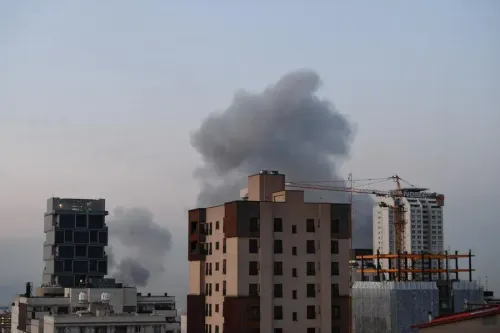
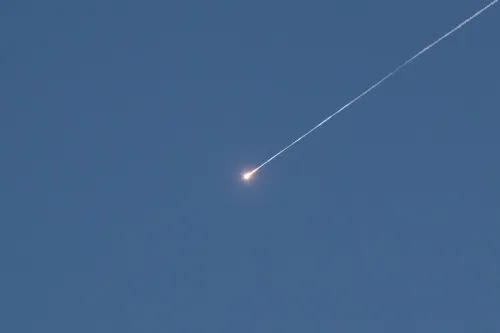
Iran's IRGC claimed a six-drone strike on a US air defence radar station at the Al-Riffa helicopter base in Bahrain on 15 November 2026 .
The IRGC described the attack as the second phase of its 'decisive and crushing' retaliation against US actions and warned of 'harsher' future responses.
Two oil tankers reportedly exploded after hitting Iranian naval mines in the Strait of Hormuz after switching off their navigation systems; one was identified as a supertanker .
Two additional tankers reversed course after receiving warnings from the IRGC Navy 's maritime traffic control.
The US and Bahrain had not independently confirmed the radar strike at the time of reporting; IRGC claims are attributed to its official outlet Sepah News .
The Strait of Hormuz handles roughly 20% of global oil trade, making any sustained closure a major energy market risk.
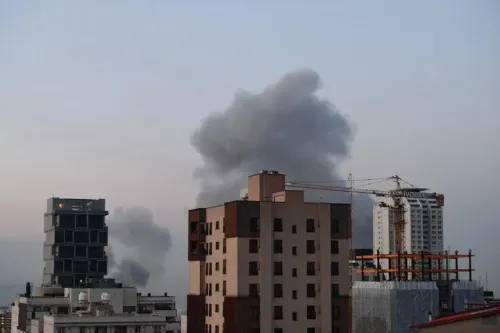
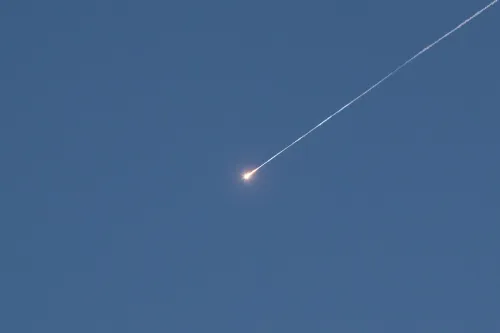
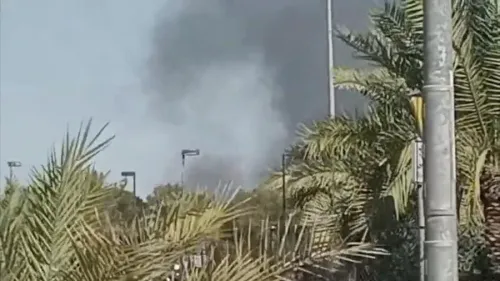
Iran's Islamic Revolutionary Guard Corps (IRGC) announced on Sunday, 15 November 2026, that its aerospace force had struck a US air defence radar station at the Al-Riffa helicopter base in Bahrain using six drones, describing the operation as the second phase of its 'decisive and crushing' retaliatory campaign against what it termed US 'flagrant aggression' against Iran.
Details of the Strike
The IRGC disclosed the attack in a statement published on its official outlet Sepah News, confirming that the drone assault specifically targeted the radar system at the Al-Riffa base. The corps characterised this as a continuation — not a conclusion — of its retaliatory posture, warning that 'any aggression by the US enemy will be met with a harsher and more crushing response.'
The statement also accused the United States of attempting to 'divert global public attention' through what it called 'small and misguided' actions, alleging that Washington had 'faced complete failure' in its effort to escort oil shipments through the Strait of Hormuz.
Tanker Explosions in the Strait of Hormuz
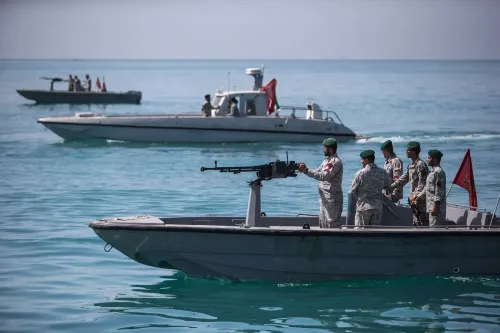
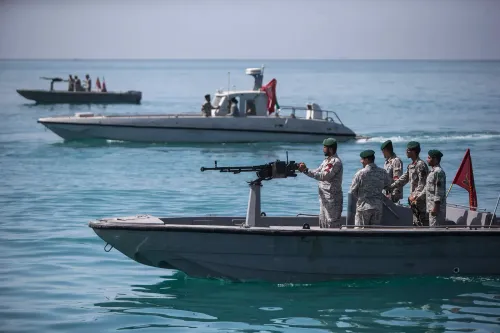
Separately on Sunday, the IRGC Navy reported that two oil tankers had exploded and caught fire after striking naval mines while attempting to transit the Strait of Hormuz via what it described as an 'unauthorised' route. According to IRGC statements, both vessels had switched off their navigation systems and automatic identification systems in an apparent bid to pass through the waterway undetected.
An earlier IRGC Navy statement — issued Friday night local time on Sepah News — identified one of the stricken vessels as a supertanker. The navy warned that shipowners and shipping companies face the 'same fate' if their vessels attempt to traverse the strait without coordination with its maritime traffic-control centre.
Two additional tankers that had reportedly sought to cross the strait 'surreptitiously' reversed course and returned to Persian Gulf waters after receiving warnings from the IRGC Navy's maritime traffic control.
Broader Context and Escalation Pattern
The Bahrain drone strike and the Hormuz incidents mark a sharp escalation in hostilities between Iran and the United States. The IRGC's framing of the Bahrain operation as the 'second phase' of a retaliation implies further strikes are anticipated, raising the risk of a broader military exchange in one of the world's most strategically sensitive waterways.
The Strait of Hormuz handles roughly 20% of global oil trade, and any sustained disruption would have immediate consequences for international energy markets. The IRGC's claim that the strait is effectively 'closed' — if borne out in practice — would constitute one of the most significant maritime crises in decades.
International Reactions and What to Watch
Neither the US Department of Defense nor Bahrain's government had issued an independent confirmation of the radar strike at the time of reporting. Independent verification of IRGC claims remains pending. Observers and maritime insurers will closely monitor vessel movements through the Hormuz corridor in the coming hours, while diplomatic channels between Washington, its Gulf allies, and Tehran are expected to face intense pressure.
Point of View
Riyadh, and Manama that Iran has a scripted escalation ladder and intends to climb it. What mainstream coverage may underweight is the tanker mine story: if Iranian naval mines are now actively deployed in the Strait of Hormuz, the insurance and energy implications are immediate and global, regardless of whether the drone strike claim is independently verified. The US has not confirmed damage at Al-Riffa, which matters — IRGC statements on operational outcomes have historically required independent corroboration. The real danger is miscalculation: each 'phase' narrows the space for de-escalation, and with no active diplomatic back-channel publicly visible, the gap between military posturing and open conflict is narrowing fast.
NationPress
15 Nov 2026
Frequently Asked Questions
What did Iran's IRGC claim to have targeted in Bahrain?
Iran's IRGC claimed that six drones struck a US air defence radar station at the Al-Riffa helicopter base in Bahrain on 15 November 2026. The corps described it as the second phase of its declared retaliation against US military actions it characterised as aggression against Iran.
What happened to oil tankers in the Strait of Hormuz?
The IRGC Navy reported that two oil tankers exploded and caught fire after hitting Iranian naval mines in the Strait of Hormuz. Both vessels had reportedly disabled their navigation and automatic identification systems before attempting an 'unauthorised' crossing; one was identified as a supertanker.
Has the US or Bahrain confirmed the drone strike on the radar station?
Neither the US Department of Defense nor Bahrain's government had independently confirmed the IRGC's claim of a radar station strike at the time of reporting. The information comes solely from the IRGC's official outlet Sepah News and should be treated as unverified until confirmed by independent sources.
Why does the Strait of Hormuz matter globally?
The Strait of Hormuz is the world's most critical oil chokepoint, handling roughly 20% of global oil trade. Any sustained closure or mining of the waterway would cause immediate disruption to global energy supplies and trigger sharp moves in international oil prices.
What is the IRGC warning to shipping companies?
The IRGC Navy has explicitly warned shipowners and shipping companies that vessels attempting to transit the Strait of Hormuz without coordination with its maritime traffic-control centre risk the 'same fate' as the tankers that reportedly hit mines. Two tankers heeded warnings and returned to Persian Gulf waters on Sunday.