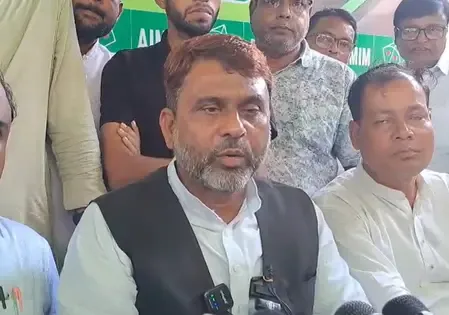
Owaisi Accuses BJP of Targeting Jauhar University
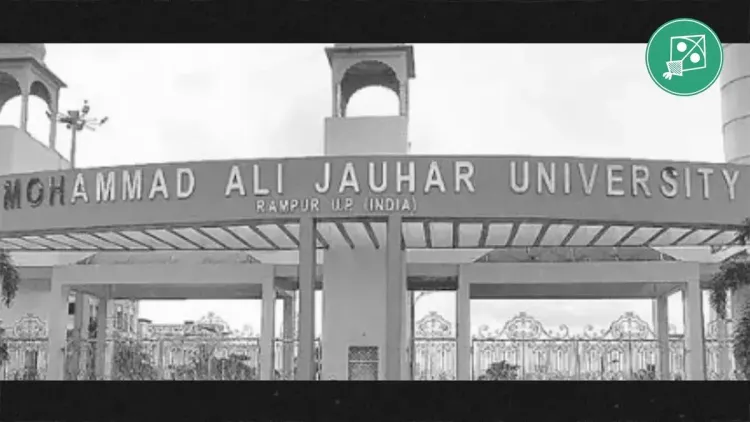
Synopsis
AIMIM president Asaduddin Owaisi on 19 July 2026 accused the BJP of seeking to dismantle Mohammad Ali Jauhar University in Rampur, UP, claiming the party deliberately obstructs Muslim children's access to higher education. The charge comes amid ongoing regulatory scrutiny of minority institutions in BJP-governed states.
Key Takeaways
AIMIM president Asaduddin Owaisi posted on X on 19 July 2026 accusing the BJP of wanting to destroy Mohammad Ali Jauhar University .
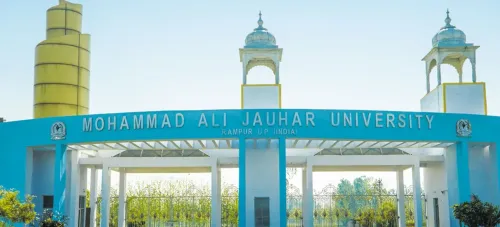
He alleged the BJP 'does not want Muslim children to receive education.' Jauhar University is a private institution in Rampur, Uttar Pradesh , named after freedom fighter Maulana Mohammad Ali Jauhar .
The Uttar Pradesh government has tightened regulatory oversight of private and minority universities since 2022 .
The BJP had not issued a formal response to Owaisi's allegation at the time of publication.
Court proceedings and upcoming UP Assembly sessions are expected to keep the issue in the spotlight.
AIMIM president Asaduddin Owaisi on Sunday, 19 July 2026, accused the Bharatiya Janata Party (BJP) of deliberately seeking to dismantle Mohammad Ali Jauhar University in Rampur, Uttar Pradesh, alleging that the ruling party does not want Muslim children to access education.
Posting on X, Owaisi wrote in Hindi: 'BJP nahi chahti ki Musalmanon ke bachche taleem hasil karein, isliye wo Jauhar University ko todna chahti hai' — translated: 'The BJP does not want Muslim children to receive education, which is why it wants to destroy Jauhar University.' The post was accompanied by a video.
Context
Mohammad Ali Jauhar University is a private institution established in Rampur, named after freedom fighter Maulana Mohammad Ali Jauhar, with an explicit focus on providing higher education to Muslim students. The university has been at the centre of regulatory disputes involving the Uttar Pradesh government led by Chief Minister Yogi Adityanath.
Owaisi, who serves as Lok Sabha MP from Hyderabad, has consistently raised concerns about what he describes as systematic barriers to minority education in BJP-governed states. His remarks on 19 July 2026 represent the latest in a series of such interventions.
Policy Backdrop
Uttar Pradesh has enacted amendments to its private universities regulatory framework and introduced madrasa oversight measures between 2022 and 2024, aimed at enforcing compliance with University Grants Commission (UGC) norms and state standards. Critics, including opposition leaders, have argued these measures disproportionately affect minority-run institutions.
Across BJP-governed states since 2017, several minority educational institutions have faced scrutiny over land use, affiliation conditions, and funding compliance. State governments have maintained that such reviews are routine administrative and legal exercises applied uniformly, while opposition parties have characterised them as targeted actions.
Stakeholders and Impact
The primary stakeholders are Muslim students enrolled at or aspiring to attend Jauhar University, along with faculty, staff, and the broader minority educational ecosystem in Uttar Pradesh. Any disruption to the university's operations would directly affect thousands of students dependent on the institution for higher education.
Minority rights groups and opposition parties have amplified Owaisi's charge, framing it as part of a wider pattern of pressure on Muslim-run institutions. The BJP has not, at the time of publication, issued a formal response to Owaisi's specific allegation.
What's Next
Legal proceedings — whether before the Allahabad High Court or the Supreme Court of India — related to the university's land use or affiliation status will be closely watched. Questions on minority institution funding are also expected to surface in the next session of the Uttar Pradesh Legislative Assembly.
The political salience of minority education access is likely to intensify ahead of future electoral cycles in Uttar Pradesh, making Jauhar University a continuing flashpoint between the ruling establishment and opposition voices advocating for Muslim educational rights.
Point of View
And Jauhar University has become a symbolic battleground for debates on Muslim access to higher education. Whether the allegation holds legal weight will depend on court findings, but politically it keeps minority education rights at the centre of the AIMIM's national messaging. The episode underscores how education policy in BJP-governed states increasingly doubles as an arena for identity-based political contestation.
NationPress
19 Jul 2026
Frequently Asked Questions
What did Owaisi say about Jauhar University?
Owaisi accused the BJP of wanting to destroy Mohammad Ali Jauhar University in Rampur, UP, claiming the party does not want Muslim children to receive education.
What is Mohammad Ali Jauhar University?
Mohammad Ali Jauhar University is a private university in Rampur, Uttar Pradesh, named after freedom fighter Maulana Mohammad Ali Jauhar and focused on higher education for Muslim students.
Why is Jauhar University in controversy?
The university has faced regulatory scrutiny from the Uttar Pradesh government over compliance with UGC norms and state rules, which critics say is part of a broader pattern of pressure on minority institutions.
Has the BJP responded to Owaisi's allegation about Jauhar University?
As of the time of publication, the BJP had not issued a formal response to Owaisi's specific allegation made on 19 July 2026.
What legal options exist for Jauhar University?
The university can challenge any regulatory or enforcement orders before the Allahabad High Court or the Supreme Court of India; such proceedings are being closely watched by minority education advocates.