Owaisi Questions SP's Park Legacy: Why No Memorial for 1857 Muslim Heroes?
Synopsis
AIMIM chief Asaduddin Owaisi on 27 October challenged the Samajwadi Party, asking why Akhilesh Yadav's 2012-17 UP government built parks for socialist leaders but not for 1857 Muslim heroes Allama Fazl-e-Haq Khairabadi and Maulana Ahmadullah Shah.
Key Takeaways
AIMIM president Asaduddin Owaisi posted on 27 October 2026 questioning the SP's record on commemorating Muslim freedom fighters in Uttar Pradesh.
During Akhilesh Yadav's 2012–2017 government , major parks in Lucknow were named after socialist icons Janeshwar Mishra and Ram Manohar Lohia .
Owaisi specifically named Allama Fazl-e-Haq Khairabadi and Maulana Ahmadullah Shah — both prominent figures in the 1857 anti-British uprising — as having been overlooked.
Allama Fazl-e-Haq Khairabadi was sentenced by British authorities for his role in 1857; Maulana Ahmadullah Shah was one of Awadh's most effective rebel commanders.
The post spotlights a broader pattern in Indian politics where official commemoration tends to favour figures aligned with the ruling party's ideological identity.
The Samajwadi Party has not yet responded publicly to Owaisi's challenge.
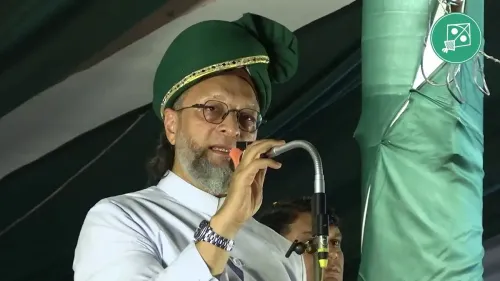
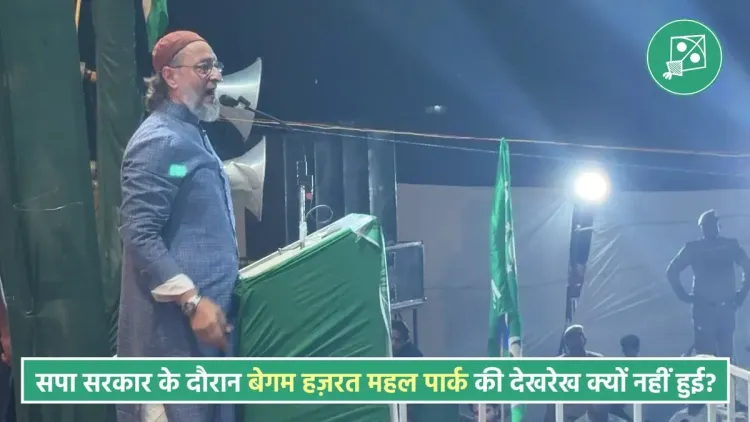
A pointed question about political memory and selective commemoration landed on Tuesday when AIMIM president Asaduddin Owaisi challenged the Samajwadi Party over its record of naming public spaces in Uttar Pradesh — asking why parks bearing the names of two Muslim freedom fighters from the 1857 uprising were never built during Akhilesh Yadav's government.
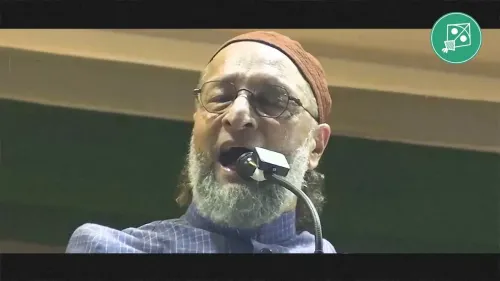
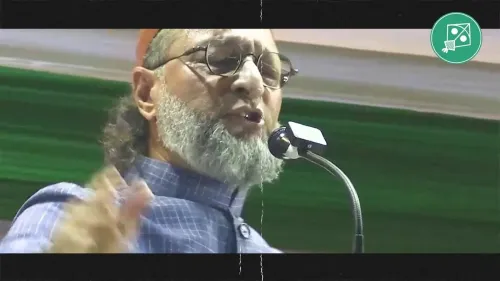
Posting on X on 27 October 2026, Owaisi asked in Hindi: 'When parks like Janeshwar Mishra Park and Lohia Park could be built under Akhilesh Yadav's government, why couldn't parks have been named after Allama Fazl-e-Haq Khairabadi and Maulana Ahmadullah?' The question is brief. The implication is not.
Two Parks That Were Built — and Two Names That Were Not
During the Samajwadi Party's 2012–2017 government in Uttar Pradesh, the Akhilesh Yadav administration developed and inaugurated major public parks in Lucknow honouring figures from its own ideological lineage. Janeshwar Mishra — a towering socialist leader — and Ram Manohar Lohia, the iconic freedom fighter and socialist philosopher, each had prominent parks named in their honour. These were not small gestures; they were large, well-funded green spaces that became landmarks in the state capital.
Owaisi's post places two other names alongside them as an implicit demand for equal recognition. Allama Fazl-e-Haq Khairabadi was a 19th-century Islamic scholar who was sentenced to transportation by the British for his role in the 1857 revolt — one of the earliest and most prominent Muslim voices to issue a religious sanction against colonial rule. Maulana Ahmadullah Shah, widely remembered as the 'Light of War,' was one of the most formidable military leaders of the Awadh uprising in 1857, commanding forces against the British East India Company with striking effectiveness.
The Pattern Behind the Politics
The charge Owaisi is lodging is a familiar one in Indian political discourse — that state governments routinely name public infrastructure after figures aligned with the ruling party's ideological or community identity, while systematically overlooking others who belong to India's shared anti-colonial history. In this framing, socialist heroes get marble and fountains; Muslim rebels of 1857 get silence.
This critique carries particular weight in Uttar Pradesh, where the SP has historically depended on a Muslim-Yadav coalition as its core electoral base. Owaisi is essentially asking: if Muslim voters were part of your political compact, why were Muslim freedom fighters absent from your commemorative one? It is the kind of question that tests the distance between coalition arithmetic and genuine recognition.
The Samajwadi Party has not yet responded to Owaisi's challenge. Whether it triggers a formal debate — or any proposal to rename or build new public spaces after the 1857 Muslim leaders — will be the measure of whether the question lands as politics or as policy.
Point of View
He forces a direct comparison that is hard to dismiss on historical grounds. The broader arc here is the long-running contest over which stories get enshrined in public space — a contest that intensifies in UP ahead of every state election cycle. Whether the SP chooses to respond substantively or absorb the critique in silence will itself be a political signal.
NationPress
27 Oct 2026
Frequently Asked Questions
Who were Allama Fazl-e-Haq Khairabadi and Maulana Ahmadullah Shah?
Allama Fazl-e-Haq Khairabadi was a 19th-century Islamic scholar who issued a religious sanction against British rule and was sentenced to transportation for his role in the 1857 revolt. Maulana Ahmadullah Shah, known as the 'Light of War,' was one of the most prominent rebel military commanders in the Awadh region during the same uprising.
What parks did Akhilesh Yadav's government build in Lucknow?
During the Samajwadi Party government from 2012 to 2017, two major parks in Lucknow were developed and named after socialist figures: Janeshwar Mishra Park, honouring the socialist leader Janeshwar Mishra, and Lohia Park, named after freedom fighter and socialist icon Ram Manohar Lohia.
Why is Owaisi raising this issue with Akhilesh Yadav?
Owaisi is challenging the Samajwadi Party's record of official commemoration, arguing that while the party built parks for its socialist ideological heroes, it did not extend similar recognition to Muslim freedom fighters from 1857 despite depending on Muslim voters as part of its core electoral coalition.
What was Allama Fazl-e-Haq Khairabadi's role in 1857?
Allama Fazl-e-Haq Khairabadi was among the earliest Muslim scholars to issue a fatwa legitimising the 1857 revolt against British colonial rule. He was subsequently tried and sentenced to transportation to the Andaman Islands by British authorities.
Has the Samajwadi Party responded to Owaisi's post?
As of 27 October 2026, the Samajwadi Party had not issued a public response to Owaisi's challenge regarding the commemoration of 1857 Muslim leaders in Uttar Pradesh.