Owaisi says Modi fears public protests
Synopsis
AIMIM president Asaduddin Owaisi on July 26, 2026, posted a sharp Hindi remark on X claiming PM Modi grows fearful whenever citizens protest. The one-line post reflects a long-running opposition argument that street demonstrations expose the limits of the government's political confidence.
Key Takeaways
Asaduddin Owaisi posted on X on July 26, 2026 , targeting PM Narendra Modi over public protests.
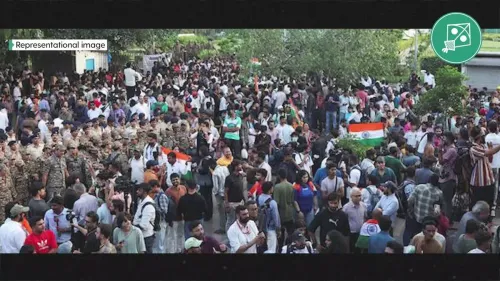
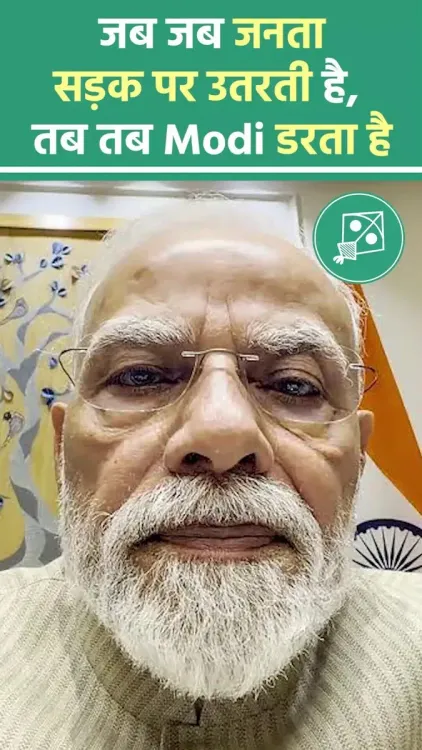
The Hindi post translates as: 'Every time the public comes out onto the streets, Narendra Modi grows afraid.' The post was accompanied by a video whose specific context is not independently verified.
AIMIM has consistently framed mass protests as evidence of public discontent with the BJP -led central government since at least 2019 .
The specific protest or event that triggered the July 26 remark has not been confirmed from available information.
No response from the BJP or the central government has been recorded as of publication.
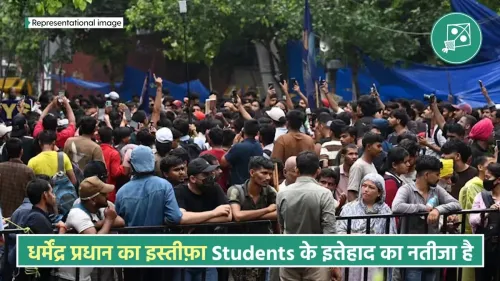
AIMIM president Asaduddin Owaisi on Sunday, July 26, 2026, took a sharp dig at Prime Minister Narendra Modi, asserting that the government grows fearful every time citizens take to the streets. The remark, posted in Hindi on X, distils a recurring opposition argument into a single pointed line.
What Owaisi Said
The post reads: 'Jab-jab janta sadak par utarti hai, tab-tab Narendra Modi darta hai' — loosely translated as, 'Every time the public comes out onto the streets, Narendra Modi grows afraid.' The statement is brief but pointed, framing mass protest as a direct political check on the central government.
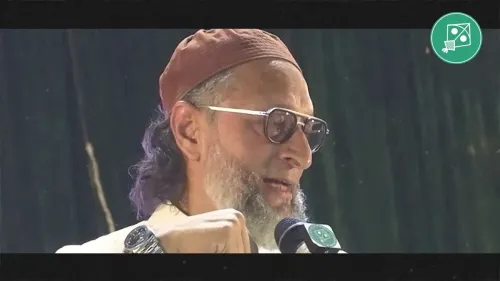
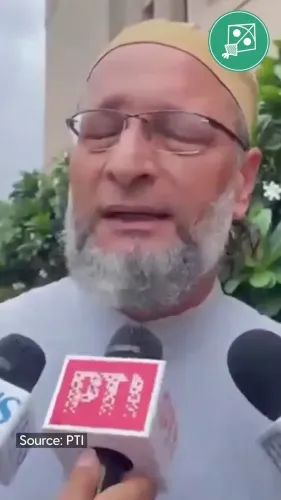
Owaisi, the Lok Sabha MP from Hyderabad, accompanied the post with a video, the contents of which are not independently verifiable at the time of publication. The Hindi phrasing uses a classical rhetorical device — the repeated 'jab-jab…tab-tab' (whenever…then) construction — to suggest a consistent pattern rather than an isolated episode.
Context
AIMIM has long positioned itself as a vocal critic of the BJP-led central government, particularly on matters touching minority rights, citizenship law, and federal relations. Owaisi has addressed mass rallies and parliamentary sessions alike to argue that government policies have marginalised sections of the citizenry.
The statement echoes a line of argument the opposition has deployed repeatedly since at least 2019-2020, when nationwide demonstrations against the Citizenship Amendment Act (CAA) drew millions onto the streets. Opposition leaders, including Owaisi, addressed those gatherings and accused the government of responding with administrative pressure rather than dialogue.
Policy Backdrop
Indian opposition parties have consistently framed public demonstrations as a barometer of popular discontent with central government decisions — whether on economic policy, citizenship legislation, or agrarian laws. The argument that a government 'fears' street protests is a standard rhetorical move in parliamentary democracies, used to signal that formal institutions alone are insufficient checks on executive power.
AIMIM's political base is concentrated in Hyderabad and parts of Maharashtra, but the party has sought a wider national profile by intervening in high-visibility debates. Statements on protest and governance allow the party to speak beyond its core constituency to a broader opposition audience.
Stakeholders and Impact
The immediate audience for such messaging is the urban, politically engaged citizenry that follows opposition leaders on social media, as well as the party's own cadre ahead of any forthcoming state or national electoral cycle. For protesting citizens and civil-society groups, the post functions as a signal of solidarity from a parliamentary voice.
The BJP and the central government have not, as of publication, responded to this specific post. The government has historically characterised opposition-backed protest narratives as politically motivated disruptions rather than genuine public mandates.
What's Next
The specific trigger for Owaisi's July 26 post remains unverified; the precise protest or event that prompted it is not confirmed from available information. Parliamentary sessions and state-level agitations in the coming weeks will likely determine whether this remark becomes the opening salvo in a sustained opposition campaign or remains a standalone commentary. Any new legislation or executive action touching civil liberties or minority rights could sharpen the political temperature further.
Point of View
Allowing the line to attach itself to any protest context without requiring a specific factual anchor. For AIMIM, which operates at the intersection of minority-rights politics and pan-opposition coordination, such statements serve a dual purpose — energising the base and staking a claim in the broader opposition narrative. The real test is whether the remark is followed by organisational mobilisation or remains rhetorical positioning.
NationPress
25 Oct 2026
Frequently Asked Questions
What did Asaduddin Owaisi say about Narendra Modi on July 26 2026?
Owaisi posted in Hindi on X: 'Every time the public comes out onto the streets, Narendra Modi grows afraid,' framing public protest as a political check on the Prime Minister.
Why does Owaisi frequently criticise PM Modi?
Owaisi, as AIMIM president and Hyderabad MP, has long opposed BJP government policies on citizenship, minority rights, and secularism, making him one of the most vocal parliamentary critics of the Modi administration.
What is AIMIM's position on public protests in India?
AIMIM has consistently supported the right to protest and has framed mass demonstrations as legitimate expressions of public discontent, particularly since the 2019-2020 Citizenship Amendment Act agitations.
What was the CAA protest and how is it connected to Owaisi?
The Citizenship Amendment Act protests of 2019-2020 saw millions demonstrate across India against a law critics said discriminated against Muslims; Owaisi addressed several rallies and accused the government of using administrative pressure to suppress dissent.
Has the BJP responded to Owaisi's July 2026 protest comment?
As of publication, no response from the BJP or the central government to this specific post has been recorded.