Owaisi Slams 'Rule by Gun, Not Rule of Law'
Synopsis
AIMIM president Asaduddin Owaisi posted 'Rule by Gun not Rule of Law' on June 2, 2026, renewing his long-standing critique of alleged extrajudicial force by state authorities. The four-word indictment invokes constitutional due-process guarantees and follows a pattern of parliamentary and social-media interventions on police conduct targeting minority communities.
Key Takeaways
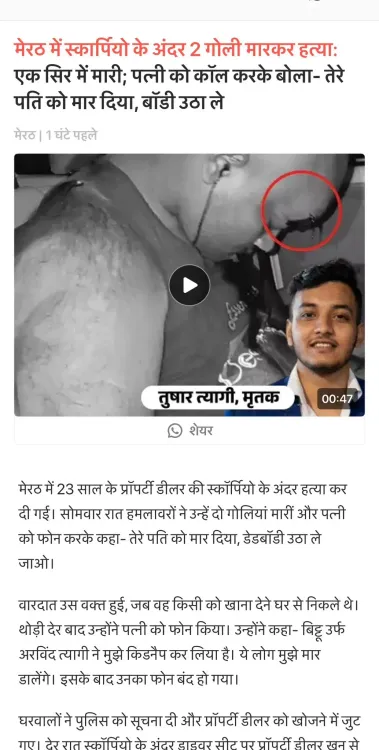
AIMIM president Asaduddin Owaisi posted 'Rule by Gun not Rule of Law' on June 2, 2026 , with two images attached.
The post is a direct challenge to alleged extrajudicial use of force by state authorities, framed as a constitutional violation.
Owaisi has a documented record of raising police-encounter and custodial-violence concerns in Parliament and on social media.
Muslim minorities and civil liberties groups are the primary stakeholders in the debate the post reignites.
The NHRC mandates magisterial inquiries into encounter deaths, but compliance has been inconsistently enforced across states.
A formal parliamentary follow-up — question, motion, or Rule 377 matter — is consistent with Owaisi's past pattern on such issues.
AIMIM president Asaduddin Owaisi on Tuesday, June 2, 2026, sharply criticised what he described as a breakdown of constitutional governance, posting the phrase 'Rule by Gun not Rule of Law' on X along with two images, signalling fresh concern over alleged use of extrajudicial force by state authorities.
Context
Owaisi's four-word indictment — 'Rule by Gun not Rule of Law' — is a pointed invocation of the constitutional principle that state power must be exercised within legal boundaries, not through coercive or extrajudicial means. The Hyderabad MP, who has long used both Parliament and social media as platforms to spotlight police conduct, posted the message with accompanying images that appear to document a ground-level incident, though the precise location and event have not been independently confirmed.
The phrase directly references Article 21 of the Indian Constitution, which guarantees the right to life and personal liberty, and can only be curtailed by a procedure established by law — not by executive or police discretion alone. Opposition leaders across the spectrum have periodically raised this standard when challenging alleged encounter killings or custodial deaths.
Policy Backdrop
Concerns over police encounters and custodial violence have been a recurring flashpoint in Indian political discourse, particularly in states governed by the Bharatiya Janata Party (BJP). Uttar Pradesh, Madhya Pradesh, and Telangana (under previous administrations) have all faced parliamentary scrutiny over the frequency of police encounters. The National Human Rights Commission (NHRC) has guidelines requiring magisterial inquiries whenever a person dies in police custody or in an encounter, though compliance has been inconsistently documented.
Owaisi, as a Lok Sabha MP, has historically tabled questions and raised matters under Rule 377 in Parliament on precisely these issues — framing them as violations of due process that disproportionately affect Muslim minorities and marginalised communities. His party, AIMIM, has built its electoral identity substantially around the demand for equal protection under law for minority communities.
Stakeholders and Impact
Muslim minorities and civil liberties organisations are the most directly implicated stakeholders in the debate Owaisi is reopening. Human rights groups have for years documented patterns of alleged extrajudicial killings in which victims are predominantly from minority or lower-caste backgrounds, a charge that state governments routinely contest.
Opposition parties — including the Indian National Congress, Samajwadi Party, and regional formations — have found common ground with AIMIM on the rule-of-law critique even when they diverge on other issues. The post is likely to be amplified within opposition circles as a rallying point ahead of any upcoming state assembly sessions or parliamentary question hours focused on law-and-order accountability.
For the ruling dispensation, the post represents a familiar line of attack that it has consistently rebutted by citing falling crime rates and arguing that police action targets criminals regardless of community identity.
What's Next
Attention will now turn to whether Owaisi follows up the social media post with a formal parliamentary intervention — a starred or unstarred question, a private member's bill, or a matter raised under Rule 377 — when Parliament is in session. State assembly sessions in the relevant jurisdiction may also see opposition members pressing for a judicial or magisterial inquiry into the incident referenced in the post.
The broader pattern suggests that unless a credible institutional inquiry is initiated, the episode will remain contested in the public domain, with the government and opposition trading competing narratives on policing standards and constitutional compliance. The post underscores a widening debate over whether India's law-enforcement apparatus operates within the guardrails its founding document intended.
Point of View
Four-word post is a calculated deployment of constitutional language designed to reframe a law-and-order incident as a governance failure — shifting the moral burden from alleged criminals to the state. By invoking 'Rule of Law' rather than naming a specific community or incident, he broadens the appeal of the critique beyond his core Muslim-minority base to any citizen concerned with due process. The post fits a long-running opposition strategy of using high-profile social media moments to set the agenda for subsequent parliamentary proceedings. Whether it translates into institutional accountability depends on whether formal inquiries follow — a question that will test the responsiveness of both legislatures and courts.
NationPress
25 Sept 2026
Frequently Asked Questions
What did Asaduddin Owaisi post on June 2 2026?
Owaisi posted the phrase 'Rule by Gun not Rule of Law' on X on June 2, 2026, along with two images, criticising what he characterised as extrajudicial use of force by state authorities.
What does 'Rule by Gun not Rule of Law' mean in the Indian context?
The phrase challenges the use of extrajudicial or coercive state force — particularly alleged police encounters — arguing it violates Article 21 of the Constitution, which guarantees the right to life and liberty through lawful procedure only.
What is AIMIM's position on police encounters in India?
AIMIM, led by Owaisi, has consistently opposed what it describes as extrajudicial killings and demanded magisterial or judicial inquiries, arguing such incidents disproportionately affect Muslim minorities and marginalised communities.
Has Owaisi raised police encounter issues in Parliament before?
Yes. Owaisi has a documented record of raising matters related to police conduct, encounter killings, and custodial deaths through parliamentary questions, Rule 377 notices, and floor speeches in the Lok Sabha.
What is the NHRC's role in encounter death cases in India?
The National Human Rights Commission requires magisterial inquiries whenever a person dies in a police encounter or in custody, though civil liberties groups have noted that compliance across states remains inconsistent.