Owaisi Shares Iqbal Verse on Youth Aspiration

Synopsis
AIMIM president Asaduddin Owaisi shared a classical Urdu couplet on July 23, 2026, evoking the eagle spirit of youth and sky-high ambition — a signature blend of Iqbali philosophy and political outreach that characterises his social media presence.
Key Takeaways
AIMIM president Asaduddin Owaisi posted an Urdu couplet on July 23, 2026 via X.
The verse invokes the metaphor of the eagle spirit awakening in youth, urging them to aim for the skies.
The imagery is closely associated with philosopher-poet Allama Muhammad Iqbal and his concept of khudi (selfhood).
Owaisi regularly uses classical Urdu poetry in social media posts as a form of cultural and community outreach.
The post carries no explicit partisan or electoral message, focusing on motivational and cultural themes for Muslim youth .
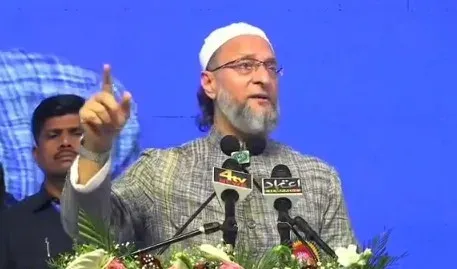
AIMIM president Asaduddin Owaisi shared an Urdu couplet on Thursday, July 23, 2026, invoking the spirit of youth and soaring ambition in a post on X, continuing his practice of weaving classical poetry into public messaging.
The couplet, rendered in Roman Urdu, reads: 'Aquabi Rooh Jab Baidar Hoti Hai Jawanon Mein Nazar Ati Hai Iss Ko Apni Manzil Asmanaon Mein' — translated broadly as, 'When the eagle spirit awakens, it is seen in the youth; they find their destination in the skies.' The imagery of the eagle (uqab) is a recurring motif in South Asian Urdu literary tradition, most closely associated with the works of philosopher-poet Allama Muhammad Iqbal.
Context
Owaisi, who represents Hyderabad in the Lok Sabha, regularly uses his social media presence to share verses from the classical Urdu canon alongside political commentary. This post carries no explicit political reference, functioning instead as a cultural and motivational statement directed at young followers. The eagle as a symbol of ambition and self-realisation is central to Iqbal's philosophy of khudi (selfhood), which has remained influential in South Asian Muslim intellectual discourse for over a century.
Policy Backdrop
Indian politicians from community-rooted parties have long drawn on classical Urdu poetry to communicate identity, aspiration, and solidarity with their constituencies. This literary tradition in political outreach traces its lineage to the independence movement, when poets and leaders used verse to articulate collective purpose. For Owaisi and AIMIM, such references serve as a bridge between cultural heritage and contemporary community mobilisation, particularly among Muslim youth.
Stakeholders and Impact
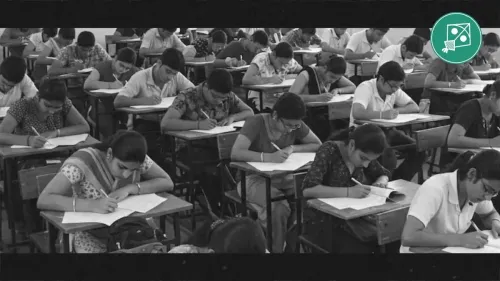
The primary audience for this post is Muslim youth in India, for whom Iqbal's philosophy of self-realisation and aspiration continues to carry resonance in educational and cultural settings. By invoking the eagle-spirit metaphor, Owaisi signals encouragement toward ambition and achievement without attaching a specific programmatic demand. Such messaging, delivered through social media, reaches a broad demographic beyond Owaisi's Hyderabad constituency.
What's Next
Observers will watch whether Owaisi follows this literary post with speeches or parliamentary interventions that connect similar themes of youth empowerment to concrete policy demands — a pattern he has employed in previous sessions of the Lok Sabha. Any such linkage would give the cultural reference a sharper political edge in the weeks ahead.
Point of View
Not merely reactive political opposition.
NationPress
22 Oct 2026
Frequently Asked Questions
What Urdu couplet did Asaduddin Owaisi share on July 23 2026?
Owaisi shared the verse 'Aquabi Rooh Jab Baidar Hoti Hai Jawanon Mein Nazar Ati Hai Iss Ko Apni Manzil Asmanaon Mein', which translates as: 'When the eagle spirit awakens, it is seen in the youth; they find their destination in the skies.'
Is this couplet from Allama Iqbal?
The eagle imagery and theme of self-realisation are closely associated with the works of philosopher-poet Allama Muhammad Iqbal, whose concept of khudi (selfhood) is a cornerstone of South Asian Urdu literary tradition. The research does not confirm the precise source of this specific verse.
Why does Owaisi post Urdu poetry on social media?
Owaisi regularly uses classical Urdu poetry to connect with his community's cultural heritage and motivate supporters, a practice rooted in the tradition of Indian politicians using literary references for identity-based outreach.
Who is the target audience for Owaisi's poetry posts?
His posts on Urdu poetry are primarily directed at Muslim youth and culturally engaged followers in India, particularly those with an affinity for the classical Urdu literary tradition.
Does this post have a specific political message?
The July 23 post carries no explicit political or electoral reference; it functions as a cultural and motivational statement encouraging youth to aspire to great heights.